
MIM/PM Manufacturing Equipment
Quick Answer: Metal Injection Molding (MIM) manufacturing equipment includes specialized feedstock mixers, injection molding machines, solvent and thermal debinding systems, vacuum sintering furnaces, and precision inspection tools such as Coordinate Measuring Machines (CMM). At Emitech, our Nanjing facility combines these MIM process steps with supporting CNC machining and surface treatment under one roof. Powder Metallurgy (PM) equipment is similar at the mixing and sintering stages, but MIM adds the injection molding and debinding steps needed for complex, near-net-shape precision parts.
Overview of MIM Manufacturing Equipment
Metal Injection Molding transforms fine metal powders into high-density precision components through a four-stage production route: feedstock preparation, injection molding, debinding, and sintering. Each stage needs dedicated machinery that is matched to the material, part geometry, and production volume. Unlike conventional Powder Metallurgy, which typically presses powder in rigid dies, MIM uses thermoplastic injection molding to form complex shapes before sintering. This difference makes MIM equipment more specialized, particularly in mixing, molding, and binder removal.
At Emitech, our production line is built around repeatable process control. We run stainless steels, low-alloy steels, titanium alloys, and special materials through the same qualified equipment set, with programs and tooling tracked by job. Whether you need a few thousand prototype parts or a high-volume annual release, the equipment chain remains consistent, so mechanical properties and MIM tolerance capability are predictable from the first article onward.
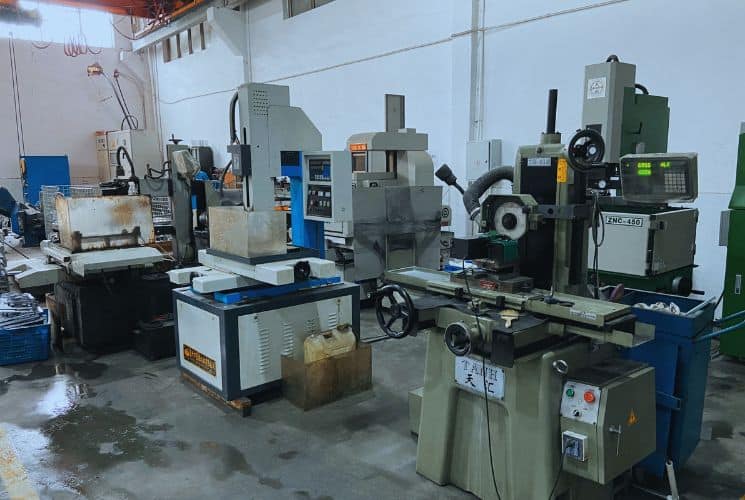
Feedstock Mixing Equipment
The MIM process begins with feedstock, a uniform mixture of metal powder and a multi-component binder system. Consistent feedstock is essential because any agglomerate, temperature gradient, or binder separation will show up later as dimensional variation or internal defects. We use several types of mixing equipment depending on material and batch size.
High-shear mixers blend powder and binder under controlled temperature and shear. Their purpose is to coat each powder particle evenly with binder and to drive out trapped air. Twin-screw extruders provide continuous compounding with intensive shearing and forward conveying inside a heated barrel. They are well suited for high-volume feedstock production because they deliver repeatable results lot after lot. For development or smaller batches, we also use planetary and tube mixers, which offer faster changeover at the cost of slightly lower consistency. Recent shear roller extruder technology uses two parallel heated rollers with adjustable groove width, typically 5–7 mm, to deliver high shear in a compact footprint.
When selecting mixing equipment for a MIM material, we evaluate temperature uniformity, output capacity, powder distribution quality, and flexibility across binder formulations. The right mixer is the foundation of every successful MIM process run.
Injection Molding Machines
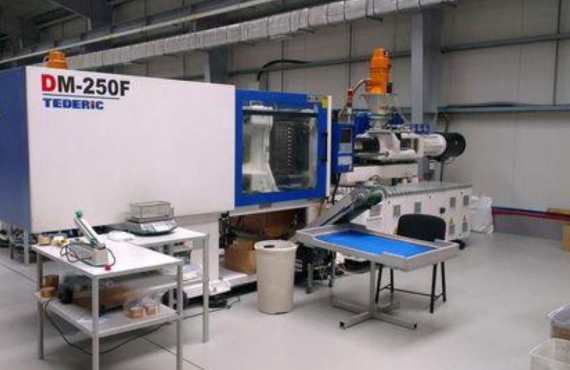
MIM injection molding machines look similar to plastic injection molding machines, but they are engineered to handle abrasive metal-polymer feedstock. At Emitech, our MIM injection units feature hardened screws and barrels that resist wear from metal powder, precise barrel temperature control across multiple zones, and higher clamping force to accommodate the denser feedstock and thinner walls common in MIM parts.
Mold temperature controllers maintain stable cavity temperatures during injection, helping to control shrinkage, warpage, and sink marks. Automated part handling systems then move green parts smoothly into the next stage while reducing manual labor and handling damage. Tooling for MIM is typically built from hardened tool steel with fine venting and gating designed for powder-laden feedstock. You can read more about how we design and maintain these molds on our MIM tooling page.
Debinding Equipment
Solvent Debinding Tanks
Thermal Debinding Furnaces
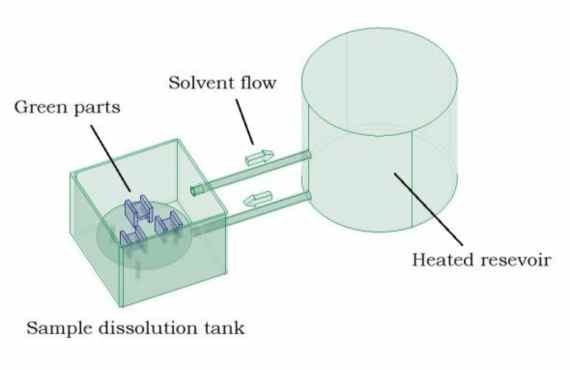
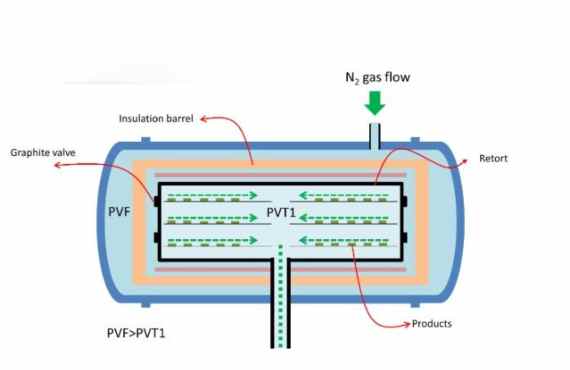
After molding, the green part contains 40–50 percent binder by volume. This binder must be removed before sintering, and the removal method determines much of the final quality. We operate both solvent debinding tanks and thermal debinding furnaces.
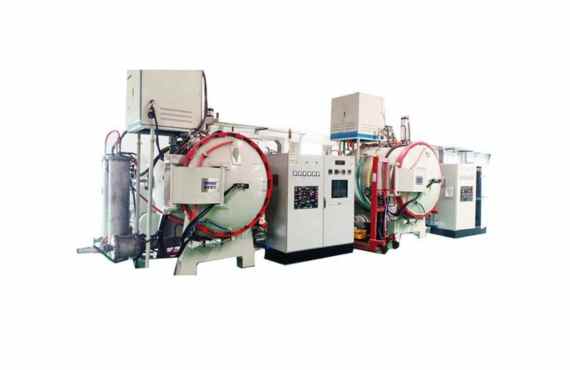
Solvent debinding tanks use a controlled chemical bath to dissolve one fraction of the binder, leaving an open pore network that allows the remaining binder to escape as vapor during thermal debinding. This two-step approach reduces cycle time and lowers the risk of cracking or blistering. Thermal debinding furnaces then heat the brown part in a programmed atmosphere to burn out or evaporate the remaining binder without oxidizing the metal powder. Atmosphere control, slow heating rates, and real-time monitoring are critical because trapped binder vapor can distort or crack the part.
Sintering Furnaces
Sintering is where the brown part densifies into a solid metal component. Our sintering furnaces reach maximum temperatures up to 1600 °C and operate under nitrogen, hydrogen, or high-vacuum atmospheres down to 10⁻⁶ bar. Key equipment characteristics include temperature uniformity within ±2 °C across the working zone, up to six independently controlled heating zones for precise profile management, and intelligent control systems that monitor and adapt the cycle in real time.
Proper atmosphere and thermal profile control allow us to achieve final densities above 98 percent of theoretical, with linear accuracy around ±0.3 percent and mechanical properties comparable to wrought material.
Inspection and Quality Control Equipment
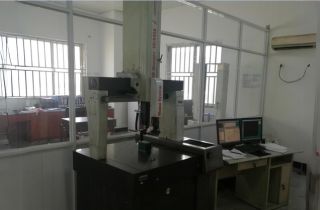
Equipment alone does not guarantee quality; measurement and traceability complete the system. Our quality lab includes Coordinate Measuring Machines (CMM) for dimensional verification, metallographic microscopes for microstructure analysis, density measurement devices, and hardness testers. For complex geometries or first-article approval, CMM programs are written directly from the customer CAD model so every critical dimension is captured and documented.
Our quality inspection process also links each batch to its feedstock lot, molding setup, furnace run, and final measurement report. This traceability is important for medical, automotive, and aerospace customers who need full documentation for regulatory or internal audits.
MIM Equipment Capabilities at a Glance
The following table summarizes the main equipment used across our MIM line. PM processes share mixing and sintering concepts, but MIM requires the additional injection molding and debinding stages shown below.
| Process Stage | Equipment | Key Capability |
|---|---|---|
| Feedstock Preparation | High-shear mixer, twin-screw extruder, planetary mixer | Uniform powder-binder distribution, temperature-controlled compounding |
| Injection Molding | MIM injection molding machine, mold temperature controller | Hardened screws/barrels, multi-zone temperature control, high clamping force |
| Debinding | Solvent debinding tank, thermal debinding furnace | Controlled binder removal in programmed atmosphere |
| Sintering | Vacuum/atmosphere sintering furnace | Up to 1600 °C, ±2 °C uniformity, N₂/H₂/vacuum atmosphere |
| Dimensional Inspection | CMM, optical comparator, digital height gauge | Part-level dimensional verification linked to CAD |
| Material Verification | Metallurgical microscope, density meter, hardness tester | Density, microstructure, and mechanical property confirmation |
| Secondary Operations | CNC machining centers, surface treatment line | Tolerance refinement, threading, polishing, coating |
Process Control and Traceability
Every MIM production run follows a controlled routing sheet that ties the part number to its feedstock batch, molding parameters, debinding cycle, sintering profile, and inspection report. We monitor barrel temperature, cavity pressure, furnace atmosphere, and heating-zone setpoints in real time, with automatic alarms and lot-hold procedures if deviations occur.
Traceability extends to raw material as well. We source metal powders against certified specifications such as MPIF Standard 35 or customer-defined chemistry, and each lot is verified on arrival. This closed-loop control supports demanding applications in medical devices, automotive sensors, and industrial tooling where consistency and documentation matter as much as price.
From MIM Equipment to Finished Parts
The equipment described above is the backbone of our MIM parts production service. Many components leave the sintering furnace ready for use, while others move to CNC machining for threads, tight tolerances, or mating surfaces. Surface finishing options such as polishing, coating, and passivation are available through our surface treatment line. Material selection guidance is available on our MIM material page.
Frequently Asked Questions
What equipment is essential for MIM manufacturing?
The core MIM equipment chain includes feedstock mixers or extruders, MIM injection molding machines with hardened screws and barrels, solvent and thermal debinding equipment, vacuum or atmosphere sintering furnaces, and CMM-based inspection systems. Supporting equipment such as mold temperature controllers, dryers, and automated handling systems are also important for repeatable production.
How does MIM equipment differ from conventional Powder Metallurgy equipment?
PM equipment typically focuses on powder blending, die compaction, and sintering. MIM adds the injection molding and debinding stages, which require specialized machines capable of processing metal-polymer feedstock and removing binder without damaging the part. That is why MIM can produce far more complex geometries than traditional press-and-sinter PM.
What temperature can your sintering furnaces reach?
Our sintering furnaces reach up to 1600 °C with temperature uniformity within ±2 °C across the working zone. They operate under nitrogen, hydrogen, or vacuum atmospheres depending on the material being sintered.
How do you ensure dimensional accuracy after sintering?
Dimensional accuracy is controlled through feedstock shrinkage modeling, stable sintering profiles, and CMM inspection. Typical as-sintered linear accuracy is around ±0.3 percent. Where tighter tolerances are required, we apply controlled CNC secondary operations.
Can you handle small prototype runs as well as high-volume production?
Yes. Our equipment mix supports both development quantities and large production releases. Tooling can be scaled from single-cavity prototype molds to multi-cavity production molds, while sintering furnaces and mixers are sized to match volume without changing the qualified process.
Get a Quote for Your MIM Project
Emitech's MIM manufacturing equipment in Nanjing is ready for your precision metal components. Whether you need design-for-manufacturing feedback, prototype samples, or scaled production, our engineering team can recommend the right material, tooling, and process route.
- Email: mim@mikeshoppingroom.com
- WhatsApp: +86 138 1403 4409
- Online form: Contact Emitech
Send us your drawing or 3D model and we will respond with a detailed quote, lead time, and process plan within one business day.
Source Custom MIM Parts from Emitech
Nanjing Emitech delivers MIM from tooling through sintering and finishing. Custom MIM parts · MIM services · Request a quote