MIM Parts — Custom Metal Injection Molding Components by Emitech
Quick Answer
Emitech is a custom MIM parts manufacturer with a documented quality management system in stainless steel, titanium, low-alloy steel, and specialty alloys. Our metal injection molding parts range from 0.1 g to 200 g, with as-sintered tolerances of ±0.3% to ±0.5% and post-machining tolerances down to ±0.02 mm. From tooling design and material selection to debinding and sintering, CNC secondary operations, and quality inspection, every step is managed under one roof in Nanjing, China. We supply MIM components to automotive, medical, firearms, aerospace, electronics, and industrial OEMs worldwide. Upload your drawing for a free DFM review and quote.
On this page: what are MIM parts · types · specs · materials · MOQ and lead time · FAQ
What Are MIM Parts?
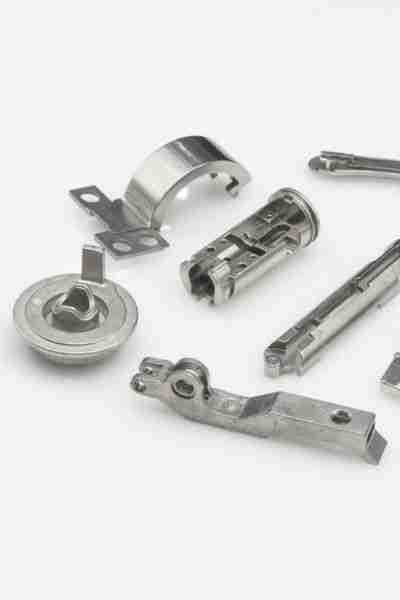
MIM parts (Metal Injection Molding parts) are precision metal components manufactured by combining fine metal powder with a thermoplastic binder, injecting the mixture into a mold, then removing the binder and sintering at high temperature until the metal particles fuse into a dense, near-net-shape component. The result is a metal part with the mechanical properties of wrought material but the geometric complexity of injection-molded plastic — at a fraction of the cost of CNC machining for medium-to-high volumes.
MIM parts are used across a wide range of industries — from automotive sensor housings and fuel system components to medical surgical instruments, consumer electronics hinges, firearm fire-control parts, and industrial gear sets. Anywhere a small, complex metal component is needed in quantities of thousands or more, MIM is often the most cost-effective manufacturing route.
Are MIM Parts Strong? Yes — Here's Why
Properly sintered MIM parts achieve 95–99% of theoretical density, meaning they are nearly as dense as wrought or CNC-machined equivalents. Tensile strengths routinely exceed 1,000 MPa for hardened low-alloy steels, and fatigue performance matches wrought material for the same alloy. In firearms applications, MIM hammers and triggers from 17-4PH or 4605 steel sustain thousands of firing cycles without failure. In automotive turbochargers, MIM vanes withstand extreme heat and rotational stress. In medical instruments, MIM surgical jaws pass the same biocompatibility and sterilization tests as machined components.
MIM parts are neither inferior nor inherently weaker — they are engineered components whose quality depends on process control. At Emitech, we monitor density, carbon content, grain structure, and dimensional accuracy on every production batch, so you get consistent mechanical performance lot after lot. For a deeper dive, read our guide on MIM parts strength and MIM parts quality.
MIM Parts vs CNC Machined Parts
CNC machining removes material from a solid billet and is best for prototypes, simple geometries, or very low volumes. MIM parts form near-net-shapes with almost zero material waste — the same complex part that costs $15 to machine might cost $3 with MIM at 10,000 units. However, for ultra-tight tolerances below ±0.02 mm, CNC secondary operations on MIM parts deliver the best of both worlds. Many customers use MIM for the net shape and CNC for critical bores or threads. See our MIM vs CNC machining comparison for a full cost-and-performance breakdown.
How Are MIM Parts Made?
Custom MIM parts follow a four-step manufacturing chain — all under one roof at Emitech:
- Feedstock compounding — Fine metal powder (5–20 μm) is mixed with thermoplastic binder into a uniform, injectable granulate.
- Injection molding — The feedstock is heated and injected into a precision mold to form a green part. Wall thickness, gate location, and parting line are optimized during DFM.
- Debinding & sintering — Binder is removed thermally or with solvent, then the brown part is sintered at 1,200–1,500 °C. Metal particles fuse, and the part shrinks by 15–20% to final dimensions.
- Post-processing (optional) — CNC secondary ops, heat treatment, passivation, PVD coating, or polishing for enhanced tolerances, strength, or surface finish.
Because MIM is a net-shape process, it can produce undercuts, thin walls, internal threads, and fine surface textures that would be expensive or impractical with CNC machining alone. Material waste is low, repeatability is high, and thousands to millions of identical parts can be manufactured from a single mold set.
At Emitech, we specialize in custom MIM parts for demanding industries — automotive, medical, firearms, aerospace, consumer electronics, and industrial equipment. Our engineering team reviews CAD models, recommends design improvements, builds mold tools, qualifies first articles, and manages ongoing production. This single-source approach gives customers consistent quality, shorter development cycles, and clear communication from prototype to mass production.
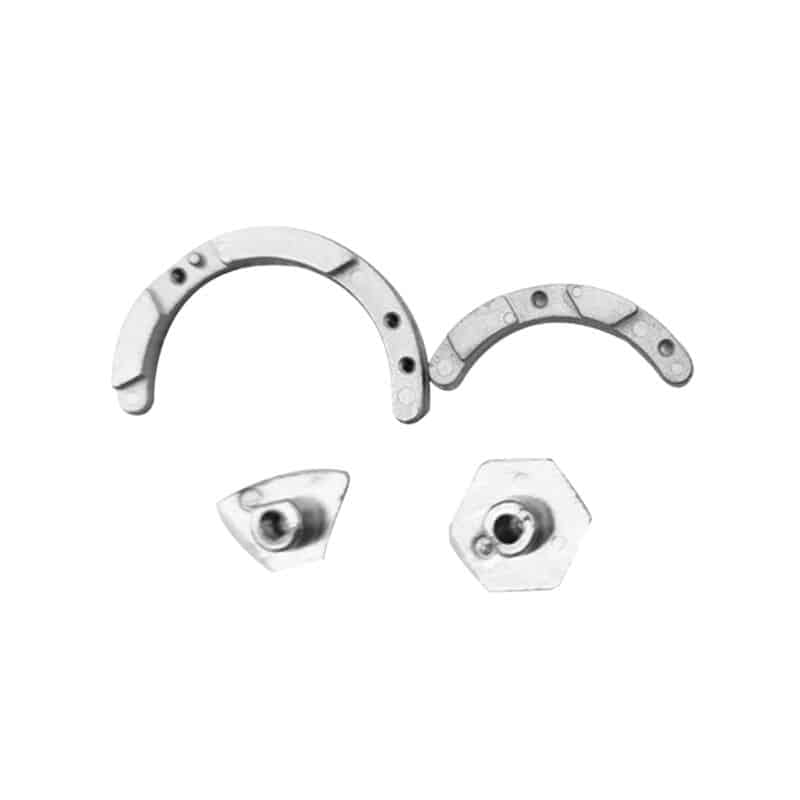
Common Types of Custom MIM Parts
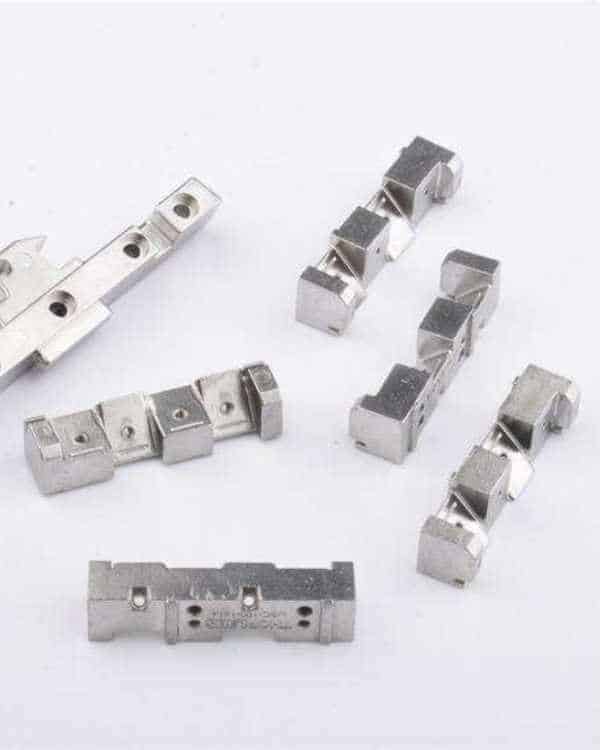
Almost any small, complex metal component can be adapted to MIM when the geometry, volume, and material fit the process. Below are the most common categories of custom MIM parts Emitech produces, together with typical applications and design characteristics.
Gears & Gearboxes
Spur gears, helical gears, pinions, and planetary gear sets with fine tooth profiles and high wear resistance. Common in automotive actuators, power tools, and consumer electronics.
Sensor Housings
Complex shells, brackets, and connectors that protect sensors in automotive, industrial, and aerospace systems. MIM allows integrated mounting features and seal surfaces.
Hinges & Knuckles
Small, high-strength hinge components for laptops, smartphones, wearables, and medical devices. Thin walls and tight bends are possible without secondary machining.
Surgical Tool Jaws
Biocompatible 316L, 17-4PH, and cobalt chrome jaws for minimally invasive instruments. High hardness, corrosion resistance, and precise gripping surfaces.
Firearm Components
Safeties, hammers, triggers, and sight parts made from high-strength stainless and low-alloy steels. MIM delivers consistent mechanical properties in high volumes.
Soft Magnetic Cores
Fe-Ni and Fe-Co alloy cores for solenoids, relays, and inductive components. Controlled permeability and consistent density support stable electromagnetic performance.
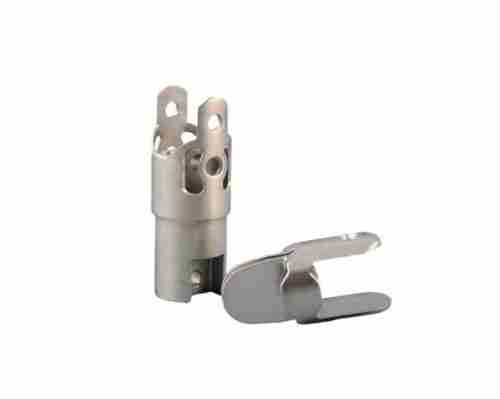
Custom MIM Parts Technical Specifications
Understanding the technical limits of MIM helps engineers specify parts that are both manufacturable and cost-effective. Engineers who design with MIM in mind from the beginning can avoid costly changes later and take full advantage of the process. The table below summarizes Emitech's standard capabilities for custom MIM parts.
| Parameter | Specification | Notes |
|---|---|---|
| Part weight | 0.1 g – 200 g | Ideal range: 0.5 g – 50 g |
| Maximum dimensions | 150 mm × 150 mm × 100 mm | Larger parts may need special review |
| Wall thickness | 0.3 mm – 5 mm | Uniform walls improve sintering quality |
| As-sintered tolerance | ±0.3% – ±0.5% | Refer to our MIM tolerance guide |
| Post-machining tolerance | ±0.02 mm or tighter | For critical fits and bores |
| Density | 95% – 99% of wrought | Depends on material and sintering cycle |
| Surface finish | Ra 0.8–1.6 µm as-sintered | Improved by polishing, plating, or PVD |
| Tensile strength | Up to 1,000 MPa | Material-dependent |
| Annual volume | 10,000 – 10,000,000+ | Mold cavity count matched to volume |
Design tip: Uniform wall thickness, generous radii, and flat parting-line surfaces reduce sink, warpage, and cracking during sintering. Send us your CAD file for a free DFM review before tooling starts.
Materials for Custom MIM Parts
Material selection directly affects mechanical properties, corrosion resistance, magnetic behavior, and cost. Emitech offers a broad portfolio of MIM materials, from standard stainless steels to specialty alloys for medical, aerospace, and electronic applications. Each material is supplied as a qualified feedstock and processed under controlled parameters to achieve consistent density and mechanical performance.
| Material Family | Common Grades | Typical Applications |
|---|---|---|
| Stainless steel | 316L, 304, 17-4PH, 420, 430L, 440C | Medical instruments, consumer electronics, firearm parts |
| Low-alloy steel | 4605, 8620, 4140, 4340 | Gears, shafts, locking components, wear parts |
| Titanium | Ti-6Al-4V, CP-Ti | Implants, aerospace brackets, premium watch cases |
| Special alloys | Cobalt chrome F75, Kovar F15, Invar FeNi36 | Orthopedic implants, hermetic seals, instrumentation |
| Soft magnetic | Fe-2Ni, Fe-8Ni, Fe50Co | Solenoid cores, relays, sensors |
| Copper / tungsten | Copper alloy, tungsten copper | Thermal management, electrical contacts, EDM electrodes |
For detailed mechanical data and corrosion performance, visit our MIM materials page. Our metallurgists can also recommend grades based on your strength, hardness, magnetic, or biocompatibility requirements. We can validate material selection through sample production and mechanical testing before mass production begins.
MIM Parts by Material
Emitech manufactures custom MIM parts in more than 50 feedstock formulations. The most commonly requested materials are grouped below by family, with typical applications and achievable mechanical properties.
Stainless Steel MIM Parts
316L, 304, 17-4PH, 420, 430L, and 440C offer corrosion resistance, strength, and biocompatibility. Used for medical instruments, firearm components, marine hardware, and food equipment.
Titanium MIM Parts
Ti-6Al-4V and CP-Ti deliver exceptional strength-to-weight ratio and biocompatibility. Ideal for orthopedic implants, aerospace brackets, and premium consumer products.
Low-Alloy Steel MIM Parts
4605, 8620, 4140, and 4340 provide high strength, wear resistance, and heat-treat response. Common for gears, locking parts, and industrial wear components.
Specialty Alloy MIM Parts
Cobalt chrome F75, Kovar F15, Invar FeNi36, and soft magnetic Fe-Ni alloys for implants, hermetic seals, instrumentation, and electromagnetic devices.
Copper & Tungsten MIM Parts
Copper alloys and tungsten-copper composites for thermal management, electrical contacts, EDM electrodes, and heat-dissipation applications.
Not sure which material fits your application? Send us your requirements and our metallurgists will recommend the best alloy based on mechanical, thermal, magnetic, and regulatory requirements.
MIM Parts by Industry
Each industry imposes different performance, certification, and documentation requirements on MIM components. Emitech adapts material selection, process control, and quality deliverables to match the end-use environment.
Medical MIM Parts
Surgical jaws, graspers, implantable fixtures, and instrument handles in 316L, 17-4PH, and cobalt chrome. Processes support biocompatibility, passivation, and full material traceability.
Automotive MIM Parts
Turbocharger vanes, sensor housings, brake components, and gearbox selectors in low-alloy and stainless steels. Dimensional inspection reports and material certificates available.
Firearms MIM Parts
Triggers, hammers, safeties, sights, and 1911 components in 17-4PH, 4605, 8620, and 420 stainless. High strength and consistent mechanical properties for reliable function.
Electronics MIM Parts
Hinges, frames, connectors, camera brackets, and shielding components. MIM enables thin walls and cosmetic surfaces in high-volume consumer devices.
Aerospace MIM Parts
Brackets, mounts, sensor housings, and actuator components in titanium, 17-4PH, and Inconel. Precision grinding and NDT available for critical applications.
Industrial MIM Parts
Gears, fasteners, locking components, and wear inserts for power tools, robotics, and machinery. Low-alloy and hardened steels provide durability under load.
MOQ and Lead Time for Custom MIM Parts
One of the most common questions from buyers is whether MIM is economical at low volumes. At Emitech, we do not enforce a rigid minimum order quantity. We accept prototype and feasibility runs to validate design, material, and process before mass production. However, the true economic advantage of MIM appears when volumes reach tens of thousands per year, because the upfront tooling cost is spread across many parts.
| Stage | Typical Lead Time | Deliverables |
|---|---|---|
| DFM review and quote | 1–3 business days | Design feedback, material recommendation, tooling plan |
| Tooling design and build | 15–25 days | Precision mold with shrinkage compensation |
| First article samples | 5–10 days after tooling | Sample parts, inspection report, density data |
| Production lead time | 4–6 weeks | Stable sintered parts ready for finishing |
| Repeat orders | 2–4 weeks | Faster turnaround once tooling is qualified |
Lead times can vary with part complexity, material availability, and secondary operations such as heat treatment or plating. For urgent projects, we offer expedited sampling and parallel processing of tooling and material procurement. Contact our team for a project-specific schedule.
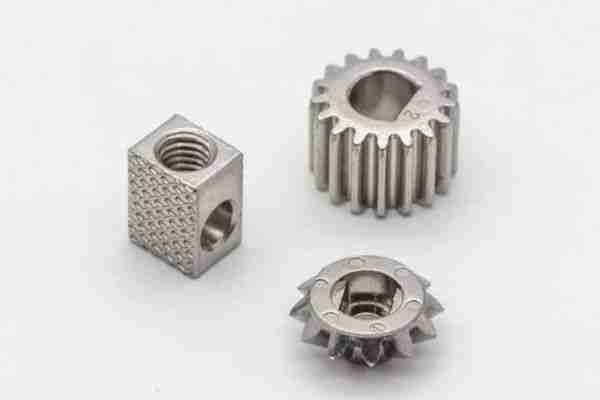
Industries Served by Emitech MIM Parts
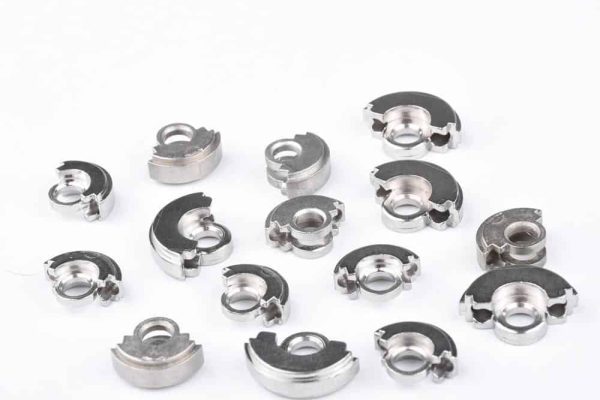
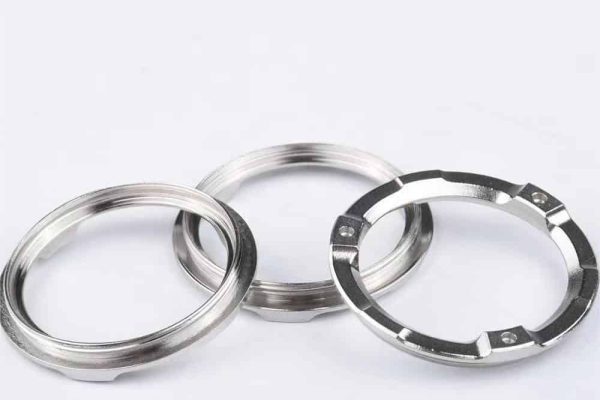
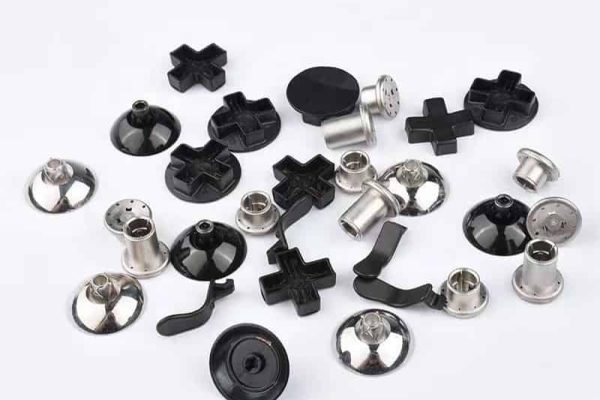
Custom MIM parts are used across a wide range of industries where small size, complex geometry, and high performance are required. Emitech supplies components to automotive suppliers, medical device OEMs, consumer electronics brands, and industrial equipment manufacturers.
- Automotive: Turbocharger vanes, sensor housings, brake components, gearbox selectors, and ADAS hardware. MIM delivers high strength and tight tolerances for safety-critical systems.
- Medical: Surgical jaws, graspers, implantable fixtures, and instrument handles. Biocompatible stainless steels and cobalt chrome meet strict regulatory requirements.
- Consumer electronics: Hinges, frames, connectors, camera brackets, and wearables. MIM enables thin walls and cosmetic surfaces in high-volume products.
- Industrial tools: Gears, locking parts, fasteners, and wear inserts for power tools, robots, and textile machinery. Low-alloy and hardened steels provide durability under mechanical stress.
Why Choose Emitech for Custom MIM Parts?
Emitech supplies precision metal components to global OEMs from our Nanjing facility. Our team combines materials science, mold design, process engineering, and quality management to deliver custom MIM parts that meet demanding specifications.
- Full-process control: We manage feedstock, molding, debinding, sintering, secondary machining, and finishing under one roof.
- Material expertise: More than 50 material grades including stainless steel, titanium, low-alloy steel, soft magnetic alloys, and specialty materials.
- Quality systems: Documented quality management system with CMM inspection, density testing, metallographic analysis, and full traceability.
- Design support: Free DFM review to optimize wall thickness, draft angles, gate location, and shrinkage compensation before tooling.
- Flexible volumes: Prototype, pilot, and mass production with mold cavity counts matched to annual demand.
Whether you need a few thousand parts for a pilot program or millions for a high-volume product, Emitech can scale with you. Our engineers work directly with your team to reduce risk, shorten development time, and ensure repeatable quality.
Custom MIM Part Design Guidelines
Good design practices reduce tooling cost, improve yield, and shorten the path from first article to stable production. The following guidelines help engineers create MIM-friendly parts from the start. For a complete engineering reference, see our MIM design guide.
- Wall thickness: Keep walls between 0.3 mm and 5 mm. Sudden changes in thickness cause differential shrinkage, warpage, and cracks during sintering. Transition gradually and use ribs or gussets for stiffness instead of thick sections.
- Radii and corners: Avoid sharp internal corners. A minimum radius of 0.2 mm reduces stress concentration and improves feedstock flow. External radii also help ejection and lower mold wear.
- Draft angles: Provide 0.5° to 2° of draft on vertical walls to assist part ejection. Zero-draft features are possible in some cases but may increase tool complexity and cost.
- Parting line: Design the parting line on a flat plane whenever possible. Complex parting lines add tooling cost and can create flash that requires secondary cleaning.
- Undercuts and cores: MIM can mold internal threads, holes, and undercuts using side cores or collapsible cores. However, each core action adds tooling cost and cycle time, so keep core geometry as simple as the function allows.
Our engineers review every incoming design for manufacturability and provide a report with suggested changes before any metal is cut. This DFM step typically saves weeks of rework and avoids surprises during first article inspection.
Frequently Asked Questions
Q: What is the minimum order quantity for custom MIM parts?
Emitech does not enforce a strict MOQ. We accept small prototype and feasibility runs. However, MIM becomes most cost-effective at volumes of 10,000 parts per year or more, because the upfront tooling investment is spread across many units. See our low volume MIM guide for break-even details.
Q: How long does it take to produce custom MIM parts?
Tooling typically takes 15–25 days, and first article samples follow 5–10 days later. Standard production lead time is 4–6 weeks after tooling approval. Repeat orders usually ship in 2–4 weeks. Full timeline breakdown on our MIM lead times page.
Q: What tolerances can MIM parts hold?
As-sintered tolerances are typically ±0.3% to ±0.5%, depending on part size and geometry. Tighter tolerances down to ±0.02 mm can be achieved with CNC secondary operations. See our MIM tolerance page for details.
Q: What materials are available for custom MIM parts?
Emitech offers stainless steels (316L, 304, 17-4PH, 420, 440C), low-alloy steels (4605, 8620, 4140), titanium Ti-6Al-4V, cobalt chrome F75, Kovar F15, Invar FeNi36, soft magnetic Fe-Ni alloys, and copper alloys. Visit our materials page for the full list.
Q: Are MIM parts strong enough for structural applications?
Yes. Sintered MIM parts reach 95–99% of theoretical density, delivering strength comparable to wrought material — MIM 17-4 PH exceeds 1,100 MPa tensile after H900 aging, and MIM 316L exceeds 450 MPa. Data and fatigue analysis: are MIM parts strong.
Q: Can MIM parts replace CNC machined parts?
Yes, when the part is small, complex, and needed in high volume. Our metal injection molding services often reduce material waste and eliminate assembly. For very tight tolerances or simple low-volume parts, CNC machining may still be preferred. Many projects use both: MIM for the net shape and CNC secondary operations for critical finishing. Full comparison: MIM vs CNC machining.
Q: What surface finishes can be applied to MIM parts?
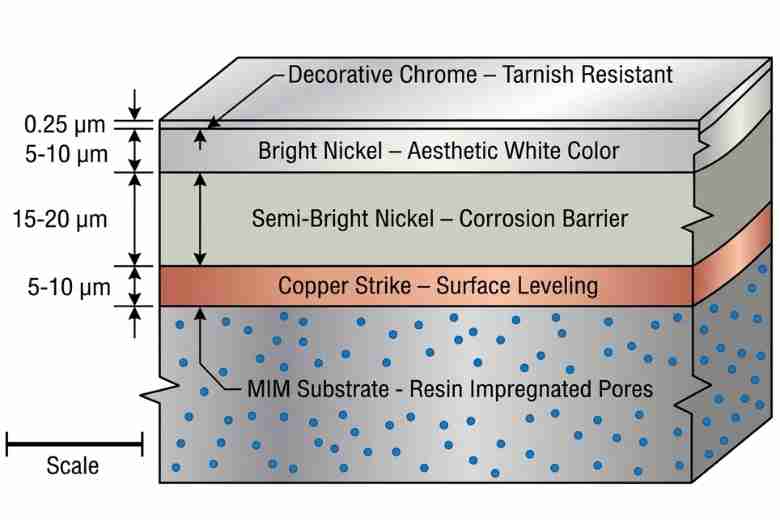
Common finishes include passivation, electropolishing, plating, PVD coating, shot peening, tumbling, and polishing. These improve corrosion resistance, appearance, wear properties, and biocompatibility. Learn more on our surface treatment page.
Q: How does Emitech ensure quality?
We follow a documented quality management system and use CMM inspection, optical measurement, density testing, metallographic analysis, and mechanical testing. First article inspection reports and material certificates are available on request — see our quality inspection capability.
Q: What part sizes are suitable for MIM?
MIM is best for parts weighing 0.1 g to 200 g, with maximum dimensions around 150 mm. The ideal weight range is 0.5 g to 50 g. Wall thickness should generally be 0.3 mm to 5 mm for best sintering results — details in our MIM size limitations guide.
Q: Do you provide tooling for custom MIM parts?
Yes. Emitech designs and builds MIM molds with shrinkage compensation, proper gate location, and suitable cavity counts. Tooling lead time is typically 15–25 days. We use hardened tool steels such as H13, P20, and DC53 for long production life. More on MIM tooling.
Q: Can you support medical and automotive qualification requirements?
Yes. We provide first-article dimensional inspection, material certificates, inspection reports, and process documentation for medical device OEMs and automotive suppliers. Our quality inspection systems support full traceability.
Get a Quote for Your Custom MIM Parts
Whether you need prototype samples, a pilot run, or high-volume production, Emitech can deliver custom MIM parts that meet your mechanical, cosmetic, and regulatory requirements. Upload your drawing or 3D model and receive a detailed quotation with DFM feedback within 24 hours.
Request a Custom MIM Parts Quote
Stainless steel, titanium, low-alloy steel & specialty alloys. Material certificates and lot-level traceability. Global delivery.
Upload Your Drawing →