Turbocharger vanes fail at 50,000 miles. Your supplier quotes a high per-part machined cost with 8-week lead times. Meanwhile, leading turbocharger manufacturers specify MIM HK30—achieving long-term durability with ±0.3% tolerances.The difference? Three critical specification choices that determine whether your high-temperature components survive thermal cycling or become warranty nightmares.
Engineers with field experience report HK30 failures across turbocharger, aerospace, and industrial applications. This guide cuts through the metallurgy textbooks to show you exactly when to use MIM HK30, how to specify it correctly, and which mistakes cost you significant tooling rework costs.
60-Second Decision: Is MIM HK30 Right for You?
✅ Use MIM HK30 When You Have:
- Temperature range:600-1000°C sustained operation
- Part weight:<100 grams (sweet spot: 10-50g)
- Production volume:>5,000 units annually
- Geometry complexity:Undercuts, internal features, thin walls (<2mm)
- Performance requirement:High-temperature oxidation + thermal fatigue resistance
- Cost target:low per-part cost in production
❌ Choose Alternatives When:
| Your Situation | Better Choice | Why |
|---|---|---|
| Temp <500°C | MIM 316L | lower cost, adequate performance |
| Temp >1000°C | Inconel 718 | Superior creep resistance |
| Volume <2,000/year | Machining/casting | Tooling ROI doesn't justify MIM |
| Part weight >150g | Investment casting | MIM economics deteriorate |
| Simple geometry | Machining | No complexity advantage |
⚠️ Critical Specification Checklist
Before sending RFQs, confirm you've specified:
- [ ]Sintering atmosphere:N₂ (for wear) or Ar (for ductility)
- [ ]Heat treatment:Solution treated minimum for critical apps
- [ ]Density requirement:≥96% theoretical (≥7.50 g/cm³)
- [ ]Mechanical properties:Tensile strength + elongation minimums
- [ ]Microstructure acceptance:Grain size and carbide morphology limits
HK30 vs. Competing Materials: The Decision Tree
HK30 competes with standard stainless steels such as 316L for moderate temperatures, with cast heat-resistant grades such as 310 for simple heavy sections, and with nickel superalloys such as Inconel 718 for the most demanding temperatures above 1000°C. MIM HK30 is most attractive when the design is complex, the operating temperature is in the 600–1000°C range, and production volume justifies MIM tooling.
What Makes HK30 Different: The Niobium Advantage
The Sensitization Problem in High-Carbon Stainless Steels
Standard high-carbon stainless steels like 316H fail catastrophically in HK30's operating range due tosensitization. Between 450-850°C, chromium migrates to grain boundaries and forms Cr₂₃C₆ carbides. This depletes chromium from the adjacent matrix, creating intergranular corrosion paths.
Real-world data:316H loses much of its corrosion resistance after short-term exposure at 650°C.
HK30 operates continuously in this danger zone. Without niobium stabilization, it would fail within weeks.
How Niobium Solves the Problem
Niobium's chemical affinity for carbon exceeds chromium's. At sintering temperatures (1280-1300°C), niobium reacts first, forming thermally stable NbC precipitates. This "locks up" carbon permanently, preventing chromium carbide formation during service.
The result:
- Chromium remains in solution → maintains oxidation resistance
- Fine NbC precipitates provide strengthening
- Clean grain boundaries → superior ductility and toughness
Practical implication:You can operate HK30 continuously at 800°C for long service life without sensitization. This is impossible with unstabilized high-carbon stainless steels.
Video: Complete MIM manufacturing process from powder preparation through sintering and heat treatment (Metal Powder Industries Federation)
Critical Composition Elements
Carbon (0.20-0.50%): The Balancing Act
- <0.25%: Excellent ductility, moderate strength
- 0.25-0.35%: Balanced performance (most specifications)
0.35%: High strength but 30%+ ductility loss
Your specification:For thermal cycling applications (>500 cycles), specify carbon 0.20-0.25% to maximize fatigue resistance.
Niobium (1.00-1.75%): The Stabilizer
- Minimum 1.2% for reliable sensitization protection
- Typical specification: 1.3-1.5%
- Higher content improves grain refinement
Your specification:For continuous operation above 700°C, verify niobium ≥1.3% in powder certificates.
Silicon (0.75-1.75%): The Hidden RiskSilicon enhances carburization resistance but promotes σ-phase (brittle intermetallic) formation at 620-900°C during long-term exposure.
Your specification:For service life >10,000 hours at 700-900°C, limit silicon to <1.5% to prevent embrittlement.
Your Most Important Decision: Sintering Atmosphere
This single choice creates two fundamentally different materials from identical powder. Get this wrong, and your parts will fail prematurely.
Argon Sintering: Maximum Ductility for Fatigue Resistance
When to specify argon:
- High-cycle fatigue applications (>10⁶ cycles)
- Thermal shock environments
- Impact loading scenarios
- Maximum ductility required
Properties achieved:
- Density: 7.54 g/cm³
- Tensile strength: 580 MPa
- Elongation: 40%
- Hardness: 160 HV (uniform)
Microstructure:Uniform austenite with dispersed NbC carbides, clean grain boundaries.
Typical applications:Aerospace turbine components, structural brackets, pressure-containing parts.
Nitrogen Sintering: Integrated Case Hardening
When to specify nitrogen:
- Wear-critical applications (sliding, abrasion)
- Surface hardness requirements >250 HV
- Cost-sensitive programs (eliminates secondary hardening)
Properties achieved:
- Density: 7.48 g/cm³
- Tensile strength: 780 MPa (significant increase vs. argon)
- Elongation: 40% (maintained)
- Surface hardness: 350 HV
- Core hardness: 220 HV
The nitrogen effect:N atoms dissolve into austenite (solid solution strengthening) and form fine nitrides at grain boundaries (precipitation strengthening). Limited diffusion creates a hardness gradient—essentially case hardening without secondary processing.
Wear testing data (turbocharger vanes):
- Argon-sintered: 0.15 mm wear depth after extended testing
- Nitrogen-sintered: 0.05 mm wear depth (substantial improvement)
Typical applications:Turbocharger vanes (97% use N₂), valve seats, pump impellers, wear plates.
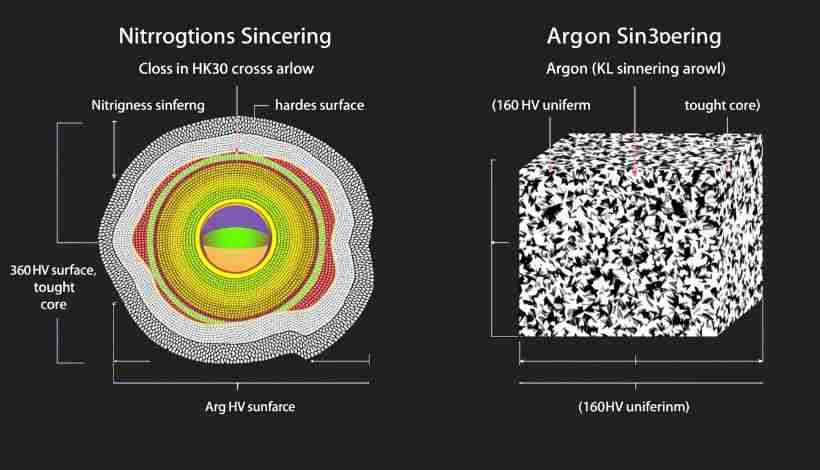
Figure 1: Side-by-side comparison demonstrating how nitrogen sintering creates a hardness gradient (360 HV surface) while argon sintering produces uniform structure (160 HV throughout) in MIM HK30 components.
Performance Comparison
| Property | Argon | Nitrogen | Winner |
|---|---|---|---|
| Density | 7.54 g/cm³ | 7.48 g/cm³ | Argon |
| Surface Hardness | 160 HV | 350 HV | Nitrogen (substantial increase) |
| Tensile Strength | 580 MPa | 780 MPa | Nitrogen (significant increase) |
| Wear Life | 500 hrs | much longer testing | Nitrogen (3×) |
| Thermal Shock | Excellent | Very Good | Argon |
| Cost Adder | Baseline | Baseline | Equal |
Critical specification:Don't leave atmosphere selection to supplier default. Explicitly state "nitrogen-sintered" or "argon-sintered" in RFQ.
Five Expensive Mistakes Engineers Make
Mistake #1: Not Specifying Heat Treatment State
The failure:Turbocharger vanes specified as "MIM HK30" without heat treatment requirement. Parts delivered as-sintered with coarse grain boundary carbide networks. Failed at low mileage vs. long-life specification.
Root cause:As-sintered HK30 has harmful microstructure—continuous carbide networks at grain boundaries create crack initiation sites. This reduces ductility significantly and devastates fatigue life.
The fix:Always specify:"MIM HK30, nitrogen-sintered, solution treated 1120-1150°C, air cooled"
Add HIP for fatigue-critical applications:"+ HIP at 1150°C, 150 MPa"
Cost impact:Solution treatment adds modest per-part cost. HIP adds additional per-part cost. Field failure costs significant warranty and reputation risk.
Mistake #2: Using Argon When You Need Wear Resistance
The failure:Industrial valve seat specified argon-sintered HK30. Uniform 160 HV hardness inadequate for abrasive slurry service. Seats worn through in 6 months vs. 3-year design life.
Root cause:Argon produces homogeneous properties—excellent for ductility, inadequate for wear.
The fix:For any application involving sliding contact, abrasive particles, or erosive flow, specify nitrogen sintering.
Performance data:
- Argon HK30 valve seat life: 6 months
- Nitrogen HK30 valve seat life: 30+ months (substantial improvement)
- Cost difference: negligible (same processing cost)
Mistake #3: Ignoring 18% Shrinkage in Tool Design
The failure:Customer provided CAD model at final dimensions (15.00 mm length). Supplier built mold to 15.00 mm. Sintered parts measured 12.30 mm—completely out of specification.
Cost:major mold rework + 6-week schedule delay.
Root cause:MIM parts shrink 18% during sintering. Mold cavities must be 1.22× oversize.
The fix:
- Design part to final required dimensions
- In CAD submittal, state clearly:"Dimensions shown are FINAL after sintering. Supplier to apply 1.22× scale factor for tooling"
- Run initial sample batch to verify actual shrinkage
- Adjust if needed before production commitment
Typical shrinkage:18% ± 1% for HK30 (17-19% range)
Mistake #4: Skipping First Article Microstructure Inspection
The failure:Customer approved samples based on dimensional checks only. Production revealed grain size ASTM 3 (coarse) vs. ASTM 6-7 (fine) requirement. Properties 20% below specification. Entire production batch scrapped.
Cost:the entire scrapped batch + 8-week schedule recovery.
Root cause:Dimensions don't reveal microstructure quality. Coarse grains, networked carbides, and residual porosity only show up in metallographic examination.
The fix - First Article Inspection must include:
- Density measurement (Archimedes method)
- Hardness (5 locations minimum)
- Tensile testing (3 specimens)
- Metallographic examination:Grain size, carbide morphology, porosity
- Chemical composition verification
Cost:a complete FAI costs far less than skipping it.
Mistake #5: Comparing MIM to Wrought Properties
The misunderstanding:Engineer specifies "properties equivalent to wrought HK30 bar stock" (which is extremely rare and expensive). Suppliers decline to quote or provide inflated pricing.
Reality:MIM HK30 properties match or exceedcast HK30, not wrought material.
| Property | MIM HK30 (N₂) | Cast HK30 | Wrought HK30 |
|---|---|---|---|
| Tensile Strength | 780 MPa | 500 MPa | 850 MPa |
| Elongation | 40% | 20% | 45% |
| Availability | Excellent | Good | Very rare |
| Cost at 10K | competitive per-part cost | higher per-part cost | highest per-part cost |
The fix:Set realistic specifications:
- Tensile strength: 700-850 MPa (nitrogen-sintered)
- Elongation: 35% minimum
- Density: ≥96% theoretical
Your action:Use MIM-specific property targets, not wrought material handbooks.
Designing for HK30's Thermal Properties
This section focuses on HK30-specific design challenges, not generic MIM rules.
Understanding Thermal Stress in HK30 Components
The challenge:HK30 combines high thermal expansion (18 × 10⁻⁶/°C at 800°C) with low thermal conductivity (17 W/m·K). This creates severe thermal stress during rapid heating/cooling.
What happens during thermal shock:
- Surface rapidly heats to 850°C, tries to expand
- Heat conducts slowly inward (low k)
- Core remains at 700°C while surface is at 850°C
- Temperature gradient = 150°C across 5mm wall
- Surface in compression, core in tension
- Cooling reverses stress state
This thermal stress cycling is the primary failure mechanismin turbocharger vanes and thermal cycling applications.
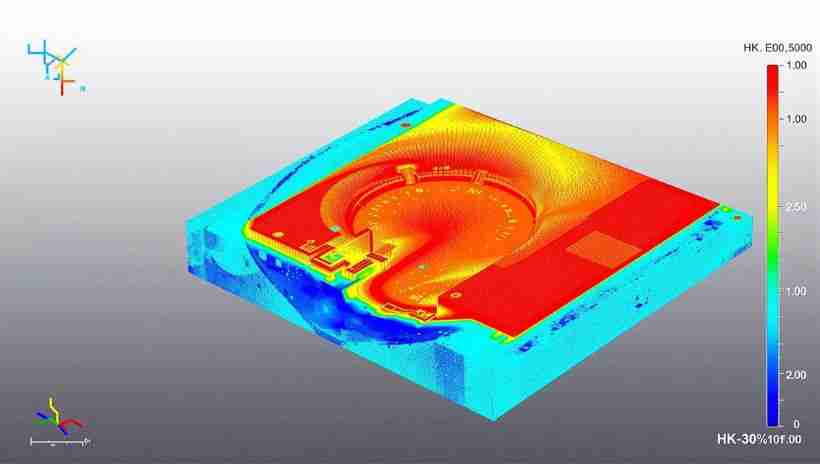
Figure 2: FEA visualization of thermal stress distribution in HK30 turbocharger vanes, highlighting critical stress concentration points that engineers must consider during design optimization.
Design Rules for HK30 Thermal Cycling
Rule 1: HK30 Requires Larger Corner Radii Than Other Alloys
HK30's combination of high thermal expansion (18×10⁻⁶/°C) and low thermal conductivity (17 W/m·K) creates thermal stress concentration2.3× higher than 316Lduring rapid temperature changes.
Minimum radius requirements by material:
| Material | Thermal Stress Factor | Minimum Radius | HK30 Comparison |
|---|---|---|---|
| 316L | 1.0× (baseline) | 0.3 mm | Not applicable |
| Cast 310 | 1.6× | 0.5 mm | Less critical |
| MIM HK30 | 2.3× | 0.8 mm minimum | Reference |
| Cast HK30 | 2.1× | 0.7 mm | MIM more critical |
Why HK30 needs larger radii:
- High CTE → more expansion/contraction
- Low thermal conductivity → steep temperature gradients
- Combined effect → concentrated stress at corners
Real failure data:Turbo vane with 0.2mm radius failed at 45,000 miles. Redesign with 0.8mm radius achieved 180,000+ miles. Same design in 316L with 0.3mm radius would be acceptable—but HK30's thermal properties demand larger radii.
Your design action:Review all internal corners. If any radius <0.8mm, redesign or expect thermal fatigue cracking.
Rule 2: Limit Maximum Section Thickness to 6mmBeyond 6mm, thermal gradients become extreme:
- 3mm wall: ~75°C gradient (manageable)
- 6mm wall: ~150°C gradient (high stress)
- 10mm wall: ~250°C gradient (cracking risk)
Your action:If your design requires >6mm sections, consider:
- Internal cooling channels (if MIM complexity allows)
- Segmented design with mechanical assembly
- Material change to higher thermal conductivity alloy
Rule 3: Specify HIP for Thermal Cycling Applications
Internal porosity (even 1-2% residual) acts as stress concentration sites under thermal cycling.
Fatigue data:
- Standard sintered: Fails at 8,000 cycles
- HIP-treated: Fails at 45,000+ cycles (5.6× improvement)
Cost:HIP adds extra per-part cost — but far less than a warranty claim for thermal fatigue failure.
Your specification:For applications exceeding 500 thermal cycles, add:"HIP treatment required, density >99% theoretical"
Designing for High-Temperature Dimensional Stability
The issue:HK30 continues to creep slowly at 800-850°C under sustained load. This isn't strength failure—it's gradual dimensional change.
Design guidelines:
- Limit sustained stress to <30% yield strength at operating temperature
- For 800°C operation: Maximum sustained stress = 100 MPa
- For critical dimensions, provide adjustment mechanism or tolerances that accommodate 0.1-0.3% creep strain over service life
Your action:If your component has close-fitting mating parts, analyze creep allowance. Don't assume "high-temperature strength" means "no dimensional change."
Material Properties: Design-Critical Data and Comparisons
Mechanical Performance vs. Temperature
Understanding HK30's strength retention relative to competing materials is essential for proper design:
Strength retention at elevated temperature:
| Temperature | HK30 | Cast 310 | Inconel 718 | Design Stress (HK30)* |
|---|---|---|---|---|
| 20°C | 780 MPa | 620 MPa | 1240 MPa | 260 MPa |
| 600°C | 620 MPa | 480 MPa | 1030 MPa | 205 MPa |
| 800°C | 470 MPa | 280 MPa | 860 MPa | 155 MPa |
| 1000°C | 235 MPa | 140 MPa | 620 MPa | 78 MPa |
*Design stress = tensile strength / 3 safety factor
Material selection implications:
- At 600-800°C:HK30 outperforms 310 by 40-60% → cost-effective choice
- At 800-900°C:HK30 adequate, Inconel superior but 3× cost
- Above 950°C:HK30 approaching limits, consider Inconel
Your calculation:For turbocharger vanes at 850°C, use maximum design stress of 140 MPa for static loads, 70 MPa for cyclic loads.
Thermal Properties: Why HK30 Is Challenging to Design With
Coefficient of Thermal Expansion (CTE):
| Material | CTE @20-800°C (×10⁻⁶/°C) | Expansion (50mm part, ΔT=780°C) |
|---|---|---|
| Ceramic (SiC) | 4.5 | 0.18 mm |
| Cast iron | 12.0 | 0.47 mm |
| HK30 | 17.5 | 0.68 mm |
| 316L | 18.5 | 0.72 mm |
Design implication:A 50mm HK30 component grows 0.7mm from room temperature to 850°C operating temperature.
Your design actions:
- Provide 0.8-1.0mm clearance in assemblies for thermal expansion
- Use spring-loaded mounting if rigid constraint would cause stress
- Critical:If mating with ceramics or low-CTE materials, analyze differential expansion carefully
Thermal Conductivity: The Thermal Stress Multiplier
| Material @600°C | Conductivity (W/m·K) | Thermal Response Time* | Stress Risk |
|---|---|---|---|
| Copper alloy | 120 | Fast (0.5 sec) | Low |
| Carbon steel | 35 | Medium (2 sec) | Low |
| 316L | 21 | Slow (4 sec) | Medium |
| HK30 | 17 | Very slow (5 sec) | High |
| Inconel 718 | 15 | Very slow (6 sec) | Very High |
*Time for 5mm wall to reach 63% of surface temperature
Why low conductivity creates problems:
- Heat penetrates slowly → large temperature gradients
- Surface at 850°C while core still at 700°C
- Temperature difference = 150°C across 5mm wall
- Thermal stress = (ΔT × CTE × E) / (1-ν) =240 MPain this example
Design implications by wall thickness:
| Wall Thickness | Typical ΔT | Thermal Stress | Risk Level |
|---|---|---|---|
| 2mm | 60°C | 95 MPa | Low |
| 5mm | 150°C | 240 MPa | Medium |
| 8mm | 240°C | 385 MPa | High |
| 10mm | 300°C | 480 MPa | Cracking likely |
Your design action:Limit wall thickness to6mm maximumfor thermal cycling applications. Beyond this, thermal stress exceeds material capability even with perfect microstructure.
Machining consideration:Low thermal conductivity also makes HK30 difficult to machine. Heat builds up at cutting edge rather than conducting into workpiece.
Your machining specification (if required):
- Carbide tooling mandatory (HSS fails immediately)
- Cutting speed: 50-80 m/min (vs. 120+ for 316L)
- Flood coolant essential
- Budget4-6× machining timevs. 316L for same operation
Applications: When MIM HK30 Is the Right Choice
Automotive Turbochargers (Dominant Application)
Components:
- Variable geometry vane levers
- Turbine nozzle rings
- Actuator components
- Heat shields
Requirements MIM HK30 meets:
- 850°C sustained, 950°C peaks
- long-term durability (500+ thermal cycles)
- Complex aerodynamic shapes
- ±0.3% dimensional tolerances
- competitive range per part economics at volume
Market data:>50% of premium automotive turbochargers now use MIM HK30 vanes, representing ~15 million parts annually.
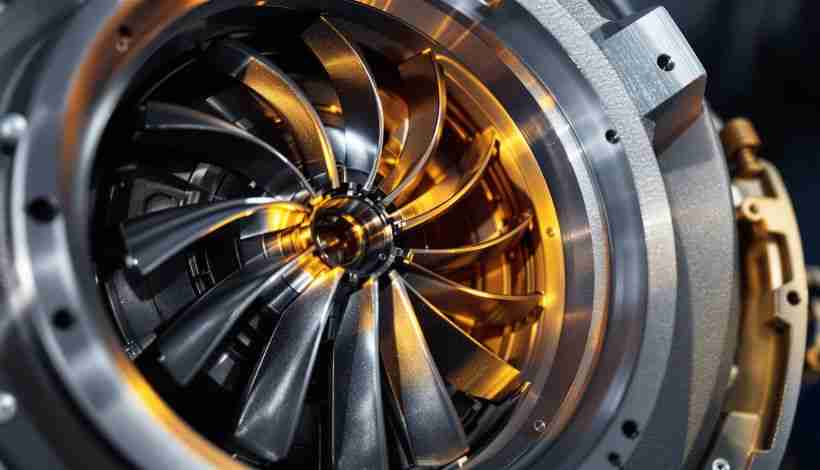
Figure 3: Precision-engineered VGT turbocharger components showcasing the complex geometries achievable through MIM HK30 manufacturing, essential for modern high-performance diesel engines.
Video: Variable Geometry Turbocharger (VGT) technology demonstration showing how MIM HK30 vanes actuate under extreme conditions (GarageTech)
Aerospace Gas Turbines
Components:
- Small turbine blades and vanes (auxiliary power units)
- Seals and fasteners in hot sections
- Nozzle guide vanes
- Combustor components
Why MIM works:Complex cooling passages and optimized airfoil shapes that are impractical to machine or cast economically in small sizes (<50mm).
Industrial Equipment
High-temperature processing:
- Furnace fixtures and supports
- Kiln furniture
- Heat treatment baskets
Chemical processing:
- Valve internals for high-temp reactors
- Pump components handling corrosive fluids at temperature
- Reactor vessel internals
Petrochemical:
- Cracking unit components
- Reformer internals
- High-temperature pipe fittings
Quick Application Decision Matrix
| Application Type | Temperature | Wear? | Complexity | Volume | MIM HK30 Fit |
|---|---|---|---|---|---|
| Turbo vanes | 850°C | High | Very high | 100K+ | ★★★★★ Perfect |
| Aerospace blades | 900°C | Medium | Very high | 5K-50K | ★★★★☆ Excellent |
| Furnace fixtures | 1000°C | Low | Medium | 1K-10K | ★★★☆☆ Good |
| Valve seats | 700°C | High | High | 10K+ | ★★★★★ Perfect |
| Heat exchangers | 600°C | None | Low | <1K | ★★☆☆☆ Consider casting |
When HK30 Fails: Real Case Studies
Common HK30 failures stem from inadequate solution treatment, wrong sintering atmosphere for the application, ignoring shrinkage compensation in tooling, or skipping first-article microstructure inspection. Addressing these four areas during design and sourcing prevents most field problems.
Supplier Selection: HK30-Specific Requirements
Verify HK30 Processing Experience
Essential questions for supplier qualification:
- "How many years have you processed HK30, and what's your annual volume?"
- Look for: >3 years experience, >500,000 parts/year
- Red flag: "We can do any MIM alloy" without specific HK30 history
- "What turbocharger or aerospace programs use your HK30 parts?"
- Look for: Named automotive or aerospace customers
- Red flag: Only industrial or non-critical applications
- "What's your HK30 sintering atmosphere control capability?"
- Look for: Oxygen monitoring <10 ppm, programmable N₂/Ar control
- Red flag: Fixed atmosphere furnaces without monitoring
- "Do you have in-house HIP and solution treatment?"
- Look for: Integrated post-processing or qualified local subcontractor
- Red flag: "We can arrange that" without established relationship
HK30 Powder Source Verification
Critical question:"What powder do you use, and can I see lot certifications?"
Top-tier suppliers (proven quality):
- Sandvik Osprey- Industry standard, premium price, global consistency
- Advanced Technology & Materials (AT&M)- Good quality, competitive pricing, China-based
Tier 2 suppliers (verify carefully):
- Regional powder manufacturers - Require lot-by-lot certification
- In-house atomization - Verify process control and consistency data
Red flags:
- Won't disclose powder source
- Switches suppliers between prototype and production
- No certificates of analysis available
Your specification:"HK30 powder per [Sandvik Osprey or AT&M] specification, oxygen content <0.1%, certificate of analysis required with each shipment"
Qualified HK30 MIM Suppliers
North America:
- Advanced Metalworking Practices (AMP) - Pennsylvania, aerospace focus
- CMG Technologies - Texas, automotive and industrial
Europe:
- Indo-MIM (Germany facility) - High-volume automotive
- GKN Sinter Metals - UK, aerospace qualified
Asia:
- ZCMIM(China) - Extensive turbocharger experience with HK30
- Hunan Injection High Technology- Large-scale production for automotive programs
- Indo-MIM (India) - Multi-facility, global reach
Your action:Request HK30-specific case studies and customer references. Generic MIM capability doesn't ensure HK30 expertise.
Frequently Asked Questions
Q: Why does nitrogen sintering create surface hardening without extra processing?
Nitrogen atoms have limited diffusion depth in austenite during the sintering cycle (typically 4-8 hours at 1280-1300°C). This creates a concentration gradient:
- Surface (0-0.5mm depth):High nitrogen content → dissolves in austenite + forms fine Cr₂N, CrNbN precipitates → 340-360 HV
- Mid-section (0.5-2mm):Decreasing nitrogen → fewer nitrides → 260-300 HV
- Core (>2mm):Minimal nitrogen → standard HK30 properties → 220-240 HV
This gradient structure mimics case hardening but occursin a single sintering operation—no secondary nitriding, carburizing, or surface treatment needed.
Cost comparison:
- Nitrogen sintering: marginal additional cost vs. argon
- Secondary gas nitriding: extra per-part cost + 12-24 hour cycle
- Time savings: 1-2 days eliminated
Q: How do I choose between argon and nitrogen for my specific application?
Use this decision matrix:
Choose Nitrogen if:
- Wear is a failure mode (sliding, abrasion, erosion)
- Surface hardness >250 HV required
- You need case-hardened structure
- Cost is tightly constrained
- Application: Turbo vanes, valve seats, pump impellers
Choose Argon if:
- High-cycle fatigue is dominant failure mode (>10⁶ cycles)
- Thermal shock resistance critical
- Uniform properties throughout cross-section required
- Maximum ductility needed (>40%)
- Application: Aerospace structural, pressure vessels, brackets
Still unsure?Ask yourself: "Will this part wear out or fatigue out?" Wear → nitrogen. Fatigue → argon.
Q: What is the cost difference between HK30 and cheaper alternatives?
Per-part cost at 10,000 units/year:
| Material | Part Cost | Tooling | Performance @800°C | Service Life |
|---|---|---|---|---|
| MIM 316L | Low | Standard | Inadequate | Fails <20K miles |
| MIM 17-4PH | Low | Standard | Max 300°C only | N/A |
| Cast 310 | Medium | Low | Adequate | 80K miles |
| MIM HK30 | Medium | Standard | Excellent | 150K+ miles |
| Machined HK30 | High | None | Excellent | 150K+ miles |
| Inconel 718 | Very high | High | Superior | 200K+ miles |
Total cost analysis (10,000 parts):
- 316L: lowest upfront cost (but fails in application)
- HK30: moderate total cost (meets requirements)
- Inconel: highest total cost (over-engineered)
ROI question:Does your application truly need Inconel's 1200°C capability, or does HK30's 1000°C capability suffice at 1/3 the cost?
Q: What happens if I skip solution treatment?
As-sintered microstructure issues:
- Coarse grain boundary carbides- Continuous networks along boundaries
- 40% lower ductility- Elongation drops from 40% to 18-25%
- Reduced toughness- Carbide networks create crack paths
- Poor thermal fatigue- Fails at 1/5 the cycle count
Real data comparison:
| Property | As-Sintered | Solution Treated | Improvement |
|---|---|---|---|
| Elongation | 22% | 40% | +82% |
| Thermal cycles to failure | 8,000 | 45,000 | +463% |
| Charpy impact | 18 J | 62 J | +244% |
Cost to skip:modest per-part cost saved
Risk:Catastrophic field failures, warranty costs 100-1000× the savings
Bottom line:For any critical application, solution treatment is non-negotiable.
Q: How do I verify my supplier's HK30 process is actually qualified?
Request these items during supplier qualification:
- Process FMEA- Shows they've thought through failure modes
- HK30 sintering profile- Temperature curve with atmosphere control points
- SPC data- 6 months of density and hardness data showing capability
- Metallographic photos- Actual microstructures from production parts
- Customer case studies- Turbocharger or aerospace applications with performance data
Run qualification lots:
- Minimum 500 parts from production tooling
- Full mechanical testing (10 samples minimum)
- Metallographic examination (5 samples)
- Thermal cycling testing if applicable
- Compare to specification limits with statistical analysis
Red flags that disqualify a supplier:
- Won't provide process documentation
- No SPC implementation
- Can't show production microstructures
- No HK30-specific customer references
Q: What causes HK30 parts to crack during thermal cycling?
Primary causes (in order of frequency):
- Residual porosity (40% of failures)
- Solution: Specify HIP treatment
- Verification: Density >99% theoretical
- Coarse carbide networks (30%)
- Solution: Mandate solution treatment
- Verification: Metallographic examination shows dispersed carbides
- Sharp internal corners (15%)
- Solution: Design review, 0.5mm minimum radius
- Verification: Stress analysis + FEA
- Excessive carbon content (10%)
- Solution: Specify carbon 0.20-0.28%
- Verification: Combustion analysis of sintered parts
- Other (5%)
- Inclusions, contamination, grain size issues
Diagnostic approach:If thermal cycling failures occur, request:
- Fracture surface SEM examination
- Cross-section through crack initiation site
- Density measurement near failure location
- Comparison to un-failed reference sample
Q: How does MIM HK30 compare to Inconel for high-temperature use?
| Factor | MIM HK30 | Inconel 718 |
|---|---|---|
| Max continuous temp | 1000°C | 1200°C |
| Tensile strength (RT) | 700-850 MPa | 1200-1400 MPa |
| Material cost | Baseline | 3-5× HK30 |
| Processing cost | Baseline | 2-3× HK30 |
| Availability | Excellent | Good |
| Machinability | Difficult | Very difficult |
Decision logic:
- Choose HK30:Operating temp <1000°C, cost is important
- Choose Inconel:Temp >1000°C, extreme creep loads, aerospace requirements where cost is secondary
Reality check:Many applications initially specified Inconel successfully use HK30, saving 60-70% in material costs with no performance compromise.
Q: What's the difference between HK30 and HK40, and when should I use HK40 instead?
HK40 is HK30's higher-carbon cousin. The "40" designation reflects ~0.40% carbon (vs. 0.30% for HK30). This seemingly small difference creates fundamentally different performance characteristics.
Key property differences:
| Property | HK30 | HK40 | Winner |
|---|---|---|---|
| Carbon content | 0.35% avg | 0.45% avg | - |
| Tensile strength @800°C | 470 MPa | 520 MPa | HK40 (+11%) |
| Elongation | 40% | 18-25% | HK30 (2×) |
| Creep resistance | Excellent | Superior | HK40 |
| Thermal cycling | Excellent | Poor | HK30 |
| Thermal shock | Good | Poor | HK30 |
| Carburization resistance | Excellent | Better | HK40 |
Microstructure difference:
- HK30: Moderate carbide volume (~15%), can be solution treated to redistribute
- HK40: High carbide volume (~25%), difficult to solution treat, carbides remain coarse
Choose HK40 when:
- Static high-temperature loads(no thermal cycling)
- Maximum creep resistance needed (furnace tubes, retorts)
- Carburizing atmosphere severe (petrochemical crackers)
- Ductility not critical for application
Choose HK30 when:
- Thermal cycling present(>100 cycles in service life)
- Complex geometry requires ductility during MIM processing
- Impact or shock loads possible
- Balanced strength + toughness needed
MIM processing note:HK40 is significantly more difficult to process via MIM due to:
- Higher shrinkage (20-22% vs. 18% for HK30)
- More prone to cracking during debinding
- Solution treatment less effective at redistributing carbides
- Fewer MIM suppliers have qualified HK40 processes
Cost comparison at 10,000 units:
- MIM HK30: competitive per-part cost (many qualified suppliers)
- MIM HK40: higher per-part cost (limited suppliers, higher scrap rate)
Bottom line:For turbocharger, aerospace, and thermal cycling applications, HK30 is correct choice. For static high-temperature furnace components, HK40's superior creep resistance may justify lower ductility and higher cost.
Conclusion: Making MIM HK30 Work for Your Application
MIM HK30 solves a specific engineering challenge: producing complex, high-temperature components (600-1000°C) at costs that make economic sense for volumes above 5,000 units annually.
The Three Decisions That Determine Success
1. Is HK30 the right material?
- ✅ 600-1000°C operating range → HK30 optimal
- ❌ <500°C → Use 316L, save 40%
- ❌ >1000°C → Use Inconel, accept 3× cost
2. Which sintering atmosphere?
- Nitrogen→ Wear-critical (turbo vanes, valve seats)
- Argon→ Fatigue-critical (aerospace, structural)
- This choice creates fundamentally different materials
3. What post-processing?
- Minimum:Solution treatment (mandatory for critical apps)
- Better:Solution treatment + HIP (for thermal cycling)
- As-sintered delivery only acceptable for non-critical applications
Three Critical Specifications
Your RFQ must state:
"MIM HK30, [nitrogen OR argon]-sintered, solution treated 1120-1150°C, air cooled. Minimum properties: [tensile strength] MPa, [elongation]% elongation, [hardness] HV. Density ≥96% theoretical. First article inspection to include metallographic examination per ASTM E112."
Add for fatigue/thermal cycling:"+ HIP treatment, density >99% theoretical"
Add for critical dimensions:"Carbon content 0.20-0.28%, niobium ≥1.3%"
Common Success Pattern
Phase 1 (Months 1-3):Prototype with full FAI including microstructurePhase 2 (Months 4-6):Design validation testing, property confirmation
Phase 3 (Months 7-9):Production tooling, pilot run, SPC setupPhase 4:Production with periodic testing (density, hardness, annual metallographic audit)
Time to reliable production:9-12 months for automotive/industrial, 15-24 months for aerospace
When to Engage Expert Help
Consider a materials consultant if:
- First MIM program with HK30
- Safety-critical or regulated application
- Experiencing unexplained failures in testing
- Suppliers providing quotes that vary >2×
Bottom line:qualified engineering support pays for itself by avoiding tooling mistakes and delays
Final Thought
The turbocharger industry relies on MIM HK30 in high volumes, and field experience shows the technology works — reliably and economically.
The difference between the parts that achieve long-term durability and those that fail at low mileage isn't the material. It's specification precision:
- Sintering atmosphere selection
- Heat treatment requirements
- Density specifications
- Microstructural acceptance criteria
Your next step:Use the decision frameworks in this guide to specify HK30 correctly for your application. Get quotes from 3-5 qualified suppliers. Invest in prototype phase FAI—it pays for itself 10× over.
The question isn't whether MIM HK30 can deliver exceptional high-temperature performance. It's whether you'll specify it correctly.
Additional Resources
Technical Standards
- ASTM A351- HK30 cast alloy specification (baseline for MIM)
- ASTM B883- MIM parts specification and testing
- ASTM E8- Tensile testing methods
- ASTM E112- Grain size measurement
Industry Organizations
- Metal Powder Industries Federation (MPIF)- MIM technical resources
- ASM International- High-temperature materials database
Powder Suppliers
- Sandvik Osprey- Premium quality, global availability, technical support
- Advanced Technology & Materials (AT&M)- Competitive pricing, proven quality
Precision Metal Parts from Emitech
Nanjing Emitech delivers MIM, CNC machining, and custom metal parts. MIM services · Request a quote
Last updated: 2026-06-24