
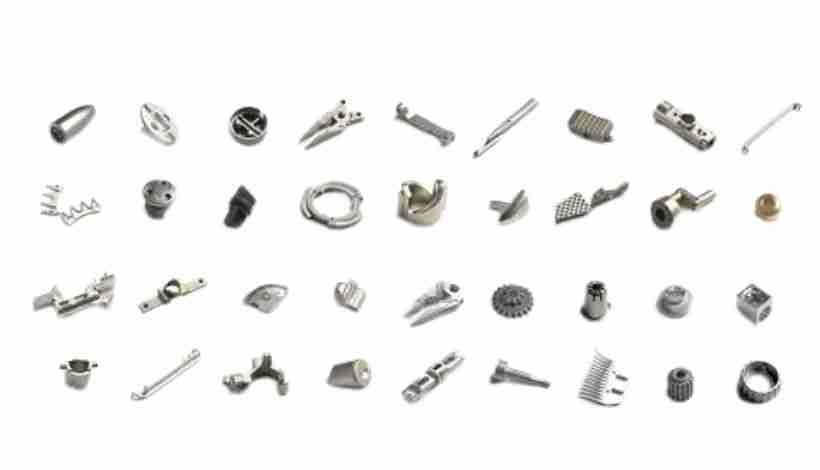
Metal Injection Molding delivers high-density parts at scale, designed to support FDA and ISO 13485 compliance while reducing secondary operations.
Why MIM Matters: Technical and Economic Reality
When you evaluate manufacturing options for medical components, the decision often comes down to a simple equation: complexity × volume ÷ cost = manufacturing method. MIM wins this equation when complexity is high and volume exceeds 10,000 units annually.
The Core Value Proposition
| Factor | CNC Machining | Investment Casting | MIM |
|---|---|---|---|
| Complex geometry cost impact | High increase | Moderate increase | Low impact |
| Minimum economic volume | 1 unit | 1,000 units | 10,000 units |
| Typical tolerances | ±0.025mm | ±0.1-0.2mm | ±0.3% of dimension |
| Material utilization | 30-60% | 60-80% | 95-98% |
| Lead time (production) | Days-weeks | Weeks | Hours |
Material Properties You Can Rely On
MIM achieves mechanical properties that matter for medical applications:
- Density: 95-99% of theoretical (typically 97-98%)
- Tensile strength: 90-95% of wrought material
- Fatigue strength: 85-90% of wrought material
- Elongation: 80-95% of wrought material
These properties exceed requirements for most medical applications, particularly when you consider the geometric advantages MIM provides.
Critical Materials for Medical MIM
Primary Material Selection Matrix
| Material | UTS (MPa) | Hardness | Key Application | Cost Index |
|---|---|---|---|---|
| 316L SS | 520-580 MPa | 60-95 HRB | General surgical, orthodontic | 1.0 |
| 17-4PH SS | 900-1310 | 28-42 HRC | Cutting instruments | 1.2 |
| Ti-6Al-4V | 860-1170 | 30-36 HRC | Permanent implants | 3.5 |
| CoCrMo | 850-1350 | 35-45 HRC | Wear surfaces | 2.8 |
*Cost index relative to 316L stainless steel
The 12 Critical Applications: Technical Deep Dive
1. Orthodontic Brackets: Economics at Scale
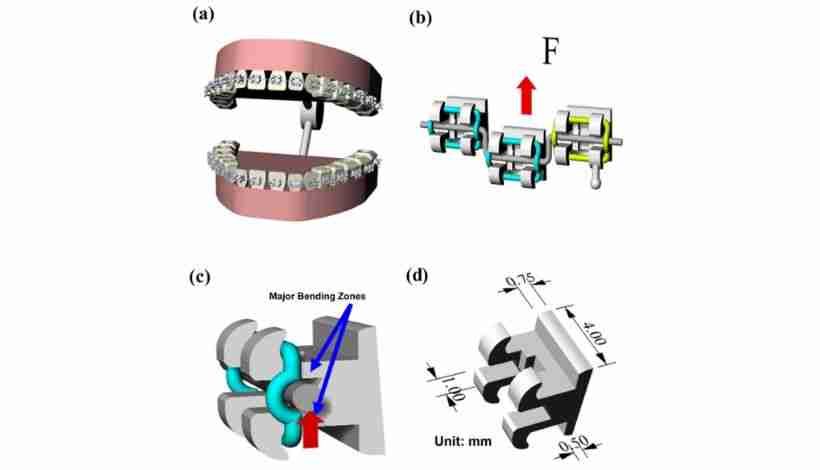
The Challenge: Machine a 0.1g bracket with compound curves, precise slots, and integrated hooks.The MIM Solution: Net-shape production can substantially reduce unit cost compared with machined brackets.
Technical Requirements:
- Slot tolerance: ±0.0005" (±12.7μm)
- Slot sizes: 0.018" or 0.022"
- Base radius: Compound curve matching tooth anatomy
- Annual global volume: >500 million units
Process Control Points:
- Feedstock metal loading: 60±1% by volume
- Sintering temperature: 1360±10°C for 316L
- Shrinkage factor: 1.18±0.002
- Density achieved: >98% theoretical
Leading manufacturers have used MIM conversion to reduce bracket cost while improving slot dimensional consistency.
2. Laparoscopic Jaw Mechanisms: Complexity Without Cost Penalty
The Challenge: Create articulating jaws with integrated pivot, spring retention, and cautery connection in 5mm diameter.The MIM Solution: Consolidate 8-12 machined parts into 2-3 MIM components.
Performance Specifications:
- Jaw bite force: >20N at tip
- Articulation range: ±90°
- Cautery compatibility: 40W monopolar
- Autoclave cycles: >500 at 134°C
Material Selection: 17-4PH H900 condition
- Yield strength: 1170 MPa
- Fatigue limit: 490 MPa
- Corrosion rate: <0.1 μm/year
Manufacturing Advantage: Part consolidation can eliminate multiple assembly operations, reduce potential failure points, and shorten manufacturing time per unit.
3. Biopsy Forceps: Precision in Miniature
The Challenge: Twin cup design with razor edges in 2.3mm diameter.The MIM Solution: Net-shape cups with integrated cutting geometry.
Critical Dimensions:
Cupdiameter: 2.3±0.05mmWallthickness: 0.3±0.03mmEdgeradius: <50μmCupdepth: 1.5±0.05mmFenestration: 0.8mmdiameterQuality Metrics:
- Sample integrity: >95% intact tissue capture
- Edge retention: >100 samples before resharpening
- Histological quality: <5% crush artifact
4. Spinal Pedicle Screws: Strength Meets Sophistication
The Challenge: Variable pitch threads with cannulation and polyaxial head in Ti-6Al-4V.The MIM Solution: Single-step formation of complex thread geometry.
Design Features:
- Dual lead thread: 2.5mm/1.25mm pitch
- Core diameter taper: 0.5° included angle
- Cannulation: 1.2mm ±0.05mm
- Torque to failure: >8.5 Nm
Osseointegration Enhancement:
- Surface roughness: Ra 1.5-2.0μm (as-sintered)
- BIC (Bone-to-Implant Contact): improves over the healing period
- Push-out strength: >850N at 8 weeks
5. Dental Implant Abutments: Precision Connections
The Challenge: Internal hex with 6° taper and emergence profile in one part.The MIM Solution: Complex internal/external geometry without assembly.
Interface Specifications:
- Hex flat-to-flat: 2.5mm ±0.015mm
- Rotational play: <2° at 35 Ncm
- Microgap: <10μm under load
- Bacterial seal: >99.9% effective
Surface Requirements:
- Subgingival: Ra 0.2μm (inhibits bacterial adhesion)
- Transgingival: Ra 0.5-1.0μm (promotes soft tissue attachment)
- Supragingival: Ra 1.5-2.0μm (retention for cement)
6. Drug Delivery Mechanisms: Reliability Through Repetition
The Challenge: Dose accuracy ±3% across 10,000 actuations.The MIM Solution: Precision gear trains and ratcheting mechanisms.
Component Specifications:
- Gear module: 0.4mm
- Pitch diameter tolerance: ±0.02mm
- Backlash: <0.15mm cumulative
- Spring force consistency: ±5% at 2N
Validation Data:
- Dose delivery consistency: validated across the design life
- Mechanism failure rate: validated per shelf-life requirements
- Post-sterilization dimensional change: validated within specification
7. Micro-Catheter Tips: Beyond Machining Limits
The Challenge: 0.5mm OD tip with internal features.The MIM Solution: Micro-MIM with 25μm feature resolution.
Achieved Capabilities:
- Wall thickness: 0.15mm ±0.02mm
- Internal channels: 3×0.2mm
- Surface finish: Ra 0.3μm
- Radiopacity: meets typical imaging requirements
8. Trauma Plates: Anatomical Precision
The Challenge: Patient-specific contouring in 1.0mm thickness.The MIM Solution: Near-net anatomical shapes reducing OR time.
Mechanical Requirements:
- 4-point bend strength: >2.5× expected load
- Fatigue: >10⁶ cycles at physiological load
- Screw hole true position: ±0.1mm
- Plate flatness: <0.2mm over 50mm length
9. Robotic Surgery Wrist Assemblies: Ultimate Dexterity
The Challenge: 7 DOF in 8mm envelope with force feedback.The MIM Solution: Integrated planetary gears and cable guides.
System Requirements:
- Gear ratio accuracy: ±2%
- Backlash: <0.3° cumulative
- Cable guide radius: 2.5mm minimum
- Positional repeatability: ±0.1mm
Part count reduction: 24 machined components → 6 MIM parts
10. Hearing Aid Mechanisms: Silent Precision
The Challenge: Non-magnetic, moisture-resistant mechanisms under 5mm.The MIM Solution: Complex geometries in titanium or austenitic stainless steel.
Environmental Requirements:
- Magnetic permeability: <1.01
- Moisture ingress: IPX8 rated design
- Acoustic damping: >30dB at 1kHz
- Dimensional stability: ±0.02mm over 5 years
11. Cardiovascular Stent Delivery Components
The Challenge: Precise deployment mechanisms in blood contact.The MIM Solution: Biocompatible actuators with integrated features.
Hemocompatibility Requirements:
- Hemolysis: <2% (ISO 10993-4)
- Platelet adhesion: <20% coverage
- Surface finish: Ra <0.2μm
- Particulate: <10 particles >25μm per device
12. Orthopedic Joint Trial Components
The Challenge: Full range of trial sizes with precise increments.The MIM Solution: Cost-effective production of 15-20 size variations.
Dimensional Control:
- Size increments: 2mm ±0.05mm
- Angular accuracy: ±0.5°
- Surface profile: ±0.1mm from CAD
- Set completeness: 100% dimensional verification
Process Validation: Ensuring Medical Grade Quality
Critical Process Parameters (CPP) Monitoring
| Parameter | Specification | Monitoring Frequency | Impact on CQA |
|---|---|---|---|
| Feedstock homogeneity | <2% variation | Every batch | Density, dimensions |
| Injection pressure | ±5% of nominal | Every shot | Part completeness |
| Debinding rate | 0.5-2°C/min | Continuous | Crack prevention |
| Sintering temperature | ±10°C | Continuous | Final properties |
| Atmosphere purity | <10 ppm O₂ | Continuous | Chemistry, properties |
Quality Verification Protocol
In-Process Controls:
- First article inspection (FAI): 100% of dimensions
- Process capability: Cpk ≥ 1.33 for critical features
- Batch density verification: >95% minimum
- Chemistry verification: Per heat lot
Final Inspection Requirements:
- Dimensional: CMM verification per sampling plan
- Visual: 100% for surface defects >0.1mm
- Cleanliness: <0.1mg particulate per part
- Documentation: Full traceability to powder lot
Economic Decision Framework
When MIM Delivers Value
Quick Assessment Tool:
MIMScore= (ComplexityFactor× Volume) ÷ (ToleranceFactor× Size)ComplexityFactor: 1-10 (machining operations saved)Volume: Annual units ÷ 10,000ToleranceFactor: 1-5 (1=±0.5%, 5=±0.05mm)Size: Maximum dimensioninmm ÷ 25Score>2: Strong MIM candidateScore1-2: Detailed analysis requiredScore<1: Consider alternative methodsTotal Cost Model
Include These Factors:
- Tooling amortization over 3-5 years
- Secondary operations (typically 20-30% of parts)
- Quality costs (inspection, documentation)
- Inventory carrying costs (MIM enables JIT)
Example: A laparoscopic jaw component consolidated from multiple CNC parts into a single MIM part can reduce part count, machining time, and total cost at moderate-to-high annual volumes.
Future-Proofing Your MIM Strategy
Emerging Technologies (2024-2027)
Two-Component MIM (2C-MIM):
- Solid core with 65% porous surface
- Single-process functional gradients
- Applications: Spinal cages, acetabular cups
- Added cost: 15-20% over standard MIM
Bioresorbable MIM:
- Mg-Ca and Fe-Mn alloys
- Controlled degradation: 0.2-0.5mm/year
- Applications: Temporary fixation devices
- Market readiness: 2-3 years
MIM-AM Hybrid:
- AM for tooling: can accelerate tool production
- AM for customization: Patient-specific features on MIM base
- Potential cost reduction for small batches
Design for MIM Excellence
Critical Design Rules
Optimize for Success:
- Wall thickness: Target 1-3mm (0.5mm minimum, 5mm maximum)
- Thickness transitions: Maximum 2:1 ratio, use gradual transitions
- Draft angles: 0.5° minimum, 1-2° optimal
- Corner radii: 0.25mm minimum, 0.5mm preferred
- Holes: Diameter ≥ 0.5× depth for blind, ≥ 0.3× for through
Avoid These Pitfalls:
- Sharp internal corners (<0.1mm radius)
- Extreme aspect ratios (>10:1)
- Isolated thin sections (<0.3mm)
- Large flat surfaces (>25mm²) without texture
Conclusion: Strategic Implementation
MIM isn't just another manufacturing option—it's a strategic enabler for medical device innovation. When you align your design philosophy with MIM's capabilities, you unlock both technical and economic advantages that traditional methods cannot match.
Your next steps:
- Evaluate your portfolio for MIM candidates using the scoring tool
- Engage MIM partners during concept development, not after design freeze
- Consider total lifecycle costs, not just piece price
- Validate material properties for your specific application
The medical devices that will dominate the next decade will leverage manufacturing technologies that enable complexity without cost penalty. MIM is that technology.
Quality Assurance Practices for Medical MIM Parts
Beyond process-parameter control, medical MIM quality depends on the management system wrapped around production. An ISO 13485:2016 quality management system formalizes document control, risk management, supplier qualification, and corrective action — the framework that auditors and notified bodies expect behind every medical component.
IQ/OQ/PQ process validation. Medical programs typically require Installation Qualification (equipment installed and calibrated correctly), Operational Qualification (process windows proven at their limits), and Performance Qualification (consistent output across multiple lots). For MIM, PQ usually means three consecutive sintering runs with full dimensional and mechanical data, demonstrating stable capability on critical features before design freeze.
Cleanroom production and packaging. Parts destined for sterile device assembly benefit from controlled-environment handling after sintering: cleanroom inspection, ultrasonic cleaning, and sealed packaging that preserves cleanliness through transit. This protects you from costly re-validation when parts arrive at your facility.
Biocompatibility evidence. Standard medical MIM alloys — 316L, 17-4PH, and titanium grades — carry established ISO 10993 biological evaluation histories. Your supplier should deliver material certifications, passivation records, and surface-treatment data per lot, so your biocompatibility file builds on documented evidence rather than new testing. See our titanium metal injection molding capability for implant-adjacent applications.
Traceability and inspection. Batch traceability links every shipment to its powder lot, furnace run, and inspection records. Incoming feedstock chemistry verification, in-process dimensional sampling, and final CMM measurement close the loop — our quality inspection workflow shows the full incoming-to-final testing sequence.
FAQ: Engineering Decisions
Q: How do I validate that MIM material properties meet my fatigue requirements?
Request S-N curve data for the specific material and process from your supplier. MIM typically achieves 85-90% of wrought fatigue strength. For critical applications, conduct validation testing per ASTM E466 on production samples, not just test bars. Consider a safety factor of 2.5-3.0 for implantable devices versus 2.0 for wrought materials.
Q: What's the real dimensional capability of MIM for press-fit applications?
MIM achieves ±0.3-0.5% of dimension as-sintered. For a 10mm press-fit diameter, expect ±0.03-0.05mm. Tighter tolerances (±0.01mm) require secondary machining. Best practice: design the MIM part 0.1-0.15mm oversize and machine critical press-fit surfaces. This hybrid approach typically costs less than fully machined parts.
Q: Can MIM parts meet ISO 13485 cleanliness requirements?
Yes, with proper process controls. Specify: maximum particulate <0.1mg/part, no particles >100μm, surface carbon <0.05%. Require ultrasonic cleaning, passivation per ASTM A967, and clean room packaging. Request cleanliness validation per ASTM F2847. About 95% of medical MIM parts meet these standards without special processing.
Q: How do I ensure lot-to-lot consistency for validated medical devices?
Implement these controls: (1) Single powder supplier with locked chemistry specification, (2) Dedicated feedstock batches with retained samples, (3) Statistical process control on critical dimensions (Cpk ≥ 1.33), (4) Lot traceability through all processing steps, (5) Capability studies every 6 months. Well-controlled MIM shows <2% variation in mechanical properties lot-to-lot.
Q: What causes carbon contamination in TiMIM and how do I prevent it?
Carbon pickup occurs during debinding if binder residue remains. Prevention: Use low-carbon binder systems (<0.5% carbon), implement two-stage debinding (solvent + thermal), maintain vacuum <10⁻³ torr during sintering, specify maximum 0.08% carbon in final parts (per ASTM F2885). Request carbon analysis on every lot for implantable titanium components.
Q: Should I design for single or multi-cavity tooling?
Multi-cavity tooling makes sense above high annual volumes. Consider: 4-cavity tooling has higher upfront cost than a single cavity but can reduce part cost. Cavity-to-cavity variation must be controlled for critical dimensions. For medical devices, validate that all cavities meet specifications independently. Design identical cavities—avoid "family" molds for regulated devices.
Custom MIM Parts from Emitech
Nanjing Emitech delivers MIM 316L, 17-4PH, 4340 and other materials from tooling through sintering and finishing. Custom MIM parts · MIM services · Request a quote
Last updated: 2026-06-24
Continue reading
- MIM vs MBJ: Which Metal Manufacturing Technology Is Right For Your Project?
- Metal Injection Molding (MIM) vs. Powder Metallurgy (PM)—Which Is Best for You?
- MIM vs Sintering: Understanding the Difference (One Is Part of the Other)
- MIM's External and Internal Undercut Design: Complex, Cheap, and Fixing Production Issues