
Metal Injection Molding for Surgical Instruments: Technical Analysis of Advanced Manufacturing Solutions
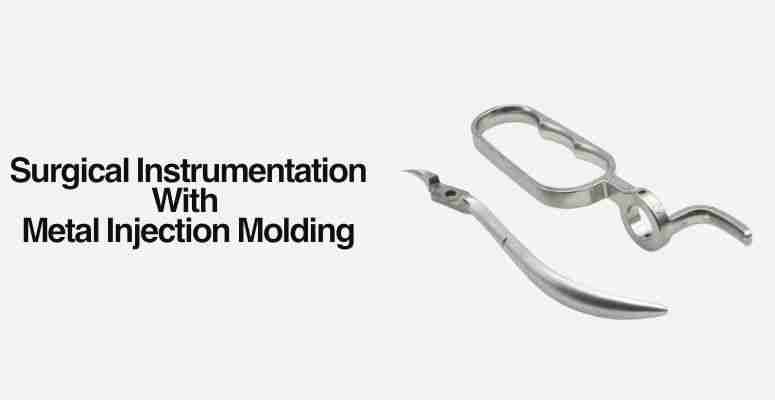
Medical device manufacturers face pressure to reduce production costs while meeting complex design requirements for surgical instruments. Traditional machining methods generate significant material waste and cannot economically produce the intricate geometries demanded by modern minimally invasive procedures.Metal Injection Molding(MIM) technology addresses these manufacturing limitations, often reducing cost while enabling previously impossible component designs.
Metal Injection Molding Process
Process Architecture and Parameters
Metal Injection Molding operates through four sequential manufacturing stages, each requiring precise parameter control to achieve medical-grade component specifications.
Feedstock preparationbegins with formulation of a homogeneous mixture comprising 60-65% metal powder by volume with thermoplastic binders. Metal powders are typically spherical with particle sizes ranging from 0.5 to 20 microns, selected for optimal packing density and sintering characteristics.
Injection molding phaseheats feedstock to 150-200°C and injects into precision tooling under pressures ranging from 500-1500 bar. This stage enables production of complex geometries including internal channels with diameters as small as 0.3mm and wall thicknesses down to 0.5mm.
Debinding operationsremove polymer binders through thermal, solvent, or catalytic methods. Thermal debinding typically operates at 300-600°C in controlled atmospheres while maintaining dimensional stability within ±0.1% of green part dimensions.
Sintering cycleachieves final densification at temperatures ranging from 1250-1350°C depending on alloy composition. Properly controlled sintering achieves 96-99% theoretical density with microstructures comparable to wrought materials.
Comparative Manufacturing Analysis
| Parameter | Metal Injection Molding | CNC Machining | Investment Casting |
|---|---|---|---|
| Geometric Complexity | High (internal features, undercuts) | Limited (tool access constraints) | Moderate (draft requirements) |
| Material Utilization | >95% | 10-40% | 75-85% |
| Dimensional Tolerance | ±0.3-0.5% | ±0.025-0.1mm | ±0.5-1.0% |
| Surface Finish (Ra) | 1-2 μm | 0.4-3.2 μm | 3-6 μm |
| Production Volume Threshold | >10,000 units/year | <1,000 units/year | 100-10,000 units/year |
| Unit Cost (High Volume) | Low | High | Medium |
Material Properties and Biocompatibility
Stainless Steel 316L
MIM-processed 316L stainless steel demonstrates mechanical properties equivalent to wrought material while enabling complex geometries impossible through conventional processing.Tensile strengthreaches 500-750 MPa withyield strengthof 350-550 MPa andelongationof 35-50%.Densityachieves 96-98% theoretical withcorrosion resistancemeeting ASTM A967 compliance. Applications include general surgical instruments, orthodontic brackets, and drug delivery components.
For comprehensive technical specifications and material options, explore our detailedMIM parts capabilities.
Titanium Alloys (Ti-6Al-4V)
MIM titanium processing achieves superior biocompatibility while maintaining strength-to-weight advantages critical for implantable devices.Tensile strengthreaches 900-1100 MPa atdensityof 4.4 g/cm³ (45% lighter than steel).Modulus of elasticitymeasures 113 GPa withbiocompatibilitycertified to ISO 10993 and enhanced surface properties forosseointegration. Applications include orthopedic implants, dental components, and cardiovascular devices.
Cobalt-Chromium Alloys
Cobalt-chromium MIM processing delivers exceptional wear resistance and magnetic compatibility for specialized surgical applications.Wear resistanceexceeds 316L stainless steel withmagnetic permeabilitybelow 1.02 (MRI compatible).Corrosion ratemeasures below 0.1 mm per year in biological environments athardnessof 35-45 HRC as-sintered. Applications include joint replacement components, cardiac valve mechanisms, and MRI-compatible instruments.
Surgical Instrument Applications
Design Flexibility for Complex Geometries
MIM enables production of surgical instruments with integrated functionality previously requiring assembly of multiple machined components. Design advantages include internal channels with diameters as small as 0.3mm for irrigation and suction systems, undercuts and complex features eliminating secondary machining operations, thin wall sections of 0.5mm minimum thickness while maintaining structural integrity, and multi-level geometries providing three-dimensional complexity not achievable through traditional methods.
Surgical Tools Manufacturing
Forceps and graspersbenefit from MIM integration of precise gripping features, jaw alignment mechanisms, and ergonomic handles in single components. Surface texturing and serration patterns are molded directly, eliminating secondary operations.
Surgical scissorsrequire critical cutting edges and pivot mechanisms that benefit from MIM's ability to produce consistent geometries with controlled surface finish. Complex blade configurations and integrated measurement features can be incorporated directly into the design.
Needle holdersachieve precision jaw alignment and ratcheting mechanisms integrated during the molding process. The consistent clamping force distribution achieved through MIM processing enhances surgical precision and reduces instrument fatigue.
Clamps and retractorsrequire precise force distribution and reliable locking mechanisms. MIM enables optimization of stress patterns while integrating multiple functions into consolidated designs.
Implantable Device Components
Orthopedic hardwareincluding spinal screws, plates, and joint components benefits from MIM's ability to create controlled porosity for bone integration while maintaining structural requirements. Thread geometries are optimized for specific bone densities and loading conditions.
Dental implant systemsrequire thread accuracy within ±0.02mm ensuring optimal osseointegration performance. Surface roughness control between 1-2 μm Sa promotes enhanced bone response while maintaining fatigue resistance exceeding 10 million cycles.
Vascular componentssuch as stent manufacturing through MIM enables precise strut dimensions and controlled expansion characteristics. Complex geometries accommodate specific vessel anatomies while maintaining biocompatibility requirements.
Learn more about our specializedmedical device manufacturing capabilitiesand industry expertise.
Minimally Invasive Surgery Devices
Endoscopic componentsmaintain internal optical channels with diameters of 0.8-2.0mm and surface roughness specifications below 1 μm Ra for optimal performance. Wall thickness control within ±0.05mm ensures consistent flexibility characteristics.
Biopsy instrumentationachieves weight reduction of 30-40% compared to machined alternatives while maintaining structural integrity. Integrated irrigation channels and cutting mechanisms improve sample collection efficiency.
Application Examples
MIM has been used to consolidate multi-part surgical instrument assemblies into fewer components. Typical applications include stapler jaws that previously required several machined parts, orthopedic screws with optimized thread profiles, and endoscopic biopsy forceps with integrated irrigation channels. Each application must be validated against the relevant ASTM and ISO standards for the specific device.
Quality Assurance and Regulatory Compliance
FDA Regulatory Requirements
MIM components follow established 510(k) clearance predicate pathways through demonstration of substantial equivalence. Documentation requirements include biocompatibility testing per ISO 10993 standards, mechanical property validation per ASTM F67, F136, and F75, manufacturing process validation protocols, and design control compliance per 21 CFR Part 820.
Quality Management Systems
ISO 13485:2016 implementation for medical device quality management requires risk management per ISO 14971, design control procedures, process validation protocols, and corrective and preventive action systems. Process control parameters include feedstock viscosity within ±2% control limits, injection pressure within ±5% tolerance, sintering temperature at ±3°C control, and dimensional verification through statistical process control.
Validation Protocols
Process qualification stages include Installation Qualification (IQ) for equipment verification, Operational Qualification (OQ) for parameter validation, Performance Qualification (PQ) for product quality demonstration, and Continued Process Verification for ongoing monitoring. Material characterization includes chemical composition analysis at ±0.1% accuracy, microstructural evaluation for grain size and porosity assessment, mechanical testing of tensile, fatigue, and impact properties, and corrosion resistance meeting ASTM standards compliance.
Design Considerations and Limitations
Geometric Constraints
Wall thickness requirements include minimum of 0.5mm for most alloys, optimal range of 0.8-3.0mm for consistent properties, and maximum of 15mm with proper core design. Feature size limitations include smallest holes of 0.3mm diameter, thread pitch minimum of 0.4mm, and draft angles of 0.5-1.0 degrees minimum.
Material Selection Criteria
Powder characteristics require particle size distribution of 0.5-20 microns, spherical morphology for optimal packing, chemical composition control within ±0.1% tolerance, and contamination levels below 50 ppm oxygen. Sintering behavior depends on material-specific densification rates, predictable dimensional change shrinkage patterns, and microstructure control for grain size optimization.
Frequently Asked Questions
Q: What are the minimum volume requirements for MIM cost-effectiveness?
MIM becomes cost-competitive at annual volumes exceeding thousands of units for complex geometries. For highly complex parts requiring extensive machining through traditional methods, break-even can occur at lower volumes. Simple geometries competing with straightforward machining may require tens of thousands of units for economic justification. The threshold depends on part complexity, material selection, and required tolerances. Tooling investment varies depending on component complexity and amortizes over production volume.
Q: How do MIM mechanical properties compare to wrought materials?
Properly processed MIM components achieve 90-95% of wrought material tensile strength with comparable ductility. Density typically reaches 96-99% of theoretical values, with remaining porosity distributed as isolated spherical pores rather than interconnected networks. Fatigue properties generally reach 80-90% of wrought equivalents. The sintering process can produce grain structures similar to wrought materials through proper thermal cycling. For most surgical instrument applications, these properties meet or exceed design requirements while enabling geometries impossible through conventional processing.
Q: What surface finishing is required for surgical applications?
MIM components achieve 1-2 μm Ra surface finish as-sintered, suitable for many surgical applications without additional processing. Additional finishing may include electropolishing reducing roughness to 0.4-0.8 μm Ra while improving corrosion resistance, passivation treatments establishing stable oxide layers for biocompatibility, or mechanical polishing for specific aesthetic requirements. Critical mating surfaces may require post-sintering grinding to achieve ±0.025mm tolerances.Our comprehensivefinishing servicesinclude specialized surface treatments for medical applications.
Q: Can design changes be accommodated after tooling completion?
Minor modifications including small feature additions, draft angle adjustments, or dimensional refinements can be made through EDM alterations to existing tooling at costs typically 10-20% of original tooling investment. Significant geometry changes including major feature additions, wall thickness modifications, or parting line adjustments typically require new tooling. Early design optimization through simulation and prototyping minimizes modification costs. Design for manufacturing reviews before tooling commitment identify potential issues requiring revision. Most experienced MIM suppliers offer design support to optimize components before tooling fabrication.
Q: What are typical lead times for MIM development?
Tooling development requires 8-16 weeks depending on component complexity and cavity count. Process optimization adds 6-12 weeks for parameter development, material characterization, and first article inspection. Total development time ranges from 16-28 weeks from design approval to production release. Rush programs can reduce timelines by 20-30% at increased cost. Parallel activities including regulatory documentation preparation can overlap with technical development. Once validated, production lead times for repeat orders typically range from 4-8 weeks depending on volume.
Q: How does MIM address biocompatibility requirements?
MIM uses standard medical alloy compositions including 316L stainless steel, Ti-6Al-4V titanium, and cobalt-chromium meeting ASTM specifications. All materials undergo ISO 10993 biocompatibility testing including cytotoxicity, sensitization, irritation, and systemic toxicity evaluations. The sintering process can improve biocompatibility through microstructure optimization producing uniform grain structures and eliminating potential contaminants. Proper debinding ensures complete binder removal preventing organic residue contamination. Post-sintering treatments such as passivation establish stable surface oxide layers enhancing corrosion resistance and tissue compatibility.
Q: What quality control measures ensure consistent MIM production?
Statistical process control monitors critical parameters including feedstock viscosity, injection pressure and temperature, debinding cycle completion, and sintering temperature profiles. First article inspection validates dimensional conformance through CMM measurement, density verification through Archimedes method, and mechanical property testing per ASTM standards. In-process inspection includes visual examination for surface defects, dimensional spot-checking of critical features, and metallographic evaluation of cross-sections. Batch traceability links raw materials through finished components enabling root cause analysis of any nonconformances. Destructive testing of representative samples from each production lot verifies mechanical properties meet specifications.
Q: How does MIM compare to additive manufacturing for surgical instruments?
MIM provides superior surface finish at 1-2 μm Ra as-produced versus 10-30 μm for additive manufacturing requiring extensive post-processing. Production economics favor MIM above 1,000 units annually while additive suits prototype and low-volume applications. Material properties of MIM components achieve 95-98% of wrought materials versus 85-95% for additive processes. Dimensional tolerances of ±0.3-0.5% for MIM compare favorably to ±0.5-2% for additive. MIM excels for high-volume production of validated designs while additive enables rapid prototyping and customization. Some applications benefit from hybrid approaches using additive for prototypes then transitioning to MIM for production.
Precision Metal Parts from Emitech
Nanjing Emitech delivers MIM, CNC machining, and custom metal parts. MIM services · Request a quote
Last updated: 2026-06-24
Continue reading
- 4140 Steel: The Complete Engineering Guide to Properties, Heat Treatment & Applications
- 17-4PH Stainless Steel: Properties, Heat Treatment, and Applications
- The Complete Guide to Angle Grinder Gears: How to Choose, Use, and Maintain for Maximum Performance
- How Strong Are MIM Parts? A Technical Analysis of Mechanical Performance