
What is Blending in Powder Metallurgy? A Data-Driven Guide
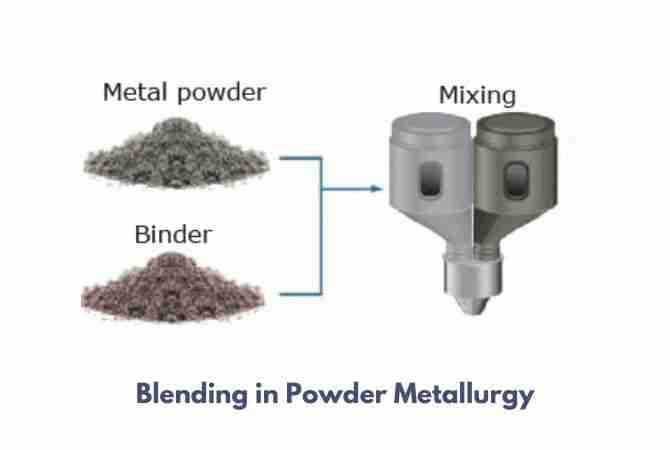
Industrial powder metallurgy blending system combining base metal powders with alloying elements and processing additives
What is Blending
Blending is where powder metallurgy either succeeds or fails. You're taking base metal powders, alloying elements, lubricants, and binders—each with different particle sizes and densities—and creating a homogeneous mixture that will determine every mechanical property of your final part.
Unlike traditional metallurgy where you melt everything together, powder metallurgy relies entirely on the uniformity you achieve during blending. A poorly blended powder will give you parts with inconsistent hardness, premature wear, and dimensional variations that destroy your scrap rate. The blending stage accounts for a meaningful share of total processing time and strongly influences final part quality.
Why Blending Matters
The physics are straightforward: when you compress powder in a die, particles don't migrate. Whatever distribution exists after blending gets locked into your green compact and survives sintering. If your chromium addition is concentrated in one region, that zone will have different wear resistance than the rest of the part.
Proper blending delivers four critical outcomes:
- Uniform distribution of alloying elements across the entire powder batch
- Consistent lubrication throughout the mixture, preventing die seizure during compaction
- Predictable flow characteristics that ensure repeatable die filling
- Elimination of segregation during handling and transfer to the press
Blending Process
Material Selection
Your base powder choice drives compressibility, sintering behavior, and final mechanical properties. Each metal brings distinct advantages and manufacturing challenges:
| Metal Powder | Key Properties | Common Applications | Typical Particle Size |
|---|---|---|---|
| Iron | Cost-effective, magnetic, high strength | Automotive components, structural parts | 45-150 μm |
| Copper | Excellent electrical conductivity, thermal properties | Electrical components,bearings | 25-75 μm |
| Aluminum | Lightweight, corrosion resistant | Aerospace parts, consumer goods | 30-100 μm |
| Stainless Steel | Corrosion resistant, biocompatible | Medical devices, food processing equipment | 20-80 μm |
| Tungsten | Extremely high density, heat resistant | Counterweights, radiation shielding | 0.5-20 μm |
| Titanium | High strength-to-weight ratio, biocompatible | Aerospace components, medical implants | 45-150 μm |
Alloying Elements
Alloying additions are typically introduced as either pre-alloyed particles (where each powder grain already contains the target chemistry) or as elemental admixtures that diffuse duringsintering. Pre-alloyed powders give you tighter property control but cost significantly more and compress with higher pressure requirements.
Common alloying elements include nickel for ductility enhancement (0.5-5%), chromium for wear resistance (1-30%), molybdenum for high-temperature strength (0.1-5%), and carbon for hardness control (0.1-1%). The exact percentages depend on whether you're targeting structural parts, bearings, or cutting tools.
Powder Testing
Before blending, characterize your incoming powders. You need baseline data on flow rate, apparent density, particle size distribution, and oxygen content. These parameters directly predict how the powder will behave during die filling and compaction.
| Material | Flow Rate (s/50g) | Apparent Density (g/cm³) | Typical Particle Size | Oxygen Content (%) |
|---|---|---|---|---|
| Iron powder | 26-30 | 2.8-3.2 | 140 μm | 0.08-0.12 |
| Copper powder | 18-24 | 3.5-4.0 | 45 μm | 0.04-0.08 |
| 316L Stainless Steel | 22-28 | 2.7-3.0 | 45 μm | 0.35-0.45 |
| Aluminum powder | 30-38 | 1.2-1.5 | 75 μm | 0.10-0.15 |
| Titanium powder | 35-42 | 1.5-1.8 | 75 μm | 0.12-0.20 |
Equipment Selection
Mixer selection depends on batch size, powder fragility, and required homogeneity. V-blenders and double-cone mixers use tumbling action and are gentle on fragile particles, making them ideal forbronze bearingpowders. Ribbon blenders force mixing through mechanical agitation and handle large batches quickly, but they can damage soft particles and introduce contamination from blade wear.
| Mixer Type | Working Principle | Best For | Mixing Time | Typical Speed |
|---|---|---|---|---|
| V-Blender | Two cylinders rotate at 90° angle | Fragile powders, precision blends | 15-30 min | 10-25 RPM |
| Double Cone | Diamond vessel rotates horizontally | Different density powders | 20-45 min | 5-20 RPM |
| Ribbon Blender | Helical ribbon in U-trough | Large batch production | 10-30 min | 20-50 RPM |
| Planetary Mixer | Blade orbits while rotating | Complex mixtures, pastes | 5-20 min | Variable |
Additives
Lubricants like zinc stearate (0.5-1.5%) reduce die wall friction during compaction and enable part ejection without galling. Binders such as polyvinyl alcohol improve green strength so parts survive handling before sintering. Both burn off cleanly during the sintering thermal cycle, leaving no residue in the final microstructure.
| Additive Type | Common Examples | Typical Amount | Purpose |
|---|---|---|---|
| Lubricants | Zinc stearate, Acrawax | 0.5-1.5% | Reduce friction during compaction |
| Binders | PVA, paraffin wax | 0.3-2.0% | Improve green strength |
| Flow enhancers | Fumed silica | 0.05-0.2% | Improve powder flowability |
| Anti-oxidants | Ascorbic acid | 0.1-0.5% | Prevent oxidation during storage |
Process Parameters
Blending time is a balancing act. Iron-based powders in a V-blender typically reach peak homogeneity at12-18 minutes. Continue past25 minutesand you risk particle work hardening, lubricant smearing across particle surfaces, or even segregation as dense particles migrate to specific zones in the mixer.
Fill the mixer to roughly50-60%of total capacity. Overfilling prevents adequate tumbling action. Underfilling causes excessive cascading that damages particles. Rotation speed matters too—run a V-blender at15-20 RPMfor most metal powders. Faster speeds don't improve mixing and can generate heat that degrades organic additives.
Common Problems
Even experienced powder metallurgy operations encounter blending failures. Recognizing the symptoms early prevents expensive scrap downstream:
| Problem | Symptoms | Root Causes | Solutions |
|---|---|---|---|
| Segregation | Property variations, visible layering | Particle size differences, over-blending | Match particle sizes, reduce mix time |
| Agglomeration | Clumping, poor flow, density variations | Moisture, electrostatic forces | Control humidity, add flow aids |
| Contamination | Foreign materials, off-spec chemistry | Equipment wear, cross-contamination | Dedicated equipment, rigorous cleaning |
| Oxidation | Discoloration, poor sintering response | Atmospheric exposure during blending | Inert atmosphere blending, anti-oxidants |
Equipment Comparison
Choosing blending equipment requires evaluating capital cost against production volume and quality requirements:
| Criteria | V-Blender | Double Cone | Ribbon Blender | Planetary Mixer |
|---|---|---|---|---|
| Initial Investment | Medium | Medium-High | Medium | High |
| Batch Size | Small-Medium | Medium | Large | Small-Medium |
| Mixing Effectiveness | Good | Very Good | Good | Excellent |
| Particle Damage Risk | Very Low | Low | Medium | Medium |
| Cleaning Difficulty | Easy | Easy | Difficult | Difficult |
| Production Rate | Low | Medium | High | Medium |
Industry Applications
Automotive manufacturers run high-volume blending operations forconnecting rods and gears, prioritizing consistent cycle times and automated quality checks. A typical automotive powder blend uses iron base powder with2%copper for improved sintering response,0.6%graphite for carbon enrichment, and0.8%zinc stearate for lubrication. Batch sizes run500-2000 kgwith blend times held to15 minutesto maintain production throughput.
The aerospace sector takes the opposite approach—small batches with exhaustive documentation. Titanium alloy blends for turbine components undergo particle size analysis before and after blending, with requirements for±0.2%compositional uniformity across five sampling locations. Medical device manufacturers operate dedicated blending rooms with HEPA filtration to prevent any cross-contamination between stainless steel implant powders and other alloy systems.
Electronics applications demand precise control of thermal and electrical properties. Copper-based heat sink powders are blended with5-8%silver additions to boost thermal conductivity while maintaining acceptable sintering temperatures. These blends require inert atmosphere processing because even0.1%oxygen pickup degrades electrical performance.
Quality Testing
Post-blend verification catches problems before they reach the press. Flow rate testing through a Hall flowmeter confirms the mixture will fill die cavities uniformly—target flow rates between25-35 seconds per 50gfor most ferrous powders. Apparent density measurements predict green density after compaction. Sample multiple locations in the batch (top, middle, bottom, corners) and run XRF spectroscopy to verify compositional uniformity within±0.3%for critical alloying elements.
Compressibility testing on a laboratory press reveals how the blend will behave during production compaction. Press small test slugs at400 MPa,600 MPa, and800 MPa, then measure green density at each pressure. This data lets you optimize press tonnage and predict final sintered density before committing to full production.
Safety Considerations
Metal powders present explosion hazards. Aluminum and magnesium powders are particularly dangerous—a dust cloud in the presence of an ignition source can detonate with destructive force. Ground all blending equipment and maintain humidity above40%to minimize static discharge. Install explosion vents on ribbon blenders and ensure dust collection systems use conductive hoses.
Respiratory protection is non-negotiable. Many alloying elements like nickel and chromium are sensitizers or carcinogens when inhaled as fine particles. Enclose blending operations where possible and use local exhaust ventilation at powder transfer points. Operators should wear properly fitted respirators rated for metal dust exposure.
Frequently Asked Questions
Q: How does blending time affect part quality?
Blending time directly impacts compositional uniformity. Insufficient blending creates concentration gradients where alloying elements cluster in specific regions, causing property variations across the part. Extended blending past the optimal window triggers work hardening of ductile particles and can induce segregation as particles sort themselves by density during prolonged tumbling.
For iron-based powders in tumbling mixers, peak homogeneity occurs between12-18 minutes. Continuing beyond25 minutesprovides no benefit and often degrades blend quality. The exact timing depends on mixer geometry, fill level, and particle size distribution—always validate with chemical analysis of samples from multiple batch locations.
Q: What's the difference between pre-alloyed and admixed powders?
Pre-alloyed powders contain all alloying elements within each individual particle, created during the atomization process. Every powder grain has the target composition, guaranteeing perfect distribution. Admixed blends combine base metal powder with separate alloying element additions that diffuse during sintering.
Pre-alloyed powders deliver superior property uniformity but cost more and require higher compaction pressures due to work hardening during atomization. Admixed systems offer better compressibility and lower material cost but demand careful blending to prevent elemental segregation. For structural parts where property variation must stay below5%, pre-alloyed is the safer choice. For bearings and filters where you can tolerate10-15%variation, admixed blends work fine.
Q: How do particle shape and size affect blending?
Particle morphology controls how powders flow and pack during blending. Spherical particles created by gas atomization flow easily but tend to segregate by size during mixing and handling. Irregular sponge iron particles interlock and resist segregation but flow poorly, requiring longer blend times to achieve uniformity.
Size differences drive segregation through percolation—smaller particles filter down through voids between larger ones. Keep particle size distributions tight, ideally within one or two sieve cuts. When blending fine alloying additions (5-10 μm) with coarse base powder (100-150 μm), add a small amount of binder to hold the fine particles onto the coarse powder surfaces.
Q: What causes segregation and how do I prevent it?
Segregation occurs through three mechanisms:
- Percolation segregation where small particles sift through large particle voids
- Trajectory segregation where particles separate during free-fall based on aerodynamic properties
- Fluidization segregation where air currents lift fine particles while coarse ones settle
Prevention starts with powder specification—match particle sizes and densities across all blend components. Add0.3-0.5%binder to create weak agglomerates that resist separation. Minimize free-fall transfer points when moving blended powder to storage containers. Some operations re-blend material just before pressing to restore homogeneity lost during storage and handling.
Q: How do I verify my powder blend is properly mixed?
Statistical sampling is the only reliable verification method. Divide the blended batch conceptually into top, middle, bottom, and corner regions. Pull50-100gsamples from at least five locations. Run chemical analysis on each sample—XRF spectroscopy works well for metallic elements while combustion analysis handles carbon.
Calculate the relative standard deviation for each critical element. Industrial practice targets RSD below3%for major alloying additions and below5%for minor elements. If you see higher variation, increase blend time by20%and retest. Document the results for every production batch as part of your quality system.
Q: What's the difference between mixing and blending?
The terms are often used interchangeably, but technically mixing combines similar materials (like two batches of iron powder) while blending combines dissimilar materials (iron powder plus copper plus graphite plus lubricant). In powder metallurgy practice, "blending" is the preferred term since you're nearly always combining different components to create acustom alloy composition.
Q: How does temperature affect powder blending?
Temperature impacts blending through several mechanisms. Rising temperature increases interparticle friction and can reduce powder flowability. Lubricants soften at elevated temperature—zinc stearate begins softening around120°C, which can cause it to smear across particle surfaces rather than maintaining discrete distribution.
Reactive metals like aluminum and titanium oxidize faster at elevated temperature. A10°Ctemperature increase can double oxidation rates, degrading sinterability. Control blending room temperature to18-25°C ±3°Cand monitor for heat buildup in high-speed mixers. If you detect temperature rise during blending, reduce mixing speed or implement water-cooled mixer jackets.
Q: What are the advantages of continuous blending systems?
Continuous blenders feed powder ingredients at controlled rates into a mixing chamber, producing a steady output stream rather than discrete batches. This eliminates batch-to-batch variations and integrates cleanly with automated pressing lines. Automotive manufacturers running24/7operations favor continuous systems because they reduce labor and floor space while improving consistency.
The drawback is complexity and cost—continuous blenders require precise metering equipment for each ingredient, real-time monitoring of composition, and sophisticated controls. They make economic sense at production volumes above5000 kg per day. Below that threshold, batch blending with tumbling mixers remains more cost-effective.
Q: What's the environmental impact of powder blending operations?
Powder metallurgy blending is remarkably clean compared to conventional melting. Energy consumption runs40-60%lower than melting operations since you're only tumbling powder rather than raising it to liquidus temperature. Material utilization exceeds95%because properly blended powder compacts with minimal scrap, versus60-70%yield for machined parts.
Emissions are minimal—organic lubricants and binders burn off during sintering, producing primarily CO₂ and water vapor. Modern sintering furnaces capture and thermally oxidize these combustion products. Dust control through enclosed transfer systems and baghouse filtration prevents particulate emissions. The main environmental concern is safe disposal of contaminated cleaning materials when switching between alloy systems.
Powder Metallurgy & MIM from Emitech
From compaction and sintering to finishing, Emitech produces complex PM and MIM parts in high volumes. Custom MIM parts · Get a quote
Last updated: 2026-06-24
Continue reading
- Oil Impregnated Bronze Bushings: The Complete Guide for Engineers and Buyers
- How P.A.N.A.C.E.A. Stainless Steel Performs in MIM Sintering: An In-Depth Technical Analysis
- Can You Polish MIM Parts? The Complete Technical Guide to Surface Finishing Metal Injection Molded Components
- The Complete Guide to Porous Ceramic Filters: Types, Applications, and Performance Comparison