MIM 430L Stainless Steel
MIM 430L is a ferritic stainless steel (UNS S43000) characterized by low carbon content for enhanced ductility and strong ferromagnetic properties. It offers moderate corrosion resistance and serves as a highly cost-effective alternative to 316L austenitic grades for metal injection molding applications requiring magnetic responsiveness.
Key Takeaways: 430L Decision Guide
- Best for Magnetic Applications:Ideal for sensor housings and electromagnetic components requiring ferromagnetic properties.
- Significant Cost Savings:Offerslower material costcompared to 316L stainless steel.
- Environment Specific:Excellent for indoor and atmospheric environments;not suitable for marineor high-chloride exposure.
- High Volume Focus:Economically viable for production volumes exceeding10,000 unitsannually.
- Process Friendly:The "L" grade (low carbon) prevents brittleness during sintering, eliminating the need for post-heat treatment.
MIM 430L is a low-carbon ferritic stainless steel (UNS S43000,16-18% Cr, <0.03% C) offering moderate corrosion resistance and ferromagnetic properties at lower cost than austenitic grades. This engineering guide covers material properties, manufacturing considerations, and application selection criteria for metal injection molding projects.
Understanding 430L Ferritic Stainless Steel
Before selecting MIM 430L for your project, understanding its fundamental characteristics helps you determine application suitability and anticipate performance in your specific environment.
Chemical Composition: Why "L" Grade Matters for MIM
MIM 430L (UNS S43000) is a ferritic stainless steel with carefully controlled composition:
Core Composition:
- Chromium (Cr): 16-18%— Primary corrosion resistance mechanism
- Carbon (C): ≤0.03% max— Critical "low-carbon" specification
- Nickel (Ni): ≤0.75%— Minimal content (vs. 8-10% in 304/316L)
- Manganese (Mn): ≤1.0%
- Silicon (Si): ≤1.0%
- Iron (Fe): Balance
Composition Comparison:
| Element | 430L (wt. %) | Standard 430 (wt. %) |
|---|---|---|
| Carbon (C) | 0.03 max | 0.12 max |
| Chromium (Cr) | 16.0-18.0 | 16.0-18.0 |
| Nickel (Ni) | 0.75 max | 0.75 max |
| Iron (Fe) | Balance | Balance |
💡 Why "L" Grade Is Critical for MIM:
The low carbon content isn't merely a specification refinement—it's what makes 430L viable for metal injection molding. During high-temperature sintering (1300-1380°C), standard 430 with higher carbon can sensitize during slow cooling, precipitating chromium carbides at grain boundaries and reducing corrosion resistance and ductility.
The "L" grade preemptively mitigates this carbide precipitation risk, enabling the material to withstand MIM's thermal demands without requiring complex post-sintering heat treatments to restore ductility. This represents process engineering embedded directly in the alloy specification.
Ferritic Microstructure and Its Consequences
At service temperatures below ~900°C, 430L maintains a stable ferritic microstructure—a body-centered cubic (BCC) crystal lattice with dispersed chromium carbides. This BCC structure directly determines several properties relevant to your application:
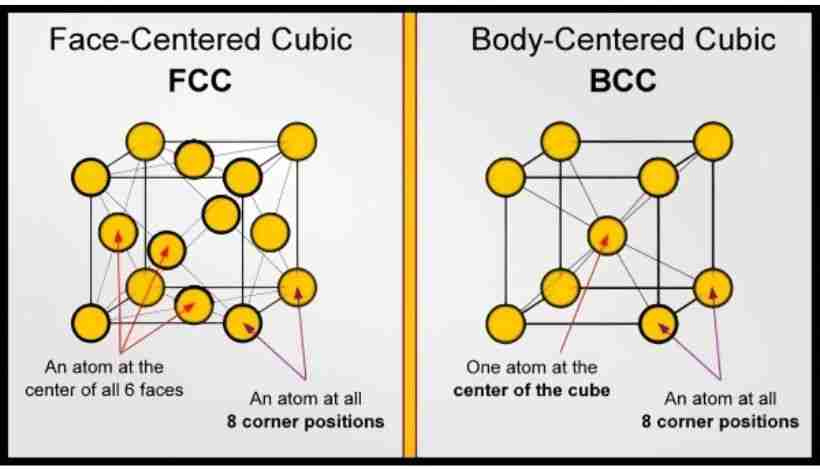
Direct Consequences of BCC Structure:
Ferromagnetic Behavior:
The ferritic structure makes 430L strongly magnetic. For electromagnetic applications requiring stainless steel corrosion resistance, 430L may be your only viable option among stainless grades. Non-magnetic austenitic grades (304L, 316L) cannot provide this functional requirement.
Moderate Formability:
The BCC arrangement results in higher atomic density and reduced malleability compared to austenitic grades. However, this is largely irrelevant for MIM since the process creates net-shape components without subsequent forming operations.
Temperature Sensitivity:
Ferritic structures exhibit a ductile-to-brittle transition near room temperature. This makes 430L unsuitable for cryogenic applications or sustained sub-zero temperatures where impact loading may occur.
Dimensional Stability:
Lower coefficient of thermal expansion (10.4 μm/m·°C) compared to austenitic grades provides better dimensional stability during temperature cycling—an advantage often overlooked in material selection.
Baseline Properties: Understanding Performance Boundaries
Mechanical Properties (Wrought, Annealed Reference):
- Yield Strength: 205-345 MPa
- Ultimate Tensile Strength: 450-517 MPa
- Hardness: 85-89 HRB
- Elongation: 20-22%
- Density: 7.7-7.8 g/cm³
Physical Properties:
- Thermal Conductivity: ~24 W/m·K (notably higher than 304/316L)
- Coefficient of Thermal Expansion: ~10.4 μm/m·°C
- Magnetic Permeability: Ferromagnetic (high)
- Electrical Resistivity: ~60 μΩ·cm
That higher thermal conductivity compared to austenitic stainless steels can be advantageous in heat transfer applications—a property differentiator that's functional in specific designs.
Corrosion and Heat Resistance: Defining Application Boundaries
Understanding where 430L performs well—and where it doesn't—is essential for appropriate material selection.
Where 430L Provides Adequate Protection:
- Atmospheric exposure (indoor and sheltered outdoor)
- Fresh water contact
- Nitric acid and many organic acids (moderate concentrations)
- Oxidizing environments
- General humidity and condensation
When properly finished (polished or passivated), 430L's corrosion resistance can approach 304L in controlled indoor environments.
Temperature Performance:
- Continuous service:Up to 815°C (1500°F)
- Intermittent service:Up to 870°C (1600°F)
- Oxidation resistance:Good scaling resistance at elevated temperatures
⚠️ Critical Limitations:
Chloride Environments:
430L is susceptible to pitting and crevice corrosion in chloride-rich environments. Applications involving saltwater, deicing salts, or high-chloride industrial atmospheres require austenitic grades (316L recommended).
Acidic Conditions:
While resistant to nitric acid, 430L offers limited protection against reducing acids (sulfuric, hydrochloric) compared to molybdenum-bearing grades.
Low Temperature:
Below 0°C, 430L experiences ductile-to-brittle transition. Impact loading or dynamic stresses in cold environments can cause brittle fracture.
Embrittlement Zone:
Prolonged exposure to 400-600°C ("885°F embrittlement") can reduce room-temperature ductility. This effect is reversible through annealing at 790-845°C.
Strategic Material Positioning
430L fills a critical gap in the stainless steel performance-cost spectrum. Many components in automotive interiors, appliance housings, and consumer electronics face only mild atmospheric conditions where the advanced chloride resistance of 316L is technically impressive but functionally unnecessary.
Selecting materials that precisely match environmental demands—rather than defaulting to higher-specification grades—optimizes both performance and cost. This is where 430L provides strategic value: adequate corrosion resistance for atmospheric applications at significantly lower material cost than nickel-bearing alternatives.
MIM 430L: Manufacturing Considerations
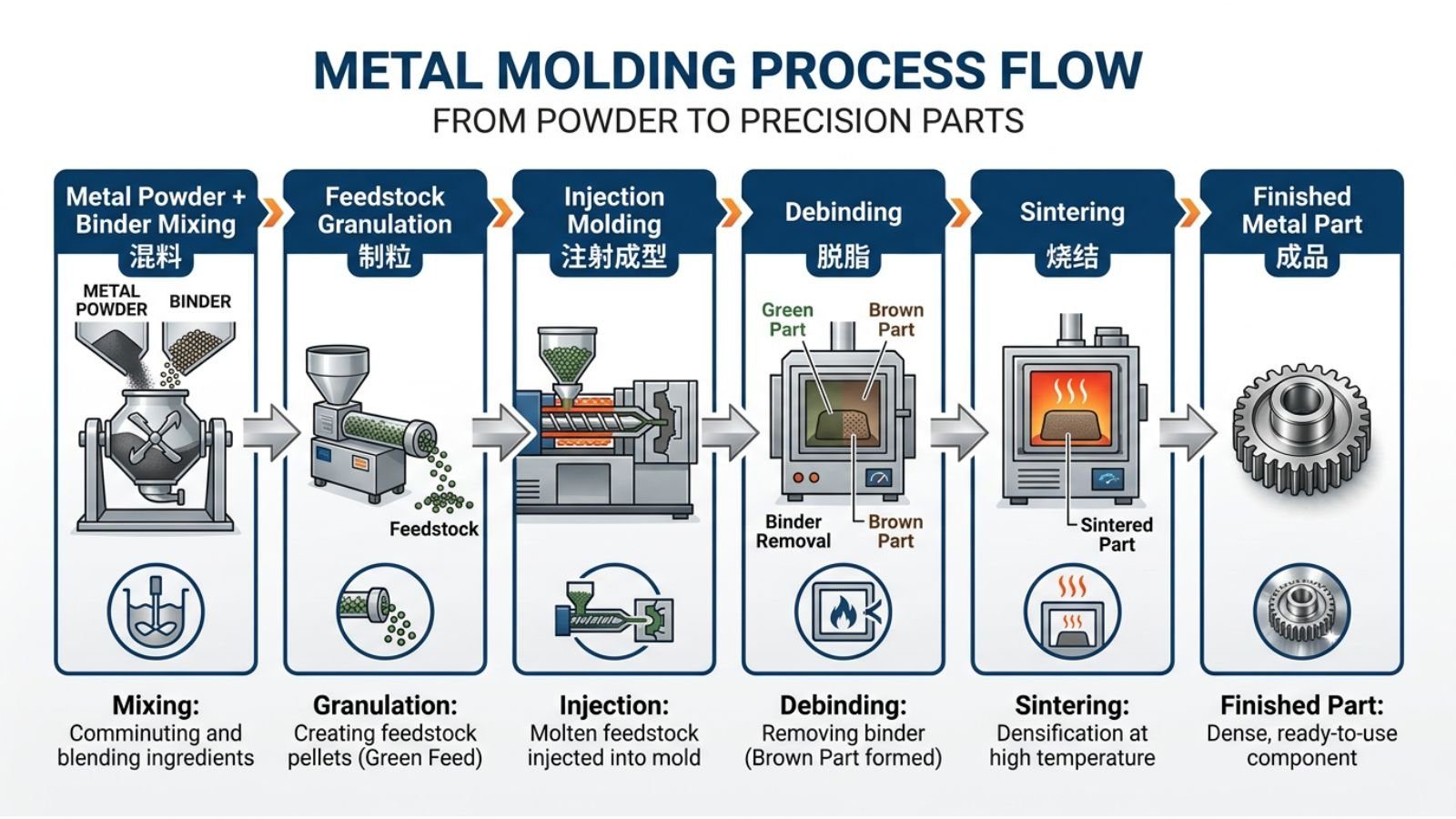
Metal Injection Molding transforms fine 430L stainless steel powder into complex components through four stages: feedstock preparation, injection molding, debinding, and sintering. While the general MIM process applies to all materials, 430L presents specific considerations that affect final part quality.
Why "L" Grade Is Essential for MIM Processing
Standard 430 stainless steel presents challenges in high-temperature processing due to its higher carbon content (up to 0.12%). During rapid cooling from elevated temperatures—whether in welding heat-affected zones or MIM sintering cycles—this carbon can lead to sensitization and carbide precipitation.
The MIM sintering cycle subjects parts to1300-1380°C, metallurgically equivalent to the thermal exposure in welding. Using standard 430 would likely yield brittle as-sintered components with compromised performance, necessitating additional post-sintering annealing to restore ductility.
The 430L "low-carbon" specification (≤0.03% C) preemptively solves this problem, enabling parts to maintain good ductility in the as-sintered condition without mandatory heat treatment. This reduces processing complexity and cost.
Critical Process Considerations for 430L
Binder System Selection and Carbon Contamination Risk:
The binder system used in feedstock formulation directly impacts final corrosion resistance—a relationship not immediately obvious from standard datasheets.
Complete binder removal is the goal, but residual contaminants, particularly carbon, can remain if processing isn't optimized. For 430L, which relies on its16-18% chromiumto form a protective passive oxide layer, residual carbon presents a specific risk.
During sintering at1300-1380°C, residual carbon reacts with chromium to form chromium carbides, preferentially precipitating at grain boundaries. This locally depletes the surrounding metal matrix of free chromium needed for passivation, creating susceptibility to intergranular corrosion.
💡 Specification Requirement:Demand "clean-burning" binder systems with minimal carbon residue potential. Water-based or catalytic-debinding-compatible binders often provide cleaner results than some paraffin-based systems.
Sintering Parameters for 430L:
- Temperature Range:1300-1380°C (2372-2516°F)
- Atmosphere:Hydrogen (preferred), vacuum, or high-purity nitrogen
- Hold Time:2-4 hours at peak temperature
- Atmosphere Purity:Oxygen content must be minimized
Oxygen Sensitivity:
Research indicates that oxygen content in the sintering atmosphere significantly affects final properties. Parts sintered with 0.23% oxygen content can exhibit ~10% reduction in mechanical properties compared to those sintered with 0.02% oxygen. Your MIM provider's atmosphere control capability directly determines your parts' performance ceiling.
The Sintering Optimization Challenge:
Sintering involves competing objectives:
- Higher temperature/longer time:Increases density, improves mechanical properties
- Excessive temperature/time:Causes abnormal grain growth (reduces ductility), carbide precipitation, increased energy cost
The optimal sintering profile for MIM 430L achieves >95% theoretical density with fine-grained microstructure within the most time- and energy-efficient cycle. This is multi-variable optimization, not simple maximization.
Post-Sintering Heat Treatment:
Unlike precipitation-hardening grades (17-4 PH) that require aging heat treatment to develop high strength, 430L is typically used in the as-sintered condition. The ferritic structure cannot be hardened through heat treatment.
Optional annealing (790-845°C) can be applied to:
- Relieve residual stresses
- Maximize ductility
- Reverse any 885°F embrittlement if slow cooling occurred through 400-600°C range
Passivation Treatment:
For corrosion-critical applications, chemical passivation (typically nitric acid immersion) enhances the natural chromium oxide passive layer, improving overall corrosion resistance. This is recommended as standard practice for 430L components.
Understanding the Metal Injection Molding Process
Professional overview of the MIM manufacturing process (2:48 minutes)
Properties of Sintered MIM 430L Components
The final characteristics of MIM 430L components result from the intrinsic alloy properties combined with the metallurgical transformations during processing. Understanding these properties helps establish realistic performance expectations.
Mechanical Properties: As-Sintered Performance
Properly processed MIM 430L achieves mechanical properties approaching wrought material:
Typical As-Sintered Properties:
- Ultimate Tensile Strength (UTS):410-515 MPa
- Yield Strength:205-230 MPa
- Elongation:20-35%
- Hardness:65-80 HRB (150-180 HV)
- Density:>7.5 g/cm³ (>95% theoretical)
Property Comparison Table:
| Property | MIM 430L (As-Sintered) | Wrought 430 (Annealed) |
|---|---|---|
| UTS | 410-515 MPa | 450-517 MPa |
| Yield Strength | 205-230 MPa | 205-345 MPa |
| Elongation | 20-35% | 20-22% |
| Hardness | 65-80 HRB | 85-89 HRB |
| Density | >7.5 g/cm³ (>95%) | ~7.75 g/cm³ (100%) |
MIM 430L achieves 80-95% of wrought tensile strength, with the difference attributable to residual porosity (5% or less). However, elongation often exceeds wrought material because the sintered microstructure is more uniform without cold work strain.
Understanding Elongation Variability:
The reported elongation range (20-35%) isn't measurement uncertainty—it directly reflects process control quality. Elongation is extremely sensitive to:
- Residual porosity levels
- Grain size distribution
- Interstitial contaminants (carbon, oxygen)
- Sintering atmosphere purity
MIM providers using high-purity powder, clean binder systems, and optimized sintering achieve the upper end of this range. This variability means you cannot rely on generic datasheets—validate your specific supplier's process capabilities for ductility-critical applications.
Dimensional Accuracy and Surface Finish
Achievable Tolerances:
- Standard as-sintered:±0.3% to ±0.5% of dimension
- Example:25mm feature = ±0.075-0.125mm tolerance
- Tighter tolerances:Require secondary sizing or machining operations
Surface Finish:
- As-sintered:0.8-1.6 μm Ra typical
- Fine powder enables:<1 μm Ra achievable without secondary polishing
- With electropolishing:<0.5 μm Ra plus enhanced corrosion resistance
This combination of dimensional precision and surface quality makes MIM competitive with investment casting and multi-axis CNC machining for small, intricate components—with significantly higher production rates once tooling is amortized.
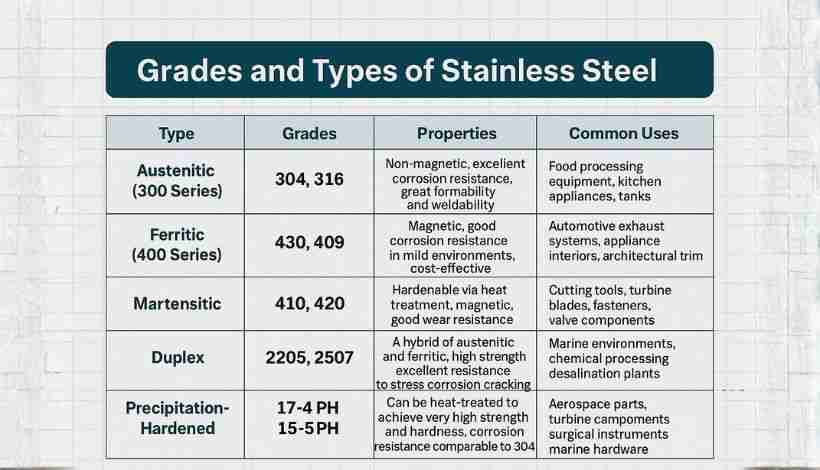
Material Comparison: When to Choose 430L vs. 316L vs. 17-4 PH
Understanding the performance and cost trade-offs between the three primary MIM stainless steels helps optimize material selection for specific applications.
The Three Material Archetypes
MIM 430L (Ferritic):
- Moderate strength and corrosion resistance
- Ferromagnetic properties
- Lowest material cost (minimal nickel/molybdenum)
- As-sintered use (no heat treatment required)
- Best for atmospheric environments
MIM 316L (Austenitic):
- Excellent corrosion resistance (especially chlorides)
- Superior ductility and toughness
- Non-magnetic
- Higher alloy cost (10-14% Ni, 2-3% Mo)
- Best for corrosive environments
MIM 17-4 PH (Precipitation-Hardening):
- Maximum mechanical performance after aging
- UTS ~1200 MPa in H900 condition
- Good corrosion resistance
- Requires post-sintering heat treatment
- Best for high-stress applications
Comprehensive Property Comparison
| Property | MIM 430L | MIM 316L | MIM 17-4 PH (H900) |
|---|---|---|---|
| Microstructure | Ferritic (BCC) | Austenitic (FCC) | Martensitic |
| UTS | 410-515 MPa | 480-550 MPa | 1100-1300 MPa |
| Yield Strength | 205-230 MPa | 170-240 MPa | 1000-1100 MPa |
| Elongation | 20-35% | >40% | 4-8% |
| Hardness | 65-80 HRB | 65-75 HRB | 38-42 HRC |
| Corrosion Resistance | Moderate | Excellent | Good |
| Chloride Resistance | Poor | Excellent | Fair |
| Magnetic | Yes | No | Yes |
| Heat Treatment | Not hardenable | Not hardenable | Requires aging |
| Relative Powder Cost | 1.0x (baseline) | 1.5-2.0x | 2.0-2.5x |
| Processing Cost | Low (as-sintered) | Low (as-sintered) | Medium (aging required) |
Cost Analysis: Material Economics
430L powder is typically the lowest-cost baseline among common MIM stainless steels, while 304L, 316L, and 17-4 PH carry material premiums driven by nickel, molybdenum, and additional alloying elements. Processing and tooling costs are comparable across grades for equivalent part geometry. Selecting 430L where its corrosion resistance and magnetic properties meet requirements can reduce annual material spend versus higher-alloy grades.
Illustrative comparison (100,000 units/year, 10 g part): material cost per part is lowest for 430L, moderate for 316L, and highest for 17-4 PH; processing and amortized tooling are similar. Exact values depend on supplier pricing, part geometry, and annual volume.
Application Suitability Framework
Choose MIM 430L when:
- Environment: Atmospheric, indoor, mild outdoor
- Temperature:-50°C to 815°C(no cryogenic, no extreme heat)
- Corrosion: Humidity, condensation, fresh water
- Magnetic properties: Required or acceptable
- Volume: >10,000 units/year (MIM economics favorable)
- Cost: Primary consideration
Choose MIM 316L when:
- Environment: Chloride exposure, marine, coastal
- Corrosion: Aggressive chemicals, food processing acids
- Biocompatibility: Medical devices, implants
- Magnetic properties: Must be non-magnetic
- Ductility: Maximum toughness required
- Cost: Performance justifies premium
Choose MIM 17-4 PH when:
- Mechanical: High strength, hardness, wear resistance required
- Stress: High-load structural components
- Applications: Firearms, aerospace, precision mechanisms
- Cost: Performance demands justify heat treatment
- Environment: Moderate corrosion resistance sufficient
Decision Framework
When evaluating material selection, follow this systematic approach:
- Define actual environmental exposure(not worst-case unless justified)
- Identify functional requirements(magnetic properties, strength levels, ductility needs)
- Establish production volume(MIM economics require sufficient scale)
- Calculate total lifecycle cost(initial cost + replacement frequency + failure consequences)
- Select minimum viable material(match capabilities to requirements)
If your analysis shows 430L meets all functional and environmental requirements, selecting 316L adds material cost without corresponding performance benefits in your specific application.
Industrial Applications: Where MIM 430L Excels
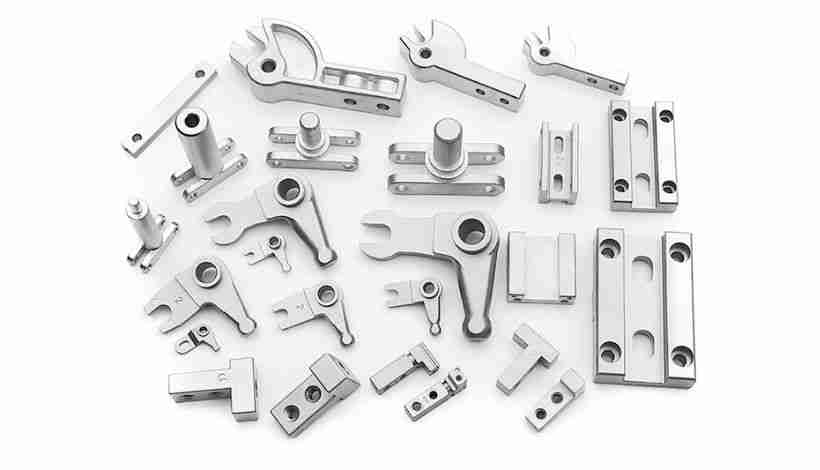
MIM 430L's successful deployment across diverse industries results from precisely matching its property profile to application requirements.
Automotive and Industrial Components
Common Applications:
- Sensor housings requiring ferromagnetic properties
- Exhaust system brackets and hangers
- Interior hardware and decorative trim
- Heating element supports
- Stove and range trim rings
- Non-critical fasteners
Property-Application Match:
Oxidation Resistance:Exhaust components requiring resistance up to 815°C continuous service benefit from 430L's heat resistance at lower cost than austenitic alternatives.
Magnetic Functionality:Position sensors, speed sensors, and alignment detectors require ferromagnetic response—a functional requirement that non-magnetic austenitic steels simply cannot fulfill. For these applications, 430L isn't just cost-effective; it's technically necessary.
Atmospheric Corrosion:Interior components (trim, hardware, mounting brackets) face mild atmospheric conditions where 430L's corrosion resistance exceeds requirements without unnecessary nickel premium.
Example: Automotive Sensor Housing
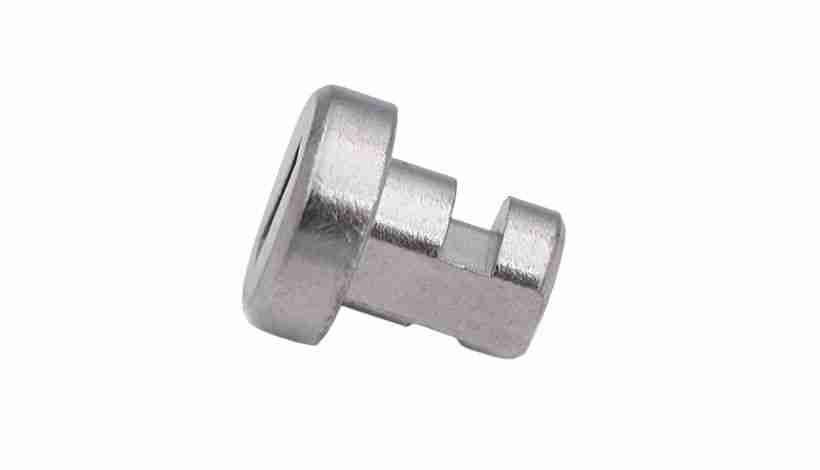
Application:Magnetic position sensor housing for transmission system
- Requirements:
- Ferromagnetic material (functional requirement)
- Complex geometry (mounting features, wire routing channels)
- Moderate corrosion resistance (protected under-hood environment)
Material Evaluation:
- 316L:Fails primary requirement (non-magnetic)
- 17-4 PH:Functional but excessive cost for non-structural housing
- 430L:Only material matching all requirements
Design Comparison:
- Machined/Stamped Steel:Multiple components and fasteners, higher material waste, longer assembly time, and higher per-unit cost.
- Optimized MIM 430L Design:Single integrated component with snap-fit features, lower material waste, and reduced assembly. The combination of part consolidation and lower-alloy material typically yields meaningful cost savings at high annual volumes.
Consumer Goods and Appliances
This sector represents the largest application field for 430-series stainless steel, driven by a unique combination of requirements.

Typical Applications:
- Dishwasher linings and spray arm components
- Refrigerator cabinet panels and shelf supports
- Washing machine internal components
- Range and cooker decorative trim
- Kitchen sink drain components
- Consumer product housings and trim
Why 430L Dominates Consumer Appliances:
Environmental Match:Indoor, controlled environments with only mild humidity and occasional water exposure—well within 430L's corrosion resistance capability.
Volume Economics:Appliances require high-volume production (often >100,000 units annually), where MIM tooling investment amortizes favorably.
Aesthetic Requirements:The "stainless steel look" is a purchase driver. MIM 430L replicates fine cosmetic details, textures, and logos directly from the mold, achieving the desired appearance at lower cost than 304/316L.
Cost Sensitivity:Appliance markets are highly price-competitive. Material cost directly impacts profitability, making 430L's 30-40% cost advantage significant.
Geometric Complexity:Appliance components often feature complex mounting features, integrated clips, and decorative elements—ideal for MIM's near-net-shape capabilities.
Electronics and Electromagnetic Applications
While most demanding applications in medical, aerospace, and defense sectors utilize 316L or 17-4 PH, MIM 430L occupies critical niches where its unique property combination provides advantages.
Applications:
- Electromagnetic device housings
- Magnetic sensor components
- Actuator assemblies
- Telecommunications equipment enclosures
- Non-implantable medical device components
- Electronic equipment chassis (non-structural)
The Magnetic Property Advantage:
Consider specifications for a magnetic relay housing:
- Functional requirement:Ferromagnetic material to complete magnetic circuit
- Environment:Indoor electronics enclosure (mild conditions)
- Geometry:Complex shape with mounting features, wire routing
- Volume:75,000 units/year
- Cost:Budget-constrained consumer electronics
Material Comparison:
- 316L:Cannot meet functional requirement (non-magnetic)
- Carbon steel:Adequate magnetic properties but poor corrosion resistance, requires coating
- 430L:Provides required magnetic properties + corrosion resistance superior to carbon steel
For this application, 430L isn't competing with premium stainless steels on corrosion resistance—it's the only material providing both required magnetic functionality and adequate corrosion protection without requiring additional coating processes.
Design Guidelines for MIM 430L Components
Successful MIM implementation requires designing specifically for the material and understanding how 430L's unique properties influence design decisions.
430L-Specific Design Considerations
Thermal Expansion and Dimensional Stability:
430L's coefficient of thermal expansion (10.4 μm/m·°C) is approximately 40% lower than austenitic grades (16-18 μm/m·°C). For components experiencing temperature cycling or requiring tight dimensional tolerances across temperature ranges, this provides an advantage.
Design Impact:If your assembly includes both 430L and austenitic components, account for differential expansion in tolerance stack-up analysis. For a 100mm assembly operating across a 100°C temperature range:
- 430L expansion: 0.104mm
- 316L expansion: 0.160-0.180mm
- Differential: 0.056-0.076mm
This differential can cause binding, gaps, or stress concentration if not properly managed through design.
Magnetic Properties in Design:
For components in electromagnetic assemblies, 430L's ferromagnetic nature requires specific design considerations:
Magnetic Circuit Integration:
- 430L can be incorporated directly into magnetic circuit design as a flux-conducting element
- Magnetic permeability affects sensor calibration—coordinate with electronics design team
- Consider orientation of part relative to magnetic field direction
EMI Shielding Applications:
- Ferromagnetic properties can be leveraged for electromagnetic interference shielding
- Housing wall thickness affects shielding effectiveness
- Multiple 430L components in assembly can create unintended magnetic coupling
Sensor Mounting Considerations:
- Avoid placing 430L support structures near sensitive magnetic sensors unless part of functional design
- Document magnetic properties for systems integration testing
Sintering Distortion Sensitivity:
Ferritic structures exhibit slightly higher distortion tendencies compared to austenitic grades during sintering, particularly in complex geometries with varying cross-sections. This is due to the BCC crystal structure's anisotropic thermal expansion characteristics.
Design Mitigation Strategies:
Uniform Wall Thickness:
Critical for 430L. Sections with varying thickness experience differential shrinkage rates, creating internal stresses that can cause warpage. Aim for thickness variation <50% within a single part.
Gradual Transitions:
When thickness changes are necessary, use gradual transitions (slope ratio <3:1) rather than abrupt steps. Sharp transitions create stress concentration points that amplify distortion.
Stiffening Features:
Large, flat surfaces are particularly prone to warpage in ferritic grades. Add stiffening ribs (thickness = 0.6-0.8× wall thickness, spacing = 3-5× wall thickness) to maintain flatness.
Symmetrical Geometry:
Asymmetric designs have higher distortion risk. Where possible, design symmetrically about principal axes to balance sintering stresses.
General MIM Design Framework
MIM 430L follows established MIM design principles applicable to all materials. These include considerations for uniform wall thickness (1-4mm optimal), minimal draft angles (0.5–2° typically sufficient), adequate corner radii (>0.4mm), and proper sintering support for long features. These general principles are well-documented in industry MIM design guides and standards.
For 430L-specific applications, the considerations detailed above (thermal expansion, magnetic properties, and distortion sensitivity) take precedence and should be addressed early in the design cycle.
Design Optimization for 430L
Leveraging Cost Advantages:
430L's material cost advantage over 316L amplifies savings achieved through design optimization. Strategies include minimizing part volume through coring and hollow sections, simplifying tooling by avoiding complex side-actions, and evaluating part consolidation opportunities where multiple components can be integrated into a single MIM part.
Part Consolidation Example:
A typical mechanical assembly might include 3-5 stamped or machined parts held together with fasteners. MIM's geometric freedom enables consolidation into a single component, eliminating assembly operations, fastener inventory, and potential failure points at joints. For 430L applications in high-volume consumer products, this consolidation often provides both cost savings and improved reliability.
Design Guidelines Summary
| Attribute | Minimum | Optimal Range | Maximum | 430L-Specific Notes |
|---|---|---|---|---|
| Component Mass | 0.1 g | 10-15 g | 100 g | Larger parts increase distortion risk |
| Wall Thickness | 0.5 mm | 1-4 mm | 8 mm | Uniform thickness critical for ferritic |
| Corner Radii (internal) | 0.2 mm | >0.4 mm | As large as possible | Reduces stress concentration |
| Dimensional Tolerance | — | ±0.3-0.5% | — | Consider CTE for temp cycling |
| Flat Surface Dimension | — | <30mm unsupported | — | Add ribs if larger |
Cost-Performance Analysis
Understanding MIM 430L economics enables data-driven material and process decisions.
Material Cost Structure
Powder Cost Hierarchy:
- 430L powder: baseline cost
- 304L powder: moderate premium
- 316L powder: higher premium
- 17-4 PH powder: highest premium among common grades
The nickel and molybdenum content in austenitic and precipitation-hardening grades drives these cost premiums. For 430L, the minimal nickel content (<0.75%) represents the primary cost advantage.
Total Cost Components
Typical Per-Part Cost Breakdown:
- Material:30-40%
- Processing (labor, equipment, energy):40-50%
- Overhead and margin:10-30%
One-Time Tooling Investment:
- Simple single-cavity mold: typically a few thousand dollars
- Complex multi-cavity mold: tens of thousands of dollars or more
- Tooling maintenance: a small percentage of original cost annually
Volume Economics and Break-Even Analysis
💡 Context Note:While these volume thresholds apply to all MIM materials, they are particularly relevant for 430L applications where cost optimization is often the primary selection driver.
Volume Thresholds:
Low Volume (<5,000 units):
- Tooling cost dominates total program cost
- Per-part cost extremely high
- Machining, casting, or stamping often more economical
- MIM rarely justified unless extreme geometric complexity
Medium Volume (5,000-50,000 units):
- MIM becomes competitive for complex geometries
- Cost per part decreases significantly as tooling amortizes
- Break-even vs. machining typically 10,000-20,000 units
- Part complexity is key decision factor
High Volume (>50,000 units):
- MIM offers significant economic advantages
- Per-part costs stabilize at optimal levels
- Multi-cavity tooling maximizes production efficiency
- Material selection (430L vs. 316L) has major annual cost impact
Break-Even Calculation Example:
Assumptions: 10 g component, medium complexity
For a machined 430 stainless steel part, tooling investment is low but per-part material and processing costs are typically higher. For MIM 430L, upfront tooling is higher, while material and processing costs per part are usually lower. The break-even volume depends on the actual part-cost differential and tooling investment; in this illustrative case it falls in the low tens of thousands of units. At higher volumes, MIM generally delivers lower total cost.
430L vs. 316L Annual Cost Impact
Scenario:100,000 units/year, 10 g component
Material cost per part is lower for 430L than for 316L because 430L contains no nickel or molybdenum. Processing cost is similar for equivalent geometry. The annual cost difference therefore scales with the material premium and production volume, often representing a meaningful saving when 430L meets the application requirements.
Lifecycle Cost Considerations
Optimizing for lowest piece-part price can be misleading if it increases replacement frequency or failure risk.
Total Lifecycle Cost Formula:
Lifecycle Cost = (Initial Cost + (Replacement Cost × Replacement Frequency) + Failure Consequences) ÷ Service Life
Example Scenario:
Option A: 430L component in mild environment
- Lower initial part cost
- Service life in mildly corrosive environment: many years
- Lifecycle cost is low when the environment matches the material capability.
Option B: 316L component in mild environment
- Higher initial part cost
- Service life in same environment: similar to 430L (no performance advantage in mild conditions)
- Lifecycle cost is higher due to the material premium without added benefit.
Option C: 430L in aggressive environment
- Lower initial part cost
- Service life in chloride exposure: shortened (premature corrosion failure)
- Lifecycle cost becomes high due to replacement and downtime.
This demonstrates that material selection must account for actual service environment. Using 430L where 316L is needed provides false economy.
430L-Specific Challenges and Solutions
Understanding potential issues specific to 430L helps prevent quality problems and optimize processing.
Challenge 1: Inadequate Corrosion Resistance
Symptom:Parts showing rust spots, pitting, or premature corrosion failure
Root Causes Specific to 430L:
Carbon Residue from Binder:
Incomplete binder removal leaves residual carbon that reacts with chromium during sintering, forming chromium carbides at grain boundaries. This locally depletes free chromium needed for passive layer formation, creating susceptibility to intergranular corrosion.
Solution:Specify clean-burning binder systems. Verify debinding completeness through carbon analysis (<0.05% residual carbon target). Implement catalytic debinding for more complete binder removal.
Inadequate Passivation:
430L's natural passive layer is thinner than austenitic grades and benefits significantly from chemical passivation treatment.
Solution:Implement nitric acid passivation as standard post-processing. Verify passivation effectiveness through salt spray testing (ASTM B117).
Application Environment More Aggressive Than Anticipated:
430L specified for application with unrecognized chloride exposure or acidic conditions.
Solution:Conduct thorough environmental assessment. If chloride or aggressive acids present, re-evaluate material selection toward 316L.
Challenge 2: Low Ductility or Brittle Behavior
Symptom:Parts failing impact testing, elongation below specification, brittle fracture
Root Causes Specific to 430L:
Excessive Grain Growth:
Ferritic structures are more susceptible to grain growth at elevated temperatures compared to austenitic grades. Over-sintering (excessive temperature or time) causes abnormal grain coarsening, significantly reducing ductility.
Solution:Optimize sintering profile. Reduce peak temperature by 20-30°C or shorten hold time by 30 minutes. Verify grain size through metallographic analysis (ASTM E112). Target ASTM grain size 6-8 for optimal ductility.
Slow Cooling Through Embrittlement Range:
Cooling slowly through 400-600°C range can cause "885°F embrittlement" in ferritic stainless steels, reducing room-temperature ductility and toughness.
Solution:Implement controlled cooling rate. After sintering hold, cool rapidly through 600-400°C range (>50°C/min cooling rate), then slower cooling below 400°C is acceptable. If embrittlement suspected, apply annealing cycle: heat to 790-845°C, hold 1 hour, air cool.
High Interstitial Content:
Oxygen and carbon contamination reduce ductility. Ferritic grades show greater sensitivity to interstitials than austenitic grades.
Solution:Use high-purity powder (<0.3% oxygen). Implement clean binder systems. Ensure high-purity sintering atmosphere (hydrogen dew point <-40°C or high-vacuum <10⁻⁴ torr).
Challenge 3: Magnetic Property Variability
Symptom:Inconsistent magnetic permeability affecting sensor calibration or electromagnetic circuit performance
Root Causes Specific to 430L:
Grain Size Variation:
Magnetic properties in ferritic stainless steels are sensitive to microstructure. Grain size variation batch-to-batch affects magnetic permeability.
Solution:Establish tight sintering process control. Monitor grain size regularly. For applications requiring consistent magnetic properties, specify grain size range in addition to mechanical properties.
Residual Carbides:
Chromium carbide precipitation affects magnetic domain structure and permeability.
Solution:Minimize carbon content through clean processing. Low-carbon "L" grade specification helps, but verify residual carbon <0.05%.
Frequently Asked Questions
What is the fundamental difference between 430L and standard 430?
The "L" designation indicates low carbon content (≤0.03% vs. ≤0.12% for standard 430). This low carbon is essential for MIM processing because it prevents sensitization and carbide precipitation during the high-temperature sintering cycle. Standard 430 would suffer grain-boundary carbide formation and reduced corrosion resistance in MIM, while 430L maintains good ductility in the as-sintered condition without requiring post-sintering heat treatment.
Can MIM 430L be used in outdoor applications?
430L performs adequately in atmospheric outdoor environments with general weather exposure (rain, humidity, temperature cycling). However, it is not suitable for:
- Coastal or marine environments (saltwater exposure)
- Areas using deicing salts
- Industrial atmospheres with high chloride content
- Prolonged direct seawater contact
For these aggressive outdoor environments, 316L is recommended.
Why is 430L magnetic when 304L and 316L are not?
The magnetic behavior is determined by crystal microstructure, not composition alone. 430L has a ferritic microstructure (body-centered cubic crystal structure), which is inherently ferromagnetic. 304L and 316L have austenitic microstructures (face-centered cubic), which are non-magnetic. This is a fundamental structural difference that cannot be changed through processing—it's an intrinsic property of each alloy family.
How does MIM 430L compare to machined 430L in properties?
MIM 430L at 96-99% sintered density achieves properties very close to wrought material:
- Tensile strength:MIM slightly lower (410-515 MPa vs. 450-517 MPa wrought) due to residual porosity
- Elongation:MIM often higher (20-35% vs. 20-22% wrought) due to uniform microstructure without cold work
- Hardness:MIM slightly lower (65-80 HRB vs. 85-89 HRB wrought)
The key advantage is MIM's ability to produce complex geometries that would be impossible or prohibitively expensive to machine economically.
What production volume justifies MIM tooling investment?
General guidelines based on part complexity and cost targets:
- Minimum viable:5,000-10,000 units for simple parts
- Economically optimal:50,000-100,000+ units annually
- High-volume production:500,000+ units (multi-cavity tooling)
Below 5,000 units, machining, casting, or stamping is typically more economical due to tooling amortization. Part complexity is also a factor—highly complex geometries justify MIM at lower volumes because alternative processes become extremely expensive.
Can MIM 430L be welded?
Yes, but with specific precautions:
- Pre-heat to 150-200°C before welding to minimize thermal shock
- Use appropriate filler metal (AWS 309, 310, or matching 430 composition)
- Post-weld annealing recommended (760-815°C, 1 hour) to reduce heat-affected zone embrittlement
- Avoid welding for impact-loaded or high-stress dynamic applications
The welded heat-affected zone remains susceptible to embrittlement and reduced corrosion resistance compared to base material.
How can rust be prevented on MIM 430L components?
Standard Preventive Measures:
- Chemical passivation:Nitric acid treatment enhances chromium oxide passive layer
- Electropolishing:Provides smooth surface finish plus enhanced corrosion resistance
- Protective coatings:Paint, powder coating, or electroplating for harsh environments
- Design considerations:Avoid crevices where moisture accumulates; design for drainage
- Storage:Use VCI (vapor corrosion inhibitor) packaging; store in low-humidity environment
For applications with prolonged outdoor exposure or high humidity, evaluate whether 304L or 316L would be more appropriate based on lifecycle cost analysis.
What tolerances can MIM 430L achieve without secondary operations?
As-sintered dimensional capabilities:
- Standard tolerance: ±0.3% to ±0.5% of dimension
- Example: 10mm feature = ±0.030-0.050mm
- Example: 50mm feature = ±0.150-0.250mm
With secondary operations:
- Sizing operations: ±0.1% achievable
- Precision machining: ±0.010-0.020mm achievable
The decision to add secondary operations depends on functional requirements versus cost trade-offs. For many applications, as-sintered tolerances are adequate.
Is MIM 430L suitable for food contact applications?
Yes, 430L meets FDA requirements for food contact when properly processed, passivated, and finished. It's commonly used in:
- Kitchen appliance components
- Food processing equipment (mild conditions)
- Utensil components
- Beverage equipment
However, for high-acid foods or aggressive cleaning chemicals, 304L or 316L may be more appropriate. For biocompatibility (implantable medical devices), 316L is strongly preferred; 430L is not recommended for direct implant applications.
What is the expected service life of MIM 430L in typical applications?
Service life depends entirely on environmental conditions:
Indoor atmospheric environments:
- Expected service life: 10-20+ years with minimal degradation
- Maintenance: Periodic cleaning; passivation may be reapplied if cosmetic appearance degrades
Outdoor sheltered applications:
- Expected service life: 5-10 years depending on humidity and pollution levels
- Maintenance: More frequent cleaning; may show surface tarnishing over time
Mild industrial environments:
- Expected service life: 3-8 years depending on specific contaminants
- Maintenance: Regular inspection; early replacement if pitting observed
For critical applications, conduct accelerated corrosion testing (salt spray, humidity cycling) to establish expected service life in your specific environment.
Can MIM 430L achieve mirror-finish surfaces?
Yes. MIM 430L can achieve excellent surface finishes:
- As-sintered:0.8-1.6 μm Ra typical (smooth, functional appearance)
- Mechanical polishing:Mirror finish achievable (comparable to wrought polished material)
- Electropolishing:<0.5 μm Ra plus enhanced corrosion resistance
The fine powder used in MIM (10-20 μm particle size) enables replication of very fine details from the mold surface. Starting with a highly polished mold cavity produces as-sintered parts with excellent surface quality requiring minimal secondary finishing.
Strategic Recommendations and Conclusion
Key Insights for Material Selection
1. Precise Environmental Assessment is Critical
The most common material selection error is over-specification driven by worst-case scenarios that don't reflect actual service conditions. If your component operates in atmospheric indoor environments, 430L provides adequate corrosion protection at significantly lower cost than nickel-bearing alternatives.
Conduct rigorous environmental assessment:
- Actual exposure to chlorides, acids, humidity
- Operating temperature range
- Expected service life requirements
- Consequences of premature failure
Match material capabilities to actual demands, not theoretical maximum exposures.
2. Leverage 430L's Unique Magnetic Properties
For electromagnetic applications requiring stainless steel corrosion resistance, 430L represents not just a cost-effective option—it's often the only technically viable stainless steel choice. Austenitic grades cannot provide ferromagnetic functionality.
Applications include:
- Magnetic sensor housings
- Electromagnetic actuator components
- Relay and solenoid parts
- EMI shielding requiring magnetic properties
3. Volume Economics Drive MIM Viability
MIM requires substantial tooling investment (typically thousands to tens of thousands of dollars). This fixed cost must be amortized over sufficient production volume to achieve favorable per-part economics.
Economic thresholds:
- Minimum: 5,000-10,000 units
- Optimal: 50,000-100,000+ units annually
- Break-even vs. machining: typically 10,000-20,000 units
Below minimum volumes, alternative processes (machining, stamping, casting) are generally more economical despite higher per-part costs.
4. Design for MIM from Project Inception
Adapting existing machined or stamped designs to MIM rarely achieves optimal results. MIM's geometric freedom enables design strategies impossible in conventional manufacturing:
- Part consolidation (multiple components into single MIM part)
- Integrated features (threads, logos, mounting bosses molded in)
- Complex 3D geometries (undercuts, internal passages)
Engage MIM expertise early in design cycle to maximize value.
5. Supplier Process Capabilities Vary Significantly
The wide range in reported elongation values (20-35%) reflects fundamental differences in MIM provider capabilities:
- Powder purity and quality control
- Binder system cleanliness
- Sintering atmosphere control
- Process optimization maturity
For ductility-critical applications, validate your specific supplier's demonstrated capabilities through prototype testing and production validation, not generic material datasheets.
When MIM 430L is the Optimal Choice
Ideal Application Profile:
- Environment:Indoor, atmospheric, or mild outdoor
- Temperature:-50°C to 815°C (no cryogenic, no extreme heat)
- Corrosion exposure:Humidity, condensation, fresh water, mild chemicals
- Functional requirements:Magnetic properties required or acceptable
- Geometry:Complex shapes difficult to machine economically
- Volume:>10,000 units annually
- Economic driver:Cost optimization while maintaining adequate performance
Successful 430L applications share common characteristics:precisely matched material capabilities to environmental demands, leveraged geometric complexity to consolidate parts, and sufficient production volume to amortize tooling investment.
When to Specify Alternative Materials
Choose 316L instead of 430L when:
- Chloride exposure present (marine, coastal, deicing salts)
- Aggressive chemical environments
- Biocompatibility required (medical implants)
- Non-magnetic properties necessary
- Maximum corrosion resistance justifies cost premium
Choose 17-4 PH instead of 430L when:
- High strength and hardness required (structural loads)
- Wear resistance critical
- Mechanical performance demands justify heat treatment cost
Final Perspective
MIM 430L represents a strategic materials option for engineers seeking to optimize cost-performance balance in stainless steel components. Its value proposition is strongest when:
- Environmental demands match its moderate corrosion resistance capability
- Magnetic properties provide functional advantages
- Geometric complexity justifies MIM process selection
- Production volumes support tooling investment amortization
Success with MIM 430L requires three elements:
- Accurate environmental assessment:Understanding actual versus perceived requirements
- Process-specific design:Leveraging MIM's capabilities while respecting its constraints
- Supplier partnership:Working with MIM providers who demonstrate consistent process control
When these factors align, MIM 430L delivers complex, functional components at costs significantly below austenitic alternatives—enabling engineers to meet performance requirements while optimizing manufacturing economics.
Custom MIM Parts from Emitech
Nanjing Emitech delivers MIM 316L, 17-4PH, 4340 and other materials from tooling through sintering and finishing. Custom MIM parts · MIM services · Request a quote
Last updated: 2026-08-01