
Key Takeaways: The Four Process Pillars
- ✅ Bimodal Powder:Optimized particle packing for higher green density.
- ✅ Binder Optimization:Maximizing powder loading to minimize shrinkage.
- ✅ Isotropic Molding:Fluid-phase pressure transmission for uniform density.
- ✅ Liquid-Phase Sintering:Capillary rearrangement at 1,475°C for final densification.
Tungsten MIM achieves 98% theoretical density—delivering higher tensile strength and better wear resistance than conventional powder metallurgy's 92% limit. Here's the mechanistic science behind this performance breakthrough.
The relationship between density and mechanical properties is exponential. Residual pores act as stress concentrators with a factor of 2.0-2.5 under tensile load. The last 6-8 percentage points of densification eliminate the exact defects that cause premature failure:
Higher density generally improves tensile strength and wear resistance by reducing residual pores that act as stress concentrators.
Four interdependent process factors work together to deliver high final density. Each contributes to the result, and missing any one can cause densification to plateau at 94-96%.
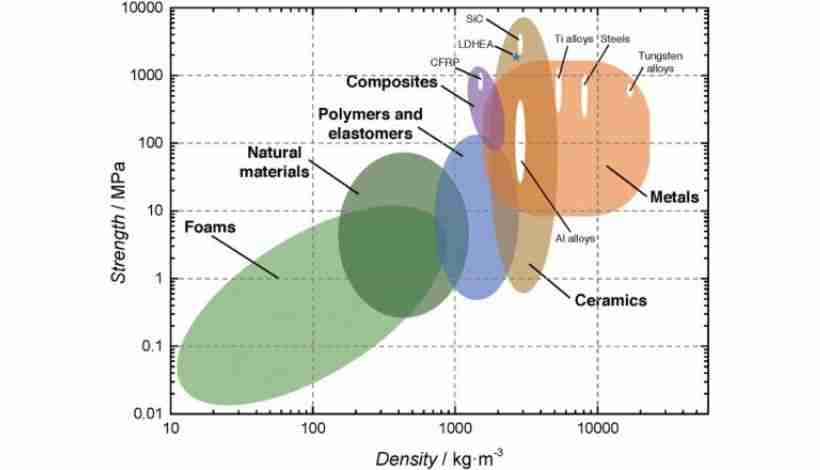
The Four-Pillar Process Chain to 98% Density
Pillar 1: Bimodal Powder Distribution (+5-6% Final Density)
Single-size tungsten powder packs to only 60-64% theoretical density due to geometric limitations. This low green density requires 16-18% linear shrinkage during sintering to reach 98%—excessive shrinkage that causes warping and cracking.
The bimodal solution achieves 70-74% green density through engineered size distribution:
Primary fraction (65-75 vol.%):15-25 μm spherical tungsten powder (gas atomized)
Secondary fraction (25-35 vol.%):2-5 μm spherical tungsten powder (gas atomized)
Critical size ratio:7:1to 10:1 (large to small diameter)
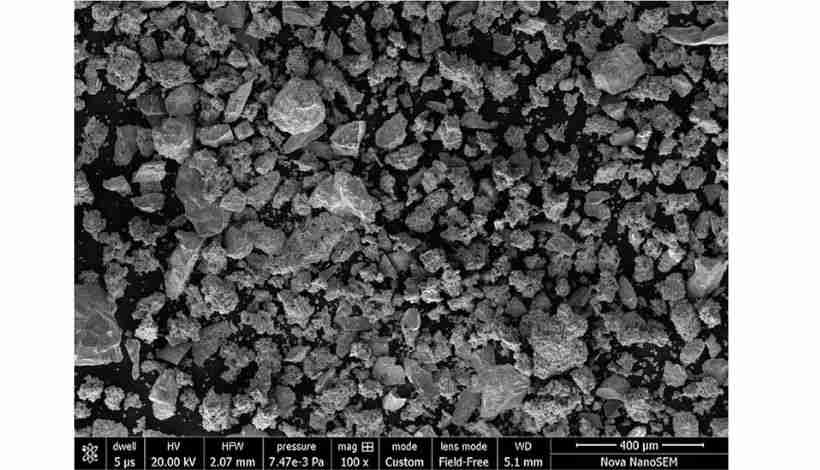
Mechanism 1 - Geometric Packing:
Large particles form the structural skeleton. Small particles fit precisely into tetrahedral and octahedral interstitial sites between large particles. This increases tap density from 68% (monomodal) to 87% (bimodal)—a 19-percentage-point improvement.
Mechanism 2 - Sintering Activation:
Fine particles concentrate at contact points between large grains. Their high surface-to-volume ratio creates localized regions of very high surface energy. During heating, these sites form necks 30-50% faster than contacts between large particles alone, creating early-stage particle bonding that stabilizes the structure before major shrinkage begins.
Critical parameters for 5-6% density gain:
Coarse fraction: - Size: d50 = 18-22 μm- Sphericity: >0.90- Oxygen: <200 ppmFine fraction:- Size: d50 = 2-4 μm - Sphericity: >0.85- Oxygen: <300 ppmMixing ratio: 70:30 (coarse:fine by volume)Mixing protocol: 60 min in V-blender or tumblerAvoid: High-shear mixing (causes particle damage)
Common failure mode:Using >40% fine powder creates a fine-particle-dominated network with poor flowability, causing molding defects and density variations.
⚡ Technical Insight:
The 7:1 size ratio isn't arbitrary—it's derived from geometric packing theory. A small sphere of diameter d can fit into the interstitial space between three large spheres of diameter 7d. Below 5:1, particles don't fill voids efficiently. Above 12:1, fine particles begin forming their own sublattice rather than filling intended spaces.
Pillar 2: Maximum Powder Loading Through Binder Optimization (+3-4% Final Density)
Powder loading directly determines how much the part must shrink during sintering. Higher powder loading = less binder volume = less shrinkage = better dimensional control = higher achievable density.
Three-component binder architecture:
Primary binder (paraffin wax, 38-42% of binder mass):
- Molecular weight: 400-500 g/mol
- Melting point: 58-64°C
- Function: Provides low viscosity (100-300 Pa·s at 180°C) for mold filling
- Removed: First stage debinding (solvent extraction)
Backbone polymer (HDPE, 50-55% of binder mass):
- Molecular weight: 80,000-120,000 g/mol
- Softening point: 125-135°C
- Function: Provides green strength after ejection from mold
- Removed: Thermal decomposition during sintering preheat (300-550°C)
Surfactant (stearic acid, 5-8% of binder mass):
- Molecular weight: 284 g/mol
- Function: Wets tungsten particles, reduces inter-particle friction
- Concentration: 1.5-2.0 wt% relative to powder
Critical Powder Loading (CPL) optimization:
Standard formulations: 58-60 vol% powder → 16-18% linear shrinkage
Optimized formulations:62-65 vol%powder → 13-15% linear shrinkage
Why 3-4% matters:
At 58% powder loading:
- Green density: 11.2 g/cm³ (58% of theoretical)
- Must eliminate 42% binder volume
- High shrinkage stress increases reject rates
At 64% powder loading:
- Green density: 12.3 g/cm³ (64% of theoretical)
- Must eliminate 36% binder volume
- Lower shrinkage stress reduces reject rates
- Final density improves by 3-4 percentage points
Working formulation achieving 64% loading:
Tungsten powder (bimodal): 64.0 vol%Paraffin wax (MW 420): 13.5 vol%HDPE (MW 95,000): 19.5 vol%Stearic acid: 3.0 vol%Mixing protocol:- Mixing temperature: 160-165°C- Mixing time: 90 minutes- Mixer: Sigma blade or planetary- Target viscosity: 250-400 Pa·s at 180°C- Green strength target: >0.5 MPa
Process verification:Measure green density immediately after molding. Should achieve 11.8-12.5 g/cm³. If below 11.5 g/cm³, powder loading is insufficient.
Pillar 3: Isotropic Pressure Distribution During Molding (+2-3% Final Density)
Press-and-sinter applies uniaxial compaction force, creating exponential pressure decay with depth due to die-wall friction. Typical gradient: 90% pressure at punch face, 75% at 10mm depth. This creates permanent density gradients that persist through sintering.
Example P&S density profile:
- Surface: 92% final density
- 5mm depth: 88% final density
- 10mm depth: 84% final density
- Result:8% density variation, part warpage, inconsistent properties
MIM eliminates pressure gradients through fluid-phase pressure transmission:
The feedstock (viscosity 250-400 Pa·s at 180°C) behaves as a non-Newtonian fluid. Injection pressure transmits quasi-isostatically throughout the mold cavity, achieving ±0.5% pressure uniformity across complex geometries.
Critical molding parameters for uniform green density:
Barrel temperature: 185°C ± 2°C (tight control critical)Injection pressure: 1,000-1,200 barInjection velocity: 60-100 mm/s (geometry dependent)Packing pressure: 850 bar, hold for 2-3 secondsPacking pressure decay: Three-stage (850→700→500 bar)Mold temperature: 50-55°CCooling time: 15-30 seconds (depends on wall thickness)
Quality criterion:Measure green density at five locations across the part. Acceptable variation: ±0.5%. If variation exceeds 1.5%, adjust:
- Reduce injection velocity (eliminates turbulent flow)
- Optimize gate location (equalizes flow path lengths)
- Extend packing time (ensures complete pressure transmission)
Mechanism of density improvement:
Uniform green density → Isotropic sintering shrinkage → No differential stress → Complete pore elimination
Non-uniform green density → Differential shrinkage → Internal tensile stress → Microcracking → Arrested densification at 94-96%
Production data correlation:
- Parts with <1% green density variation: 97.5-98.5% final density (98% average)
- Parts with 1-2% variation: 96.0-97.5% final density (96.8% average)
- Parts with >2% variation: 94-96% final density with visible warpage
Pillar 4: Liquid-Phase Sintering in Controlled Atmosphere (+8-10% Final Density)
This is where the 65% dense brown part transforms into a 98% dense component. For tungsten heavy alloys (W-Ni-Fe, W-Ni-Cu), liquid-phase sintering (LPS) is the enabler of high density at manageable temperatures.
Why LPS reaches 98% while solid-state sintering plateaus at 95-97%:
Pure tungsten requires 1,900-2,300°C for solid-state densification. At these temperatures, trapped gas in closing pores creates back-pressure that counteracts surface tension, halting densification at 95-97%.
Tungsten heavy alloys form a liquid phase at 1,450-1,520°C. This liquid accelerates densification through mechanisms 10-100X faster than solid-state diffusion.
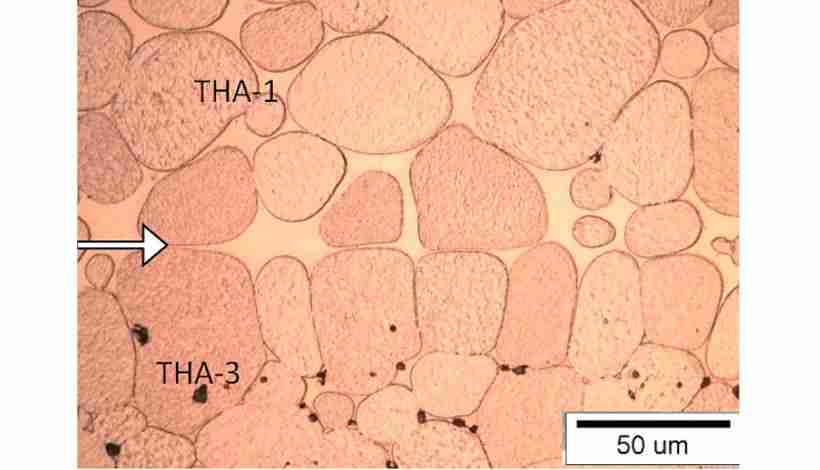
Three-stage LPS mechanism:
Stage 1: Capillary Rearrangement (10-20 minutes)
At 1,450-1,480°C, the Ni-Fe matrix melts (tungsten remains solid). The liquid wets tungsten particles with contact angle 10-30°. Surface tension in the liquid phase creates capillary forces that physically pull tungsten grains together:
Capillary pressure = 2γ cos(θ) / r
Where:
- γ = liquid-tungsten surface tension (~1.5 N/m)
- θ = contact angle (10-30°)
- r = pore radius
For typical pore radii (5-20 μm), capillary pressure reaches 50-150 MPa—sufficient to cause particle rearrangement and sliding.
Result:40-60% of total shrinkage occurs in first 10-20 minutes. Part visibly contracts.
Stage 2: Solution-Reprecipitation (1-3 hours)
Tungsten solubility in molten Ni-Fe: ~31 wt% at 1,500°C. Small tungsten grains (high curvature = high chemical potential) dissolve preferentially into liquid. Dissolved tungsten diffuses through liquid (D ≈ 10⁻⁹ m²/s) and reprecipitates onto larger grains.
Ostwald ripening kinetics:
- Average grain size increases from 5-10 μm to 30-50 μm
- Grain morphology changes from angular to rounded
- Grain shape accommodation enables tighter packing
- Result:30-40% of remaining porosity eliminated
Stage 3: Final Solid Skeleton Densification (30-60 minutes)
Tungsten grains impinge, forming a continuous skeleton. Final 1-2% isolated pores are eliminated by solid-state diffusion through tungsten network—but now aided by liquid phase at grain boundaries.
Critical atmosphere control:
Tungsten powder has native WO₃ surface layer (even high-purity powder). These oxides prevent particle bonding and limit density to 90-93% if not removed.
Hydrogen reduction reaction:
WO₃ + 3H₂ → W + 3H₂O(occurs at 550-850°C)
By 1,000°C in hydrogen atmosphere, surfaces are clean metallic tungsten—enabling direct diffusion bonding.
Optimized sintering cycle for 97.5-98.5% density:
Stage 1 - Thermal debinding: 25°C → 450°C at 2°C/min Hold at 450°C for 2 hours Atmosphere: H₂ (dew point <-60°C)Stage 2 - Oxide reduction: 450°C → 1,000°C at 3°C/min Hold at 1,000°C for 1 hour (WO₃ reduced to W by this point)Stage 3 - Ramp to sintering: 1,000°C → 1,475°C at 5°C/minStage 4 - Liquid-phase sintering: Hold at 1,475°C for 3 hours Temperature uniformity: ±5°C Dew point: <-60°C throughoutStage 5 - Controlled cooling: 1,475°C → 1,000°C at 3°C/min 1,000°C → 25°C at natural cooling
Temperature sensitivity:
- 1,455°C: Insufficient liquid volume → 96.5-97.5% density
- 1,475°C: Optimal liquid phase → 97.5-98.5% density✓
- 1,495°C: Excessive grain growth → 98% density but degraded properties
- 1,520°C: Grain coarsening → mechanical property loss
Atmosphere purity requirements:
- Hydrogen purity: >99.95%
- Oxygen: <10 ppm
- Water vapor (dew point): <-60°C
- Nitrogen: <500 ppm
Verification:If final density is below 97%, first check furnace atmosphere. insufficient oxide reduction is a common root cause.
Understanding the MIM Process
To better understand how these four pillars work together in the complete Metal Injection Molding process, watch this comprehensive overview from the Metal Powder Industries Federation:
Debinding: The Process Step That Enables or Prevents 98% Density
Inadequate debinding is a common cause of failures to reach 98% density. Carbon residue from incomplete binder removal forms tungsten carbide at grain boundaries, creating diffusion barriers that arrest densification.
Two-stage debinding protocol:
Stage 1: Solvent Debinding
- Immerse green parts in n-heptane at 55°C for 10-14 hours
- Removes 55-65% of total binder (paraffin wax component)
- Creates interconnected pore network (35-40% porosity)
- Part retains shape via HDPE backbone
Critical outcome:Pore network must be fully interconnected. If not, Stage 2 gases cannot escape, causing internal pressure buildup and cracking.
Verification:Section a test part after Stage 1. Under optical microscope, should see continuous porosity. If porosity appears isolated, extend solvent debinding time.
Stage 2: Thermal Debinding
- Occurs during sintering preheat (300-550°C)
- HDPE decomposes to gaseous hydrocarbons
- Gases diffuse out through pore network created in Stage 1
- Heating rate critical: 2°C/min maximum to allow gas escape
Why incomplete debinding limits density to 94-96%:
Residual binder leaves 0.1-0.5 wt% carbon contamination. At sintering temperatures (1,475°C), carbon reacts with tungsten:
W + C → WC
Tungsten carbide precipitates at grain boundaries:
- Block atomic diffusion pathways
- Pin grain boundaries (prevent sliding and accommodation)
- Create rigid barriers resistant to densification
Result:Densification arrests at 94-96% regardless of sintering time or temperature.
Quality control:Thermogravimetric analysis (TGA) of debound parts. Residual organics must be <0.05 wt%. If >0.1 wt%, extend thermal debinding hold times:
- Standard: 450°C for 2 hours
- Extended: 450°C for 4 hours + 500°C for 2 hours
Process Troubleshooting: Diagnosing Density Failures
| Achieved Density | Root Cause | Diagnostic Test | Corrective Action |
|---|---|---|---|
| 88-92% | Uniaxial pressing limitations | N/A | Switch to MIM process |
| 92-94% | Powder agglomeration | SEM of starting powder | Use spray-dried granulated powder |
| 94-96% | Incomplete debinding | TGA of brown part (<0.05% residual required) | Extend thermal debinding: 450°C for 4 hrs |
| 95-96% | Single-size powder | Measure powder size distribution | Switch to bimodal (7:1 ratio, 30% fines) |
| 96-97% | High oxygen content | ICP-MS powder analysis (require <200 ppm) | Source gas-atomized spherical powder |
| 96-97% | Low sintering temperature | Review furnace temperature logs | Increase to 1,475-1,480°C for W-Ni-Fe |
| 96-97% | Poor atmosphere control | Measure dew point during sintering | Maintain H₂ dew point <-60°C continuously |
| 96-97% | Low powder loading | Calculate from green density | Optimize binder system to 63-65% loading |
| 97-98%✓ | Process optimized | - | Maintain current parameters |
Frequently Asked Questions
Q: Why does tungsten content affect maximum achievable density?
Liquid phase volume determines densification efficiency:
- 90% W + 10% Ni-Fe:Large liquid volume (10%) → easily achieves 98-99% density
- 93% W + 7% Ni-Fe:Moderate liquid volume (7%) → achieves 97.5-98.5% with optimization
- 95% W + 5% Ni-Fe:Limited liquid volume (5%) → difficult to exceed 97-98%
- 97% W + 3% Ni-Fe:Minimal liquid volume (3%) → plateaus at 96-97%
Above 97% tungsten content, insufficient liquid phase for effective capillary rearrangement. Process becomes predominantly solid-state sintering with associated density limitations.
Q: Can water-atomized powder achieve 98% density?
Theoretically possible but practically difficult. Water-atomized powder has two disadvantages:
- Irregular morphology:Tap density 55-60% vs. 65-70% for gas-atomized spherical powder
- High oxygen content:2,000-5,000 ppm vs. 100-500 ppm for gas-atomized
To reach 98% with water-atomized powder requires:
- Extended hydrogen reduction: 4 hours at 1,000°C (vs. 1 hour for gas-atomized)
- Higher sintering temperature: 1,520°C (vs. 1,475°C)
- Longer hold time: 5 hours (vs. 3 hours)
Even with these adjustments, final density typically plateaus at 96.5-97.5%. Gas-atomized spherical powder is recommended for consistent 98% density achievement.
Q: What causes the most common failures when targeting 98% density?
Common failure sources include:
- Incomplete debinding:Carbon residue forms WC barriers. Fix: Verify <0.05% residual organics via TGA.
- Powder agglomeration:Large agglomerates resist densification. Fix: Use spray-dried granulated feedstock.
- Oxygen contamination:Persistent oxides prevent bonding. Fix: Source powder with <200 ppm O₂, verify hydrogen dew point <-60°C.
- Incorrect sintering temperature:±20°C deviation significantly impacts density. Fix: Calibrate furnace quarterly, use witness samples.
- Non-uniform molding:Green density variation causes differential shrinkage. Fix: Optimize injection parameters for <1% density variation.
Q: How does tungsten grain size affect final density?
Smaller starting grain size enables higher final density:
- Starting powder 2-5 μm:Final grain 20-35 μm → achieves 98-99% density
- Starting powder 15-25 μm:Final grain 40-60 μm → achieves 97-98% density
- Starting powder 30-50 μm:Final grain 80-120 μm → plateaus at 95-97%
Mechanism: Smaller grains have higher surface energy (driving force for sintering) and shorter diffusion distances. However, very fine powders (<2 μm) agglomerate severely, creating processing challenges that offset their sinterability advantage.
Optimal strategy: Bimodal distribution with 70% coarse (15-25 μm) + 30% fine (2-5 μm).
Q: What are typical applications of tungsten MIM parts?
A: Tungsten MIM serves radiation shielding components, X-ray and CT collimators, aerospace and motorsport balance weights, vibration-damping tool shanks, and defense components — parts that need maximum density in a small, complex envelope.
Q: What tungsten alloys can be processed with MIM?
A: The standard MIM tungsten materials are tungsten heavy alloys (WHA) in the 90–97% W range with Ni-Fe or Ni-Cu binder phases, such as 90WNiFe, 93WNiFe, and 95WNiFe per ASTM B777. Tungsten-copper (W-Cu) composites are used when thermal management and electrical conductivity matter as much as density.
Q: How dense can MIM tungsten parts get?
A: With bimodal powder packing and liquid-phase sintering, MIM tungsten heavy alloys routinely reach 98–99% of theoretical density. That density is what delivers the radiation attenuation, inertial mass, and machinability that WHA parts are specified for.
Q: Is tungsten MIM more economical than machining tungsten?
A: Almost always for complex shapes. Tungsten is extremely abrasive on tooling and slow to machine; MIM forms the geometry in the mold and finishes with light grinding on critical datums only. Tooling amortization typically makes MIM the lower-cost route from mid volumes upward.
Conclusion: The Integrated Process Chain
Achieving 98% theoretical density in tungsten MIM requires optimization of four interdependent process stages:
- Bimodal powder distribution(15-25 μm + 2-5 μm at 7:1 ratio, 70:30 blend) → Establishes 70-74% green density, provides localized sintering activation →Contributes +5-6% final density
- High powder loading binder system(63-65 vol% powder through optimized three-component formulation) → Minimizes shrinkage, reduces distortion probability →Contributes +3-4% final density
- Isotropic injection molding(precise temperature, pressure, and velocity control achieving <1% green density variation) → Eliminates pressure gradients that cause differential shrinkage →Contributes +2-3% final density
- Liquid-phase sintering in reducing atmosphere(1,475°C × 3 hrs in H₂ with dew point <-60°C) → Enables capillary rearrangement and solution-reprecipitation mechanisms →Contributes +8-10% final density
Each pillar builds on the previous one. Missing any single optimization causes densification to plateau at 94-96% regardless of how well other factors are controlled.
The difference between 92% and 98% density isn't incremental—it's the elimination of stress-concentrating defects that cause premature failure. This 6-percentage-point improvement translates to higher tensile strength, better wear resistance, and longer fatigue life.
For applications where performance and reliability are non-negotiable, 98% density through optimized tungsten MIM is the only manufacturing pathway that delivers both geometric complexity and material integrity at production scale.
For project-specific tungsten MIM guidance, request a feasibility review from our engineering team.
Precision Metal Parts from Emitech
Nanjing Emitech delivers MIM, CNC machining, and custom metal parts. MIM services · Request a quote
Last updated: 2026-06-24
Continue reading
- Small Gear Materials Selection: Complete Guide to Steel, Aluminum & Advanced Composites
- What Are MIM Parts? A Complete Technical Guide to Metal Injection Molding
- What is Metal Injection Molding (MIM) for Aluminum? Benefits and Applications Explained
- Comprehensive Guide to the Yield Strength of 316 Stainless Steel