
316/316L Stainless Steel Yield Strength
Quick Answer
Annealed 316 stainless steel has a minimum 0.2% offset yield strength of 205 MPa (30,000 psi); annealed 316L is 170 MPa (25,000 psi). Cold-worked 316 can exceed 515 MPa (75,000 psi). The exact value depends on product form, heat treatment, temperature, and whether the part is wrought bar, sheet, or metal injection molding (MIM) 316L. Choose 316 over 304 mainly for molybdenum-enhanced corrosion resistance—not because 316 has higher baseline yield strength.
316 vs 316L Mechanical Properties — Quick Reference
| Property (annealed) | 316 | 316L |
|---|---|---|
| Yield strength, 0.2% offset (min) | 205 MPa (30 ksi) | 170 MPa (25 ksi) |
| Tensile strength (min) | 515 MPa (75 ksi) | 485 MPa (70 ksi) |
| Elongation in 50 mm (min) | 40% | 40% |
| Hardness (max) | 95 HRB (217 HB) | 95 HRB (217 HB) |
| Elastic modulus | 193 GPa (28 × 10⁶ psi) | 193 GPa (28 × 10⁶ psi) |
| Density | 8.00 g/cm³ | 8.00 g/cm³ |
Minimum values per ASTM A240/A276 for annealed product. Cold working raises both grades well above these baselines; see the annealed vs cold-worked table below.
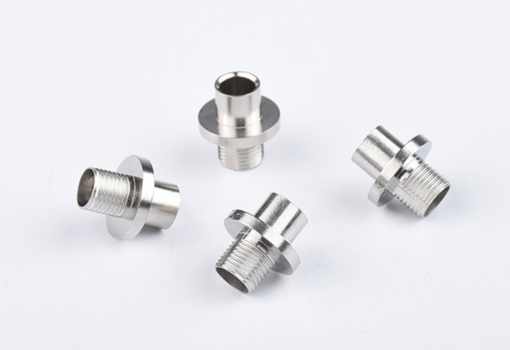
316 stainless steel precision components combine corrosion resistance with reliable mechanical strength.
What Is 316/316L Stainless Steel?
Per ASTM A240/A240M and ASTM A276/A276M, 316 stainless steel is an austenitic chromium-nickel stainless steel distinguished by 2–3% molybdenum. The molybdenum improves resistance to pitting and crevice corrosion in chloride-bearing environments, which is why 316 outperforms standard 304 in marine, chemical, and medical service. Its face-centered-cubic (FCC) austenitic structure keeps it non-magnetic in the annealed condition and gives it excellent toughness, even at cryogenic temperatures.
316L is the low-carbon variant—typically ≤0.03% carbon compared with ≤0.08% in standard 316. The lower carbon reduces sensitization, which is the precipitation of chromium carbides at grain boundaries during welding or prolonged exposure between roughly 425 °C and 860 °C. For welded fabrications and medical devices that will be autoclaved or electropolished, 316L is usually the safer choice.
Both grades are widely available as wrought bar, sheet, plate, tube, and wire, and both are also produced as MIM feedstock. In MIM, fine 316L powder is mixed with a polymer binder, injected into a mold, debound, and sintered to produce complex, net-shape parts. The resulting MIM-316L properties are comparable to wrought 316L, though slight differences in density and grain structure must be considered when yield strength is critical. Per MPIF Standard 35 (2020 edition), sintered MIM-316L achieves a minimum yield strength of 170 MPa and ultimate tensile strength of 510 MPa at ≥96% sintered density, with elongation ≥40%.
316/316L Chemical Composition (wt%, typical)
| Element | 316 | 316L |
|---|---|---|
| Chromium (Cr) | 16.0–18.0 | 16.0–18.0 |
| Nickel (Ni) | 10.0–14.0 | 10.0–14.0 |
| Molybdenum (Mo) | 2.0–3.0 | 2.0–3.0 |
| Carbon (C) | ≤ 0.08 | ≤ 0.03 |
| Manganese (Mn) | ≤ 2.0 | ≤ 2.0 |
| Silicon (Si) | ≤ 1.0 | ≤ 1.0 |
| Iron (Fe) | Balance | Balance |
All values are approximate; refer to ASTM A240 or EN 10088-2 for certified limits. Nitrogen may be added to 316/316L for solid-solution strengthening, typically up to 0.10%.
316 vs 304 Stainless Steel: Yield Strength and When to Choose Each Grade
Engineers often search for 316 vs 304 stainless steel when selecting material for corrosive service. For yield strength, the grades are similar in the annealed condition—both 304 and 316 typically specify a minimum 0.2% offset yield strength of 205 MPa (30,000 psi) per ASTM A240. Low-carbon 316L specifies 170 MPa (25,000 psi), slightly below standard 304/316 because of reduced solid-solution strengthening from lower carbon.
The decisive difference is not yield strength but corrosion performance. Type 316 contains 2–3% molybdenum, which improves resistance to pitting and crevice corrosion in chloride environments (marine, chemical processing, medical fluids). Type 304 has no molybdenum and is adequate for many indoor and food-grade applications but is more susceptible to chloride attack.
| Property | 304 / 304L | 316 / 316L |
|---|---|---|
| Minimum yield strength, annealed (MPa) | 205 (304); 170 (304L) | 205 (316); 170 (316L) |
| Typical tensile strength, annealed (MPa) | ≥ 515 | ≥ 515 |
| Molybdenum | None | 2–3% |
| Chloride / marine corrosion | Good | Superior |
| Weldability (sensitization risk) | 304L preferred for welding | 316L preferred for welding |
| Common MIM grade | MIM-304 | MIM-316L |
For stainless steel injection molding, 316L is the default when parts face autoclave sterilization, salt spray, or surgical fluids. Use 304 when cost is critical and the environment is mild. See our MIM material selection guide for alloy-specific mechanical data.
Yield Strength Values: Annealed vs Cold-Worked
Yield strength is the stress at which a material begins to deform plastically. For design engineers, it is more important than tensile strength because it defines the load limit before permanent deformation occurs. The 0.2% offset yield strength is the standard metric used for metals, including 316/316L stainless steel.
The table below summarizes typical minimum or representative values for common product forms.
| Grade / Condition | Yield Strength (MPa) | Yield Strength (psi) | Typical Product Form |
|---|---|---|---|
| Annealed 316 | ≥ 205 | ≥ 30,000 | Sheet, plate, bar |
| Annealed 316L | ≥ 170 | ≥ 25,000 | Sheet, plate, welded tube |
| 316 sheet, higher strength grade | up to ~290 | up to ~42,100 | Cold-rolled sheet |
| 316 plate | ~250 | ~36,300 | Hot-rolled plate |
| Cold-worked 316 | > 515 | > 75,000 | Spring wire, fasteners, high-stress parts |
| MIM 316L (sintered, high density) | ≥ 205 typical | ≥ 30,000 typical | Net-shape MIM components |
These figures are approximate; always verify against the material certificate or test report. ASTM A240, ASTM A276, EN 10088-2, and MPIF Standard 35 are common references. Cold-worked material is usually specified by tensile-strength level or percent cold reduction.
Factors Affecting Yield Strength
Several microstructural and processing variables determine the yield strength delivered in a finished 316/316L part. Understanding them helps engineers choose the right alloy, heat treatment, and manufacturing route.
Grain Size
Austenitic stainless steels follow the Hall-Petch relationship: finer grains raise yield strength because grain boundaries obstruct dislocation motion. In stainless steel injection molding, sintering time and temperature are carefully controlled to avoid excessive grain growth while still achieving near-full density.
Porosity
Even small amounts of residual porosity act as stress concentrators and reduce the effective load-bearing cross-section, so porous 316L can have lower yield strength than near-full density wrought material. High-quality MIM 316L is typically sintered to 97–99.5% relative density or higher. Density and porosity inspection are standard in MIM production validation.
Heat Treatment
Annealing softens 316/316L by removing dislocations and dissolving carbides. Typical annealing temperatures are 1,010–1,120 °C followed by rapid cooling, giving lower yield strength but high ductility. Cold working—rolling, drawing, swaging, or pressing at room temperature—increases dislocation density and raises yield strength substantially. A 50% cold reduction can push 316 yield strength from 205 MPa to over 515 MPa, although elongation drops.
Alloy Composition
Chromium, nickel, and molybdenum define the base properties of 316, but minor elements also matter. Nitrogen is a potent solid-solution strengthener: increasing it from about 0.03% to 0.08% can raise yield strength by roughly 50 MPa. Specialty nitrogen-alloyed grades such as 316LN can provide 100–200 MPa higher yield strength than standard 316.
Residual Stress
Forging, rolling, machining, and welding leave residual stresses that add to or subtract from applied stresses, effectively shifting the apparent yield point during service. Stress-relief annealing, shot peening, or other surface treatments can manage residual stress and improve fatigue performance.
MIM 316L Properties vs Wrought 316L
MIM 316L is used for small, complex parts that would be expensive to machine from wrought bar or sheet. Fine 316L powder is mixed with a thermoplastic binder, injection molded, debound, and sintered in a controlled atmosphere. When processed correctly, MIM 316L reaches densities above 7.8 g/cm³, close to the wrought value of ~7.99 g/cm³.
| Property | Wrought 316L (annealed) | MIM 316L (sintered) |
|---|---|---|
| Density (g/cm³) | ~7.99 (~7,990 kg/m³, 0.289 lb/in³) | ≥ 7.8 (≥ 7,800 kg/m³, 0.282 lb/in³) |
| Yield Strength (MPa) | ≥ 170 | ≥ 205 typical |
| Young's Modulus (GPa) | ~193 | ~190–193 |
| Tensile Strength (MPa) | ≥ 485 | ≥ 520 |
| Elongation (%) | ≥ 40 | ≥ 30 |
| Hardness (HV) | ~150 | 120–180 |
The slightly lower elongation in MIM 316L is mainly due to small residual pores and oxide inclusions. For most small precision components the difference is not functionally significant. Tight dimensional tolerances and excellent surface finish make MIM 316L attractive for medical devices, marine fasteners, and chemical sensor housings.
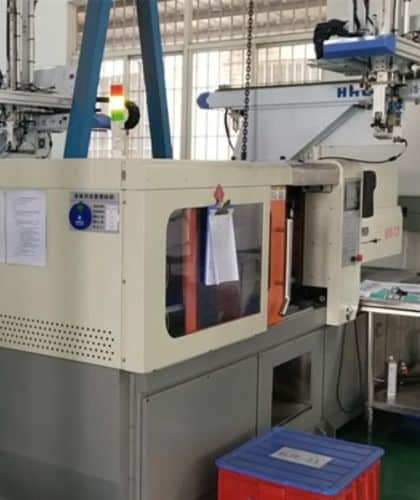
MIM injection molding allows complex 316L parts to be formed before sintering to near-full density.
Temperature Effects on Yield Strength
316/316L loses yield strength as temperature rises because thermally activated dislocation motion makes plastic deformation easier. The FCC austenitic structure remains stable, retaining useful strength and oxidation resistance at moderately elevated temperatures and good toughness at cryogenic temperatures.
| Temperature (°C) | Temperature (°F) | Typical 0.2% Yield Strength (MPa) | Typical 0.2% Yield Strength (psi) |
|---|---|---|---|
| 20 | 68 | 205 | 29,750 |
| 100 | 212 | 175 | 25,400 |
| 200 | 392 | 155 | 22,500 |
| 300 | 572 | 140 | 20,300 |
| 400 | 752 | 130 | 18,850 |
| 500 | 932 | 120 | 17,400 |
| 600 | 1,112 | 110 | 15,950 |
| 700 | 1,292 | 95 | 13,775 |
| 800 | 1,472 | 75 | 10,875 |
Values are typical for annealed wrought 316/316L. For prolonged high-temperature service, designers should also consider creep resistance and carbide precipitation. Intermittent exposure up to about 925 °C is possible, but continuous service is usually limited to roughly 870 °C. Avoid the 425–860 °C range for long durations unless a stabilized grade such as 316Ti or 316Nb is used.
Corrosion Resistance and Stress Interaction
Yield strength and corrosion resistance are not independent. High residual tensile stresses can promote stress-corrosion cracking (SCC) in chloride environments, so cold-worked 316 with high yield strength may have increased SCC susceptibility when exposed to chlorides and elevated temperature.
The passive chromium-oxide film that protects 316/316L must remain intact. Passivation removes surface contaminants, electropolishing produces a smooth passive finish common in the medical industry, and shot peening introduces compressive stresses that improve fatigue life.
Applications of 316/316L Stainless Steel
The combination of moderate yield strength, high ductility, excellent weldability, and outstanding corrosion resistance makes 316/316L suitable for a wide range of demanding applications.
Medical Devices
316L is widely used for surgical instruments, dental brackets, endoscopic components, and temporary implants, meeting ASTM F138 and ISO 5832-1. Its biocompatibility, non-magnetic response, and polishability make it ideal for operating-room tools. MIM-316 is often chosen for intricate geometries.
Marine Hardware
The molybdenum in 316 gives superior resistance to pitting and crevice corrosion in seawater. Applications include fittings, deck hardware, fasteners, and underwater sensor housings. Cold-worked 316 is often used for high-strength rigging.
Chemical and Petrochemical Processing
316/316L resists many acids, alkalis, and salt solutions in heat exchangers, reactor vessels, valve bodies, pump housings, and piping. Higher alloyed grades may be needed for aggressive chlorides, but 316L remains the workhorse for moderate conditions.
Food and Pharmaceutical Equipment
Hygiene requirements demand smooth, corrosion-resistant surfaces that withstand frequent cleaning and sterilization. 316L is widely used in tanks, mixers, spray nozzles, and processing lines.
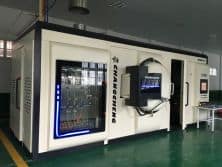
Controlled-atmosphere sintering is what gives MIM 316L its near-wrought mechanical properties.
Testing Methods for Yield Strength
Accurate yield-strength measurement requires standardized mechanical testing. The most common method is the tensile test according to ASTM E8/E8M or ISO 6892-1. The 0.2% offset yield strength is determined by drawing a line parallel to the elastic portion of the stress-strain curve, offset by 0.2% strain.
For MIM and powder-metallurgy parts, test specimens are often produced alongside production parts. Dimensional inspection, density measurement, metallographic porosity analysis, and hardness testing are used together with tensile testing. Common standards include:
- ASTM E8/E8M — Tension testing of metallic materials
- ASTM A370 — Mechanical testing of steel products
- ISO 6892-1 — Metallic materials tensile testing at ambient temperature
- MPIF Standard 35 — Materials standards for MIM parts
- ASTM B311 — Density of powder metallurgy materials
Hardness testing provides a quick indicator but cannot fully replace a tensile test when yield strength must be certified. For critical components, material-test reports should include actual tensile yield strength, ultimate tensile strength, and elongation values.
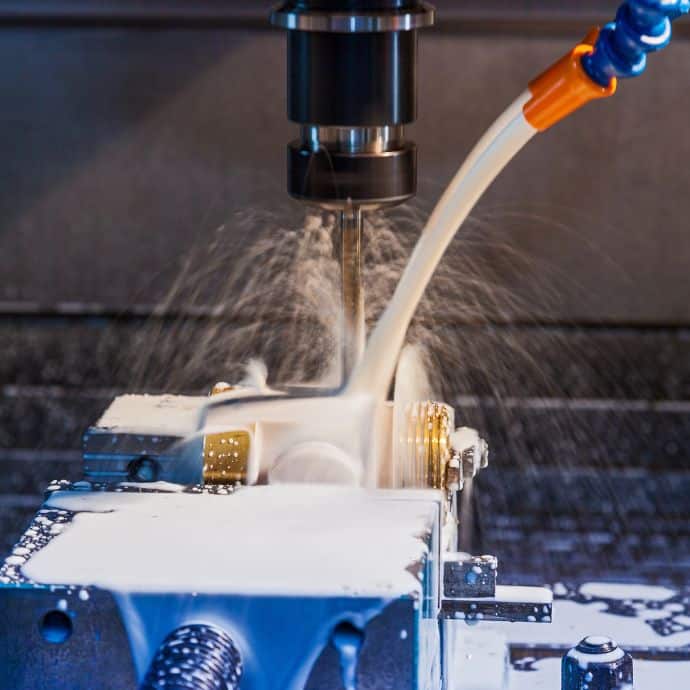
Mechanical testing and dimensional inspection confirm that every 316/316L batch meets design requirements.
Design Considerations for 316/316L Parts
When designing with 316/316L, use the minimum guaranteed yield strength from the relevant material standard rather than a typical value. Room-temperature data cannot be extrapolated to elevated-temperature service without correction, and cold-worked material will have reduced ductility that must be checked against forming requirements.
For MIM components, specify density and porosity acceptance criteria alongside mechanical-property requirements. A part that meets a tensile-strength target but contains connected porosity may still fail prematurely in fatigue or corrosive environments. Working with an experienced MIM supplier ensures that material selection, process controls, and inspection plans are aligned from the start.
Frequently Asked Questions
Q: What is the yield strength of 316 stainless steel?
Annealed 316 stainless steel has a minimum 0.2% offset yield strength of 205 MPa (30,000 psi) per ASTM A240. Annealed 316L specifies 170 MPa (25,000 psi). Cold-worked 316 can exceed 515 MPa (75,000 psi).
Q: How does 316 compare to 304 stainless steel for yield strength?
Annealed 304 and 316 have the same minimum yield strength (205 MPa). 316L and 304L both specify 170 MPa. Choose 316 over 304 for molybdenum-enhanced corrosion resistance in chlorides—not for higher baseline strength.
Q: What is the difference between 316 and 316L yield strength?
Annealed 316 is typically 205 MPa (30,000 psi), while annealed 316L is specified at 170 MPa (25,000 psi). The lower carbon content of 316L slightly reduces solid-solution strengthening but greatly improves weldability and intergranular corrosion resistance.
Q: Can 316 stainless steel be heat treated to increase yield strength?
No. Because 316 is austenitic, it cannot be hardened by quenching and tempering. Yield strength can only be increased by cold working, nitrogen alloying, or grain-size control.
Q: How does MIM 316L compare to wrought 316L for load-bearing parts?
High-quality MIM 316L can achieve yield strength and tensile strength comparable to wrought 316L when sintered to high density. The main differences are slightly lower elongation and residual porosity. Compare MIM-316 and MIM-304 in our material guides.
Q: Does porosity reduce the yield strength of MIM 316L?
Yes. Residual pores reduce the load-bearing area and act as stress concentrators. Emitech targets sintered density of 97% or above and verifies it through quality inspection protocols.
Q: Is 316 stainless steel magnetic?
In the fully annealed condition, 316 is essentially non-magnetic. Cold working can produce a small amount of strain-induced martensite and a slight magnetic response, but permeability usually remains below 1.02.
Q: What is the maximum service temperature for 316/316L?
For continuous service, 316/316L is generally used up to about 870 °C; intermittent exposure can reach roughly 925 °C. However, yield strength decreases steadily above room temperature, so high-temperature design must use elevated-temperature data.
Q: Which surface treatment is best for improving corrosion performance of 316/316L?
Passivation (ASTM A967) and electropolishing are the most common treatments. Passivation removes contaminants and restores the passive film; electropolishing smooths the surface. Shot peening can add compressive stresses for fatigue-critical parts.
Q: How is yield strength measured in a quality-control laboratory?
Yield strength is measured by tensile testing according to ASTM E8/E8M or ISO 6892-1, using the 0.2% offset method. Supporting tests include hardness, density, and metallography.
For MIM 316L components, send drawings to Emitech for material and tolerance review via our contact page.
Source Custom MIM Parts from Emitech
Nanjing Emitech (ISO 9001:2015) delivers MIM from tooling through sintering and finishing. Custom MIM parts · MIM services · Request a quote
References
- ASTM A240/A240M-23, Standard Specification for Chromium and Chromium-Nickel Stainless Steel Plate, Sheet, and Strip for Pressure Vessels and for General Applications, ASTM International, 2023.
- ASTM A276/A276M-23, Standard Specification for Stainless Steel Bars and Shapes, ASTM International, 2023.
- MPIF Standard 35, Materials Standards for Metal Injection Molded Parts, Metal Powder Industries Federation, 2020 Edition.
- ASM Handbook, Volume 1, Properties and Selection: Irons, Steels, and High-Performance Alloys, ASM International, 1990.
Last updated: 2026-08-01