
Performance Transformation #2: Exceptional Edge Retention
In high-stakes cutting applications, the edge is everything. HRC 58-60 ensures it lasts.
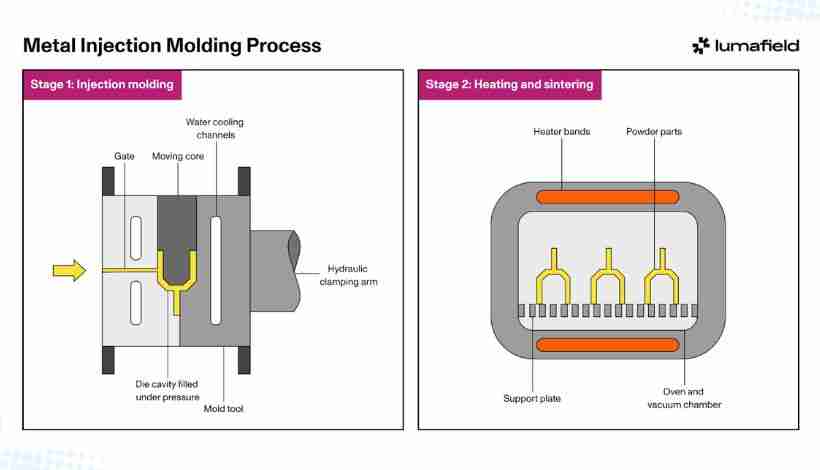
CT scans often reveal internal porosity in poorly sintered parts. These invisible defects compromise mechanical integrity, leading to sudden edge collapse. Only fully dense MIM parts deliver true edge retention.
Where Edge Retention is Critical
Medical
- Scalpel Blades
- Biopsy Punches
- Dental Scalers
Industrial
- Trimming Dies
- Automated Cutters
- QC Punches
Consumer
- Premium Cutlery
- Outdoor Knives
- Grooming Tools
Performance Transformation #3: Structural Stability
Precision isn't just about making it right; it's aboutstayingright under load.
The Challenge: Drift & Creep
Soft materials deform microscopically under load. A valve seat that deforms by just 50 micrometers leaks. A bearing race that distorts causes runout.
🛡️ The Physics of Stability
High Hardness = High Yield Strength.
440C (HRC 60) boasts a yield strength of1,900 MPa. It resists plastic deformation and returns to its original shape with minimal hysteresis. This is the definition of "Dimensional Stability."
Where Stability is Critical
📏 Precision Instruments
Optical alignment, Gauges, Reference standards.
⚙️ High-Stress Systems
Bearing races, Spring elements, High-vibration fasteners.
🔩 Critical Assemblies
Watch movements, Valve poppets, Sensor mounts.
How MIM Enables 440C High Hardness in Complex Geometries
💡 The Manufacturing Paradox
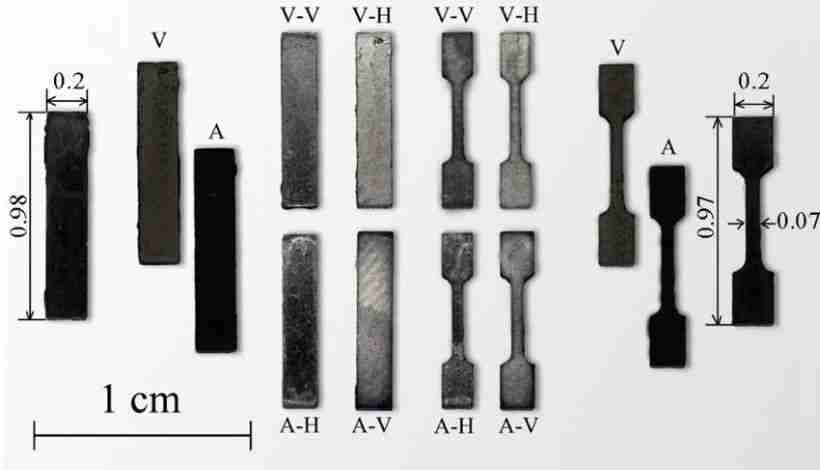
Heat-treated 440C (HRC 60) is unmachinable. MIM solves this bydecoupling shaping from hardening. It is an enabler, not just an alternative.
The MIM Advantage: Shape First, Harden Later
This sequence bypasses hard-machining limitations entirely:
1. Shape (Soft)
Complex geometries formed while material is pliable feedstock.
2. Consolidate
Sintering at 1240-1290°C produces 98-99% theoretical density.
3. Harden
Heat treatment transforms the finished geometry to HRC 58-60.
Video: Professional MIM process overview. Source: OptiMIM
Process Controls for Maximum Hardness
Achieving HRC 60 isn't automatic. It requires three specific controls:
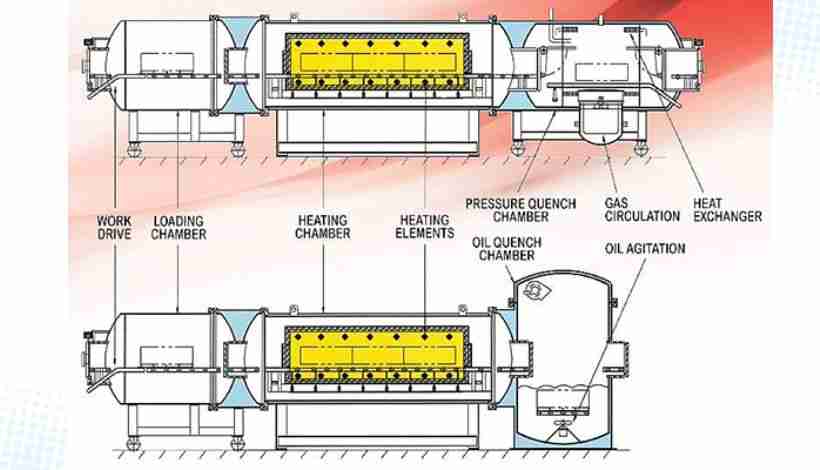
1. Carbon Management
Sintering loses carbon. We must add controlled carbon to feedstock to land at0.95-1.20 wt%final content.
2. Vacuum Sintering
Vacuum produces superior mechanical properties compared to hydrogen for this alloy.
3. Cryogenic Heat Treatment
Austenitize → Quench →Cryo (-75°C)→ Temper. This step converts retained austenite to hard martensite.
The Result: MIM vs. Wrought 440C
| Property | MIM 440C (Optimized) | Wrought 440C |
|---|---|---|
| Hardness (HRC) | 58 - 63 | 58 - 60 |
| Density (g/cm³) | 7.6 - 7.7 | 7.65 - 7.75 |
| Tensile Strength | >2000 MPa | 1970 - 2030 MPa |
Conclusion: MIM delivers equivalent performance with infinite geometric freedom.
Material Selection: Is 440C Right for You?
✅ Choose 440C When:
- ✓Wear Critical:Surface degradation determines life.
- ✓Edge Retention:Sustained sharpness needed.
- ✓Dimensional Stability:Zero deformation under load.
- ✓Complex Geometry:Cannot machine in hard state.
- ✓Volume:>5,000 units/year.
❌ Avoid 440C When:
- ✗Severe Corrosion:Use 316L or 17-4PH instead.
- ✗Impact/Shock:Low toughness leads to fracture.
- ✗Welding Required:High carbon makes it non-weldable.
- ✗Extreme Toughness:Use 420 or 17-4PH.
⚖️ The Trade-off:
HRC 58-60 comes at a cost. Elongation is only1-4%. Do not use 440C for parts that must bend or absorb shock loads.
Industrial Applications: Where Hardness Transforms Performance
HRC 58-60 isn't just a number; it's a capability unlocked across industries.
Frequently Asked Questions
Q: What makes 440C harder than other stainless steels?
It's the chemistry. Carbon (1.1%) is the key driver. For comparison, 304 SS has ~0.08% carbon (soft), 420 SS has ~0.35% carbon (medium), and 440C has ~1.10% carbon (extreme hardness). This high carbon content allows the formation of hard Martensite and Chrome Carbides.
Q: Can MIM actually match Wrought hardness?
Yes, but with a catch. Standard MIM often fails (~55 HRC) due to carbon loss. Optimized MIM adds carbon to the feedstock to compensate. When done right, MIM achieves 58-63 HRC, matching or exceeding wrought material.
Q: What's the difference between 440 A, B, and C?
The grades differ primarily by carbon content, which dictates their hardness and best applications. 440A contains ~0.7% carbon (55-57 HRC) and is best for corrosion resistance. 440B contains ~0.85% carbon (56-58 HRC) and provides a balanced profile. 440C contains ~1.1% carbon (58-60+ HRC) and is best for maximum wear resistance and edge retention.
Q: Can hardened 440C be machined?
Barely. You are limited to grinding or EDM (Electrical Discharge Machining). This is why Metal Injection Molding (MIM) is so valuable for net-shape manufacturing—you shape the part while it's soft, avoiding expensive hard-machining operations later.
Q: What is the cost premium?
The input cost is higher than 304/316L, but the lifecycle value can be favorable for wear-critical applications. For high-volume wear parts (>10,000 units), the total cost of ownership strongly favors 440C.
Q: How do I specify it correctly?
Use a strict engineer's specification checklist: require a final carbon content of 0.95 - 1.20 wt% (verify via analysis), a hardness of HRC 58 minimum / HRC 60 target, and a density of ≥7.5 g/cm³. Additionally, always request full heat treat records, including verification of cryogenic treatments.
Conclusion: Hardness as a Multiplier
The 3 Fundamental Transformations
- Wear Resistance:Extends life 3-5x, slashing maintenance costs.
- Edge Retention:Transforms user experience in medical & consumer tools.
- Structural Stability:Zero drift under load for precision mechanics.
The Final Verdict:The question isn't "Is 440C hard enough?"—it is. The question is whether your application warrants the trade-offs in toughness and corrosion.
For components where wear, edge degradation, or dimensional drift determines functional life,HRC 58-60 is not a luxury—it is an engineering necessity.
Precision Metal Parts from Emitech
Nanjing Emitech delivers MIM, CNC machining, and custom metal parts. MIM services · Request a quote
Last updated: 2026-06-24
Continue reading
- Understanding the Chemical Composition and Properties of Stainless Steel 304
- Can Stainless Steel Be Sintered? Engineer's Technical Decision Guide
- Metal Injection Molding for Surgical Instruments: Technical Analysis of Advanced Manufacturing Solutions
- Titanium MIM: The Precision Manufacturing Revolution Transforming High-Performance Industries