
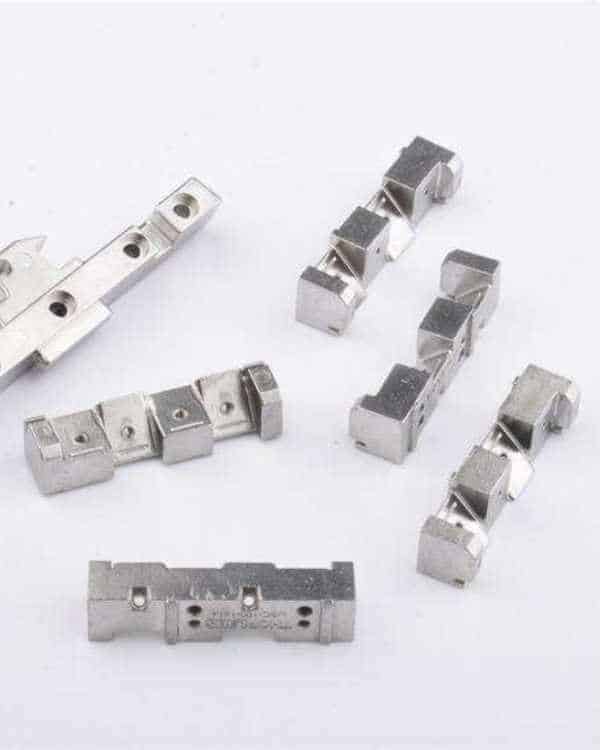
What is Sintering? Definition, Process & Complete Guide
Key Takeaways
- Core Definition: Sintering bonds metal or ceramic powder particles by heating them to 50-90% of their melting point without liquefying the material.
- Material Efficiency: Achieves >95% powder utilization with minimal waste compared to machining in traditional machining.
- Cost Advantage: At high volumes (50,000+ parts), sintering can reduce costs compared to machining from bar stock.
- Density & Properties: Produces parts with 88-98% theoretical density, suitable for complex geometries in automotive, aerospace, and medical industries.
Sintering is a manufacturing process that bonds metal or ceramic powder particles into solid components by heating them to 50-90% of their melting point. Unlike casting (which completely melts material) or machining (which cuts away material), sintering uses heat and atomic diffusion to fuse powder particles while they remain solid, creating dense parts with minimal material waste and complex geometries impossible through traditional methods.
Key Facts:
- Temperature range : 1000-2000°C (below melting point)
- Density achieved : 88-98% of theoretical maximum
- Material efficiency : >95% powder utilization vs. 40-60% waste in machining
- Main industries : Automotive, aerospace, medical devices, electronics, cutting tools
What Is Sintering? The Core Definition
You're looking at a pile of metal powder—loose, weak, unable to hold any shape. Within hours, that same powder becomes a solid gear strong enough to transmit power in an automotive transmission. This transformation is sintering.
Sintering is a thermal process that permanently bonds powder particles together by heating them in a controlled environment. The critical distinction: the powder never melts. Instead, heating to 50-90% of the material's melting temperature provides enough energy for atoms to diffuse across particle boundaries, creating solid bonds while maintaining the solid state.
Think of it this way: imagine pressing snowballs together. The snow grains bond at contact points without the snow melting into water. Sintering works similarly at the atomic level—particles stick together through atomic movement, not by melting and resolidifying.
Video: Visual explanation of the sintering process
The Basic Process Steps
The sintering journey begins with powder and ends with a finished component:
1. Powder Preparation : Metal or ceramic powder (typically 1-100 micrometers in size) is mixed with small amounts of binder and lubricant.
2. Compaction : The powder mixture is pressed in a die under high pressure (100-800 MP), forming a "green body"—a fragile part held together by mechanical interlocking and binder. This green compact has about 50-70% of the final density.
3. Sintering (Heating) : The green body is placed in a furnace and heated according to a controlled temperature profile:
- Debinding (200-600°C): Binders burn off or evaporate
- Heating (600°C to sintering temperature): Gradual temperature increase
- Sintering (typically 1000-2000°C): Held at peak temperature for 20 minutes to 4 hours
- Cooling : Controlled cooling prevents cracking
4. Final Part : The sintered component has 88-98% density, with significantly improved strength and dimensional stability.
Why "Sintering" and Not "Melting"?
The name comes from the German word "sinter," meaning to cake or coalesce without melting. This distinction is fundamental to understanding what sintering means:
| Characteristic | Sintering | Melting/Casting |
|---|---|---|
| Material state | Remains solid | Becomes liquid |
| Temperature | 50-90% of melting point | 100%+ of melting point |
| Energy required | Lower (cost-effective) | Higher (energy-intensive) |
| Dimensional control | Excellent (±0.1-0.3mm) | Good (±1-2mm) |
| Material waste | Minimal (<5%) | Moderate (15-25%) |
For materials with extremely high melting points—tungsten (3422°C), molybdenum (2623°C), or certain ceramics—sintering is often the only practical manufacturing route. Achieving complete melting would require enormous energy costs and specialized equipment.
Why Sintering Works: The Fundamental Principle
Understanding why powder particles bond during sintering requires looking at energy and atomic movement.
The Driving Force
Powder particles have enormous surface area. This vast surface represents high energy—specifically, surface free energy. Nature always moves toward lower energy states, and sintering provides the pathway.
When you heat the powder compact, atoms gain enough energy to move. They migrate from particle surfaces (high energy regions) to the contact points between particles (lower energy regions). As atoms accumulate at these contact points, they form "necks" or bridges that bind particles together.
You can visualize this through surface geometry. Particle surfaces bulge outward (convex), creating regions of high atomic stress. Where particles touch, there's an inward-curving (concave) neck region with lower stress. Atoms preferentially move from high-stress to low-stress areas, gradually filling the spaces between particles.
The Role of Temperature
Temperature determines how fast atoms can move. At sintering temperatures (typically 50-90% of melting point), atoms have sufficient energy to:
- Break free from their current positions
- Migrate across particle boundaries
- Find new, more stable positions
This atomic migration—called diffusion—occurs primarily along grain boundaries (the interfaces between crystal grains) because atoms move more easily along these pathways than through the crystal interior.
What You Observe
As sintering progresses, you'll see:
Early stages : Necks form at particle contact points. Particles remain distinct but begin bonding.
Middle stages : Necks grow larger. Particle boundaries disappear, replaced by grain boundaries. The compact shrinks measurably (5-15% linear shrinkage). Pores become smaller and more rounded.
Late stages : Most pores have been eliminated. The remaining pores become isolated rather than interconnected. Density reaches 88-98% of theoretical maximum. Further densification becomes increasingly difficult.
This progression explains why achieving full density (>99%) is challenging without applying external pressure—once pores close off, trapped gas inside opposes further shrinkage.
Types of Sintering: Different Approaches
While the fundamental principle remains constant—bonding particles through heat—several variants exist for different materials and requirements.
Solid-State Sintering
This is conventional sintering where everything remains solid. Densification occurs purely through atomic diffusion in the solid state.
Advantages:
- Simple and well-understood
- Excellent microstructure control
- Lower equipment cost
- Suitable for most metals and ceramics
Limitations:
- Slower densification requiring longer times
- May need very high temperatures
- Difficult to achieve full density without pressure
Common applications: Structural steel parts, iron-based automotive components, alumina ceramics, tungsten lamp filaments
Liquid Phase Sintering
A small amount (typically 1-10%) of a secondary material with lower melting point is added. At sintering temperature, this forms a liquid that dramatically accelerates densification.
The liquid acts like a lubricant between solid particles, allowing rapid rearrangement. Solid material also dissolves into the liquid and reprecipitates in a more favorable arrangement, filling pores quickly.
Classic example: Tungsten carbide-cobalt cutting tools. Pure tungsten carbide would require impractically high temperatures to sinter. Adding 6-12% cobalt, which forms a liquid at 1320°C, enables full densification at 1400-1500°C—more than 1000°C lower than would be needed for pure WC.
Advantages:
- Much faster densification (minutes vs. hours)
- Lower sintering temperature possible
- Higher final density achievable
Common applications: Cutting tool inserts, hard facing materials, certain electronic ceramics, diamond tool segments
Pressure-Assisted Sintering
Applying external pressure during heating provides an additional driving force for densification.
Hot Pressing : Powder is simultaneously heated and compressed in a die. This achieves near-theoretical density but is limited to simpler shapes.
Hot Isostatic Pressing (HIP) : High-pressure inert gas (typically 100-200 MPa argon) is applied uniformly from all directions while at elevated temperature. This achieves virtually complete densification (<0.1% residual porosity) and properties approaching wrought materials.
Advantages:
- Achieves maximum density and properties (>99%)
- Eliminates essentially all porosity
- Can process materials difficult to sinter conventionally
Limitations:
- High equipment and operating costs
- More complex processing
Common applications: Aerospace turbine components, orthopedic implants requiring maximum fatigue resistance, nuclear reactor components
When Should You Use Sintering? Decision Framework
Selecting the right manufacturing process requires evaluating multiple factors. Use this framework to assess whether sintering fits your needs.
Choose Sintering When:
✅ Production volume : 5,000+ parts annually (economics favor sintering at volume)
✅ Part complexity : Medium to high geometric complexity that would require multiple machining operations
✅ Material challenges : Working with high-melting-point materials (refractory metals, advanced ceramics)
✅ Near-net-shape benefits : Final part geometry close to the sintered shape, minimizing machining
✅ Controlled porosity : Need intentional porosity for self-lubrication, filtration, or other functions
✅ Material combinations : Require composite structures or alloys difficult to produce by casting
✅ Tolerance requirements : ±0.1-0.3mm acceptable (tighter tolerances require post-machining)
Avoid Sintering When:
❌ Low volume : <1,000 parts (tooling investment not economical)
❌ Very large parts : Diameter >300mm or mass >50kg (press capacity and furnace size limitations)
❌ Full density critical : Application requires zero porosity and conventional sintering + HIP is too expensive
❌ Rapid prototyping : Need design flexibility without tooling investment (use 3D printing or machining)
❌ Extremely tight tolerances : Require ±0.01mm as-processed (machining is better)
❌ Complex undercuts : Geometry has features impossible to create in rigid die compaction
Cost Comparison: When Does Sintering Pay Off?
Sintering becomes cost-effective when production volumes are high enough to amortize tooling and when the part geometry eliminates significant machining. The exact payback point depends on material, part size, number of secondary operations avoided, and supplier pricing. A detailed quote comparing sintering against machining or casting is the only reliable way to determine the crossover volume for a specific component.
Real-World Applications: Where Sintering Matters
Understanding what sintering means becomes clearer when you see where it's used.
Automotive Industry: The Largest Market
Powder metallurgy components account for 18-20kg per vehicle. The automotive industry represents the largest market for sintered parts globally.
Transmission Components : Synchronizer hubs, sprockets, planet gears, and clutch plates are produced by high-volume sintering. A typical Ford F-150 transmission contains 15-20 sintered parts. The near-net-shape capability eliminates 60-80% of the machining required compared to forged alternatives, saving meaningful cost per transmission.
Engine Components : Valve seat inserts must withstand extreme temperatures and corrosive exhaust gases. Liquid phase sintered iron-copper-carbon alloys provide the necessary hardness and thermal conductivity. Production cost: significantly lower than a machined wrought steel insert.
Self-Lubricating Bearings : Sintered bronze bearings with 20-25% intentional porosity are impregnated with oil. During operation, friction heat causes the oil to expand and exude from pores, providing continuous lubrication. These bearings require no external lubrication system and last 50,000-100,000 miles in applications like seat adjustment mechanisms and small motors.
Magnetic Sensors : ABS wheel speed sensors use sintered soft magnetic iron-silicon alloys. The powder metallurgy route provides superior magnetic properties at 40% lower cost than machining from magnetic steel bar stock.
Aerospace: Where Performance Justifies Cost
Aerospace applications demand maximum material performance, making advanced sintering techniques economically viable.
Turbine Components : Nickel-based superalloy turbine disks operate at 1200-1300°C under high centrifugal stress. These critical parts are produced by powder metallurgy followed by hot isostatic pressing, achieving properties equivalent to forged material with better homogeneity. A powder metallurgy turbine disk carries a premium price but offers 15-20% weight savings versus forged equivalents—critical in aerospace where every kilogram carries significant annual fuel cost.
Titanium Structures : Aerospace structural components made from titanium powder metallurgy achieve 30-40% weight reduction versus steel while maintaining equivalent streng. The buy-to-fly ratio (starting material mass ÷ final part mass) is approximately 3:1 for PM versus 15:1 for machining from billet. At varies/kg for titanium, this material savings is substantial: a 5kg structural component costs far less in powder than the value of the machined billet waste it replaces.
Medical Devices: Biocompatibility and Precision
Medical applications exploit sintering's ability to create both dense structures and controlled porosity.
Orthopedic Implants : Hip and knee replacement stems are manufactured from sintered cobalt-chromium or titanium alloys. The critical innovation: porous coatings (40-60% porosity) sintered onto implant surfaces encourage bone ingrowth (osteointegration). Bone cells grow into the porous structure, creating biological fixation that eliminates the need for bone cement and extends implant life from 10-15 years to 20-30 years.
Dental Prosthetics : Zirconia dental crowns are produced by sintering pre-shaped green bodies that shrink approximately 20-25% during sintering to final dimensions. A CAD/CAM system mills the oversized green crown, which then sinters to exact specifications with excellent aesthetics (white, tooth-like appearance) and strength exceeding 1000 MPa—double that of alumina crowns.
Electronics: Miniaturization Enabler
Modern electronics would be impossible without sintered ceramics.
Multilayer Ceramic Capacitors (MLCCs) : Your smartphone contains 800-1000 tiny capacitors, mostly MLCCs. These consist of alternating layers of dielectric ceramic (barium titanate) and metal electrodes, co-sintered into a monolithic structure. The dielectric layers are 0.5-1 micrometer thick after sintering—achievable only through precise control of powder properties and sintering parameters. Global MLCC production exceeds 1 trillion units annually.
Electrical Contacts : Switch and relay contacts must withstand repeated mechanical wear and electrical arcing. Sintered silver-metal oxide composites (typically silver with 8-12% cadmium oxide or tin oxide) provide optimal conductivity with arc resistance. The unique porosity and microstructure from sintering cannot be replicated by casting or machining.
Cutting Tools: Performance That Defines Industries
The cutting tool industry relies almost exclusively on sintered materials.
Cemented Carbides : Tungsten carbide-cobalt cutting inserts dominate metalworking. These achieve hardness of 1500-2000 HV (approaching diamond) combined with adequate toughness through liquid phase sintering at 1400-1500°C. The characteristic microstructure—hard WC grains (2-5 micrometers) bonded by ductile cobalt—is impossible to create by any other manufacturing route. Global production exceeds 50,000 tons annually, worth billions of dollars.
A typical WC-Co cutting insert is inexpensive yet enables machining of steel at cutting speeds of 100-400 m/min—3-5 times faster than high-speed steel tools, dramatically improving manufacturing productivity.
Sintering vs. Other Manufacturing Methods
Understanding what sintering means requires comparing it to alternatives.
Comprehensive Comparison Table
| Factor | Sintering | Casting | Forging | Machining | 3D Printing (Metal) |
|---|---|---|---|---|---|
| Material utilization | 95%+ | 70-80% | 50-70% | 40-60% | 95%+ |
| Typical tolerance | ±0.1-0.3mm | ±1-2mm | ±0.5-1mm | ±0.01-0.05mm | ±0.1-0.5mm |
| Density achieved | 88-98% (>99% with HIP) | 99-100% | 100% | 100% | 99-100% |
| Geometric complexity | High | Medium | Low | Very high | Very high |
| Production rate | Very high | High | Medium | Low | Very low |
| Tooling cost | Medium-high | Low-medium | High | Low | None |
| Unit cost at volume | Low | Medium | Medium | High | Very high |
| Minimum economic volume | 5,000+ | 100+ | 1,000+ | 1-1,000 | 1-100 |
| Maximum part size | ~300mm di. | No practical limit | ~3m | No practical limit | ~500mm |
| Controlled porosity | Yes | No | No | No | Possible |
When Each Process Excels
Choose Casting for:
- Large parts (>10kg)
- Low to medium volume (100-10,000 parts)
- Materials that don't sinter well
- When material properties from solidification are advantageous
Choose Forging for:
- Maximum mechanical properties needed (streng, toughness, fatigue resistance)
- Critical load-bearing applications
- Grain flow orientation important
- Volume justifies tooling (typically >1,000 parts)
Choose Machining for:
- Prototypes and low volume (<1,000 parts)
- Very tight tolerances required (±0.01mm)
- Complex features requiring precision
- When material waste is acceptable
Choose Metal 3D Printing for:
- Complex geometries impossible with other methods
- Customization (medical implants, dental)
- Low volume with high design freedom
- Rapid prototyping
- When part cost is less critical than design freedom
Choose Sintering for:
- High volume production (>5,000 parts)
- Near-net-shape advantages significant
- High-melting-point materials
- Controlled porosity required
- Material utilization critical (expensive alloys)
- When balancing cost, properties, and complexity
Practical Considerations
Material Guidelines
Easily Sintered Materials:
- Iron and steel alloys (workhorse of PM industry)
- Copper and bronze (excellent sinterability)
- Tungsten carbide with cobalt binder (liquid phase)
- Alumina and zirconia ceramics (mature technology)
Challenging Materials:
- Pure metals (generally densify poorly vs. alloys)
- Titanium (requires vacuum, reactive)
- Silicon carbide (covalent bonds, needs additives)
- Very high melting materials (require extreme conditions)
Common Temperature Ranges
- Copper-based : 800-1000°C
- Iron/steel : 1100-1300°C
- Stainless steel : 1200-1350°C
- Tungsten : 2000-2400°C
- Alumina ceramic : 1500-1650°C
- Zirconia ceramic : 1400-1550°C
Typical Problems and Quick Solutions
| Problem | Likely Cause | Solution |
|---|---|---|
| Low density (<88%) | Temperature too low | Increase sintering temperature 50-100°C |
| Cracks after sintering | Cooling too fast | Slow cooling rate, check uniformity |
| Distortion | Non-uniform density or gravity sag | Improve compaction, use support fixtures |
| Poor surface finish | Oxidation or contamination | Improve atmosphere control |
| Excessive grain growth | Time/temperature too high | Reduce sintering time or temperature |
Advantages and Limitations: The Complete Picture
Key Advantages
1. Material Efficiency : Sintering uses 95-98% of input powder with minimal waste. This is decisive for expensive materials like titanium, superalloys, or precious metals.
2. Near-Net-Shape Manufacturing : Parts emerge from sintering very close to final dimensions. This eliminates 50-80% of the machining that would be required starting from bar stock or castings, reducing manufacturing cost and time.
3. Complex Geometries : Sintering produces intricate shapes—gears with internal splines, parts with multiple features, thin walls—that would require multiple machining setups or be impossible to cast.
4. Unique Material Combinations : You can create materials impossible by melting: composites with controlled reinforcement distribution, immiscible alloy systems, functionally graded materials that change composition through the part.
5. Controlled Porosity : This is unique to sintering. Self-lubricating bearings, filters with precise pore sizes, and battery electrodes with controlled porosity are impossible to manufacture any other way.
6. Consistent Quality : Automated powder preparation and computer-controlled sintering produce highly reproducible results—critical for automotive and aerospace applications requiring certified materials.
7. High Production Rates : Once tooling is made, sintering produces parts at very high rates. A typical production line runs 500-2,000 parts per hour.
Practical Limitations
1. Residual Porosity : Conventional sintering rarely achieves full density. Typical iron-based parts reach 88-95% density, leaving 5-12% porosity. These pores reduce tensile strength and ductility compared to wrought materials. Achieving higher density requires expensive additional processing (HIP, infiltration).
2. Size Constraints : Press capacity limits part size. Most industrial presses handle parts up to 200-300mm diameter. Larger parts require specialized equipment or alternative compaction methods (cold isostatic pressing).
3. Shape Limitations : Certain geometries remain difficult:
- Undercuts require complex tooling or are impossible
- Transverse holes cannot be formed during compaction
- Very thin walls (<1mm) are fragile
- Sharp internal corners create stress concentrations
4. Dimensional Changes : Parts shrink 10-20% during sintering. This must be accurately predicted and compensated in tooling design. Non-uniform shrinkage can cause distortion requiring sizing operations.
5. Tooling Investment : Die sets cost varies depending on complexity. This makes sintering uneconomical for very low volumes (<1,000 parts in most cases).
6. Material Restrictions : Not all materials sinter well. Pure metals densify poorly compared to alloys. Some ceramics require extreme conditions or sintering additives.
Frequently Asked Questions
Q: What is the main difference between sintering and melting?
Sintering bonds powder particles by heating them to 50-90% of their melting point—hot enough for atoms to diffuse and create bonds, but not hot enough to liquefy the material. Melting heats material above its melting point, causing it to become completely liquid. This distinction means sintering requires less energy, provides better dimensional control (parts don't flow), and enables processing of materials with extremely high melting points that would be impractical to melt. For example, tungsten (melting point 3422°C) can be sintered at 2000-2400°C, avoiding the extreme energy costs and technical challenges of complete melting.
Q: Why doesn't sintered metal reach 100% density?
Two factors limit densification in conventional atmospheric sintering. First, at approximately 90-92% density, the interconnected pore network breaks into isolated closed pores. Gas trapped in these closed pores creates internal pressure that opposes further densification—like trying to compress a sealed balloon. Second, as densification progresses, the remaining pores become smaller and the driving force (surface curvature) decreases, slowing the process. Achieving full density requires either very long times (allowing trapped gas to slowly diffuse out through the solid), sintering in vacuum (preventing gas entrapment), or applying external pressure that overcomes internal pore pressure (as in hot isostatic pressing).
Q: Can you sinter different metals together?
Yes, but careful attention to material compatibility is required. Successful multi-material sintering requires: (1) similar or compatible sintering temperatures, (2) matching thermal expansion coefficients to prevent cracking during cooling, and (3) chemical compatibility without detrimental reactions at the interface. Examples include copper-steel composites (electrical contacts), tungsten carbide in cobalt or nickel binders (cutting tools), and copper infiltration into iron-based structures. Pre-alloyed powders or powder mixtures are compacted together, and during sintering either both materials densify simultaneously or the lower-melting component melts and infiltrates the higher-melting component.
Q: How much does sintered metal shrink?
Typical linear shrinkage during sintering is 10-20%, depending on material, green density, and final density achieved. For example, if the green compact has 60% theoretical density and sinters to 93% density, linear shrinkage would be approximately 13-14%. This is predictable and must be compensated in tooling design—dies are oversized by the expected shrinkage percentage. The challenge is that shrinkage isn't perfectly isotropic: it varies slightly with pressing direction and local density variations. Achieving precise final dimensions may require a secondary sizing operation that cold-restrikes the part in a die to correct dimensional variations.
Q: Is porosity in sintered parts always a problem?
No—controlled porosity is actually advantageous for specific applications. Self-lubricating bearings intentionally retain 15-30% interconnected porosity that is vacuum-impregnated with oil. During operation, frictional heating causes thermal expansion of the oil, which exudes from the pores to lubricate the bearing surface. When cooling occurs, capillary action draws the oil back into the pores, creating a self-contained lubrication system. Similarly, filters require controlled pore size and distribution for fluid or gas filtration. Battery electrodes need porosity for electrolyte access. Catalyst supports use porosity to maximize surface area. The ability to precisely control porosity volume, pore size, and interconnectivity is a unique advantage of sintering.
Q: What's the difference between powder metallurgy and sintering?
Powder metallurgy (PM) is the broader field encompassing all aspects of manufacturing components from metal powders: powder production, characterization, compaction, sintering, and secondary operations. Sintering is one critical step within the powder metallurgy process—the thermal treatment that bonds powder particles together. Think of it as: powder metallurgy is the overall manufacturing approach, while sintering is the specific heating process that transforms a fragile green compact into a strong, dense component. In casual usage, "powder metallurgy parts" often means "sintered metal parts," and the terms are sometimes used interchangeably.
Q: Can ceramics be sintered?
Absolutely—ceramics have been sintered for thousands of years, from ancient pottery to modern technical ceramics. In fact, sintering is the primary manufacturing method for advanced ceramics because most cannot be cast or machined efficiently. Ceramic sintering typically requires higher temperatures than metals (1400-1800°C for common ceramics) because ionic and covalent bonding results in lower atomic diffusivity. Examples include: alumina (electrical insulators, substrates), zirconia (dental crowns, oxygen sensors), silicon carbide (high-temperature components), silicon nitride (engine components), and ferrites (magnetic cores). Many ceramics use sintering additives—small amounts of secondary materials that enhance densification by forming liquid phases or increasing grain boundary diffusion.
Q: How does sintering compare to 3D printing in cost?
The cost comparison depends heavily on production volume. For a typical automotive component weighing 200g with medium complexity at different volumes:
- 1-100 parts: 3D printing is cost-effective; sintering is expensive (tooling not yet amortized)
- 1,000 parts: 3D printing cost stays flat per part; sintering cost starts to drop
- 10,000 parts: sintering typically undercuts 3D printing
- 100,000 parts: sintering is dramatically cheaper per part
The crossover point is typically 500-2,000 parts depending on geometry complexity. Sintering requires significant tooling investment but achieves very low per-part costs at volume. 3D printing has no tooling cost but maintains constant per-part costs regardless of volume. Choose 3D printing for low volume with high geometric complexity; choose sintering for higher volume production. Hybrid approaches—binder jetting (a 3D printing method) followed by sintering—offer a middle ground.
Q: What temperatures are used for different materials?
Sintering temperatures are typically 0.5-0.9 times the absolute melting temperature (in Kelvin), varying by material:
- Low-temperature materials (800-1100°C): Copper (850-950°C), bronze (780-900°C), low-alloy steels (1100-1150°C)
- Medium-temperature materials (1100-1400°C): Plain carbon steel (1100-1300°C), stainless steel (1200-1350°C), iron-nickel alloys (1200-1300°C)
- High-temperature materials (1400-1800°C): Alumina ceramics (1500-1650°C), zirconia (1400-1550°C), tungsten-copper (1300-1500°C)
- Very high-temperature materials (1800-2500°C): Tungsten (2000-2400°C), molybdenum (1900-2200°C), silicon carbide (1900-2200°C)
Temperature selection balances densification (higher temperature increases atomic mobility) against grain growth (higher temperature causes coarser grains, potentially reducing properties). The optimal temperature achieves target density with acceptable grain size.
Conclusion: Understanding What Sintering Means
Sintering is a manufacturing process that transforms powder into solid components through controlled heating below the melting point. This seemingly simple concept enables extraordinary capabilities: producing parts from materials too difficult to cast, creating complex geometries impossible to machine economically, and manufacturing billions of components annually across automotive, aerospace, medical, electronics, and tooling industries.
The fundamental meaning of sintering lies in this transformation—from loose powder to engineered component—driven by nature's tendency to minimize energy. Heat provides the activation energy for atoms to diffuse, building bridges between particles, eliminating porosity, and creating the solid bonds that give sintered parts their streng.
For you as an engineer or materials professional, understanding sintering means recognizing when this process offers advantages over alternatives:
Choose sintering when you need:
- High-volume production (>5,000 parts) with excellent economics
- Near-net-shape manufacturing to minimize machining
- Materials with very high melting points
- Controlled porosity for specialized functions
- Composite structures or unique alloy combinations
The key economic insight: Sintering requires upfront tooling investment but delivers lowest per-part cost at volume through minimal material waste (>95% utilization) and high automation potential. The crossover point versus machining typically occurs at 5,000-10,000 parts; versus casting at somewhat higher volumes depending on part complexity.
The technical reality: Conventional sintering produces parts with 88-98% density—excellent for many applications but not equal to wrought materials in strength and ductility. When maximum properties are critical, post-sintering treatments like hot isostatic pressing achieve full density at additional cost. Understanding this trade-off between cost and performance is essential for appropriate application of the technology.
Sintering has evolved from ancient pottery firing to a sophisticated, science-based manufacturing process producing everything from your car's transmission gears to the ceramic crown on your tooth to the cutting tool that machines jet engine components. Its meaning extends beyond the technical definition to represent a fundamental approach to materials processing: precisely controlled, energy-efficient, and remarkably versatile.
Whether you're evaluating manufacturing options for a new component, troubleshooting quality issues in current production, or simply seeking to understand this essential technology, the core principle remains constant: sintering bonds powder particles through heat and atomic diffusion, creating solid components with properties tailored to demanding applications across virtually every industrial sector.
Precision Metal Parts from Emitech
Nanjing Emitech delivers MIM, CNC machining, and custom metal parts. MIM services · Request a quote
Last updated: 2026-08-01