
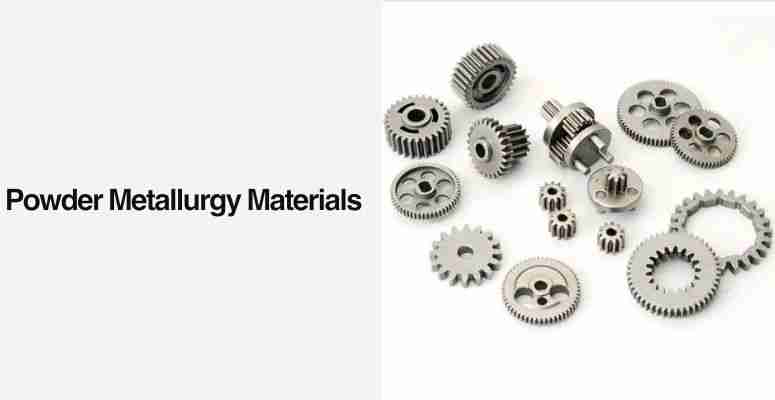
Powder Metallurgy Materials Definition
Powder metallurgy materials consist of metal particles ranging from 1 to 300 micrometers in diameter, processed through compaction and sintering to form solid components. The particle size distribution, morphology, and composition determine the final part's mechanical properties, dimensional precision, and manufacturing characteristics. Unlike casting or forging, PM processes consolidate metal without complete melting, enabling material combinations impossible through conventional metallurgy.
The process exploits powder characteristics that disappear once the material becomes solid. Particle packing behavior determines green density—the compacted but not-yet-sintered state—which influences shrinkage rates during sintering. Particle surface chemistry affects sintering kinetics, controlling densification rates and final microstructure. These powder-specific properties create manufacturing advantages: complex geometry formation through die compaction, controlled porosity for fluid retention, and near-net-shape production with material utilization exceeding 95% compared to 60-80% for machining from bar stock.
Iron-Based Powder Systems
Iron powders account for the majority of PM production tonnage, driven by their combination of adequate mechanical properties and low raw material cost. Pricing varies by production method and purity grade. The material compresses readily under 400-700 MPa pressing forces, achieving green densities of 6.8-7.2 g/cm³—sufficient for handling without fracture while allowing densification to 7.0-7.6 g/cm³ during sintering at 1120-1150°C.
Production methods create distinct powder characteristics.Reduction processingconverts iron oxide ore with hydrogen or carbon monoxide at 800-1100°C, producing spongy particles with internal porosity. This morphology provides high green strength—the compacted part's resistance to handling damage before sintering—making reduced iron suitable for complex shapes requiring ejection from multi-level tooling.Water atomizationbreaks molten iron streams with high-pressure water jets, creating irregular particles that interlock during compaction. The process handles 500-2000 kg/hour throughput at production scale, supporting high-volume automotive component manufacturing.Gas atomizationsubstitutes inert gas for water, producing more spherical particles with lower oxygen content (0.1-0.3% versus 0.3-0.8% for water atomization), but at 2-3x higher processing cost.
Magnetic applications exploit iron's ferromagnetic properties. Soft magnetic components in electric motors and transformers require high magnetic permeability and low coercivity—characteristics enhanced by high-purity reduced iron powders with less than 0.02% carbon. Hard magnetic materials for permanent magnets combine iron with rare earth elements through PM processing, achieving magnetic energy products impossible to obtain through casting due to the brittleness of these alloy systems.
Copper-Based Powder Systems
Copper powders provide thermal conductivity of 394 W/m·K and electrical conductivity of 58 MS/m (100% IACS for pure copper), properties that decrease only 5-10% in sintered PM parts compared to wrought material. Market pricing fluctuates with commodity copper rates, typically at a premium over commodity copper for powder grades. The material serves two distinct roles in PM: as the primary constituent in copper alloy parts, and as an infiltrant to densify porous iron components.
Electrolytic copper powder production deposits pure copper from sulfate solutions onto rotating cathodes, then mechanically removes and processes the deposit into powder form. The resulting dendritic particles exhibit high surface area that promotes sintering but creates flow difficulties during die filling. Atomized copper powders—both water and gas atomized—flow more readily but sinter more slowly due to lower surface area-to-volume ratios. Application requirements determine the appropriate production method: electrical contacts needing maximum conductivity specify electrolytic powder despite processing challenges, while structural bronze bushings use atomized powder for improved manufacturing consistency.
Copper infiltration addresses iron's residual porosity. Porous iron components are placed in contact with solid copper during sintering at 1083-1120°C. Molten copper wicks into the iron's pore network through capillary forces, increasing density from 6.8-7.0 g/cm³ to 7.8-8.2 g/cm³. The process improves mechanical properties—tensile strength increases from 250-350 MPa to 400-550 MPa—while adding thermal and electrical conductivity absent in pure iron parts. Material costs increase substantially, but the combination delivers properties unobtainable from either metal alone.
Stainless Steel Powder Grades
| Grade | Relative Cost | Primary Characteristics | Application Focus |
|---|---|---|---|
| SS-303L | Medium | Sulfur addition improves machinability | Components requiring secondary machining |
| SS-304L | Medium | 18% Cr, 8% Ni, general corrosion resistance | Food equipment, architectural hardware |
| SS-316L | Higher | 2-3% Mo addition, chloride resistance | Medical implants, marine components |
Stainless steel powders address corrosion environments where iron or low-alloy steel would fail. The 300-series austenitic grades maintain corrosion resistance in the sintered condition, unlike many PM materials requiring protective coatings. Sintering occurs at 1250-1290°C in high-purity hydrogen or vacuum atmospheres—oxidizing atmospheres would form stable chromium oxides that prevent densification. The high sintering temperature and protective atmosphere requirements increase processing costs by 40-60% compared to iron-based materials.
Grade 316L contains 2-3% molybdenum beyond 304L's composition, specifically improving resistance to chloride-induced pitting corrosion. This difference matters in medical implants exposed to body fluids containing 0.9% sodium chloride, or marine hardware in saltwater environments. The molybdenum addition increases powder cost over 304L, justified when the application environment would cause 304L to fail within months rather than years.
Grade 303L incorporates sulfur or selenium additions that improve machinability by 30-40% compared to 304L. The sulfur forms manganese sulfide inclusions that act as chip breakers during machining operations. This grade suits components requiring precision secondary machining—threaded features, close-tolerance bores, or complex milled surfaces—where the machinability improvement reduces manufacturing time sufficiently to offset the 2.4% powder cost premium over 304L.
Aluminum Powder Applications
Aluminum's 2.7 g/cm³ density—one-third that of steel—drives adoption in weight-critical applications. Aerospace components and automotive parts benefit from the 65% weight reduction when substituting aluminum PM parts for equivalent steel components. The material maintains adequate strength for moderate-load applications: sintered aluminum alloys achieve 200-350 MPa tensile strength depending on composition and processing conditions.
Processing challenges limit aluminum PM's market penetration. The stable aluminum oxide layer on particle surfaces prevents solid-state diffusion bonding during conventional sintering. Two approaches address this limitation:liquid-phase sinteringadds 2-10% elements (silicon, copper, magnesium) that form low-melting eutectics, creating transient liquid that disrupts the oxide and enables densification at 580-620°C.Hot pressingapplies simultaneous pressure and temperature, mechanically disrupting the oxide layer while promoting particle bonding. Both methods add cost and complexity compared to conventional PM processing.
Electrical conductivity reaches 35-45% IACS in sintered aluminum—adequate for power distribution components, heat sinks, and electromagnetic shielding where copper's conductivity isn't necessary. Corrosion resistance exceeds steel in most atmospheric environments due to the protective oxide layer. These properties create application niches in electrical enclosures, thermal management systems, and lightweight structural components where aluminum's characteristics justify the additional processing requirements.
Tungsten Powder Characteristics
Tungsten's 19.3 g/cm³ density and 3,422°C melting point place it at the extreme end of the PM materials spectrum. No practical melting and casting route exists for pure tungsten—the refractory crucible materials that could contain molten tungsten would contaminate it. PM processing provides the only economical manufacturing path, pressing tungsten powder at 200-400 MPa then sintering at 2000-2400°C in hydrogen atmospheres or vacuum.
Radiation shielding exploits tungsten's high density and atomic number (Z=74). Medical imaging equipment and industrial radiography systems use tungsten collimators that absorb X-rays or gamma radiation. The shielding effectiveness per unit thickness exceeds lead by 40-50% due to the density and atomic number advantages. Environmental regulations increasingly restrict lead usage, accelerating tungsten adoption despite 3-4x higher material costs.
Ballast weights in aerospace and motorsport applications leverage the high density to minimize volume for a given mass. Aircraft control surface balances and rotating assemblies in racing applications specify tungsten alloys—typically 90-95% tungsten with nickel-iron or nickel-copper binders—that maintain 16.5-18.5 g/cm³ density while providing machinability impossible with pure tungsten. These alloys process through liquid-phase sintering at 1450-1500°C where the binder metals melt and infiltrate the tungsten skeleton, creating a composite structure combining tungsten's density with the binder's ductility.
Alloying Element Functions
| Element | Typical Addition (%) | Primary Effect | Secondary Benefit |
|---|---|---|---|
| Nickel (Ni) | 1.75-8% | Solid solution strengthening | Improves hardenability, toughness retention |
| Chromium (Cr) | 0.5-30% | Hardenability, wear resistance | Passivation layer formation (corrosion protection) |
| Molybdenum (Mo) | 0.15-3% | High-temperature strength retention | Reduces distortion during heat treatment |
| Manganese (Mn) | 0.3-1.5% | Hardenability improvement | Oxygen scavenging during sintering |
Nickeladditions dissolve into the iron lattice, creating lattice strain that resists dislocation motion—the microscopic mechanism of plastic deformation. A 2% nickel addition increases tensile strength by 70-100 MPa compared to plain iron-carbon alloys. Higher nickel contents (4-8%) enable heat treatment responses approaching wrought alloy steels, with hardness reaching 30-45 HRC after quenching and tempering. Nickel-containing PM alloys are significantly more expensive than plain iron compositions.
Molybdenumadditions of 0.5-1.5% dramatically improve heat treatment response in PM steels. The element slows transformation kinetics during cooling from austenitizing temperature, allowing through-hardening in PM parts with the inherent porosity that would prevent conventional steels from hardening uniformly. Molybdenum also refines carbide precipitate size and distribution, improving wear resistance in gear teeth and cam lobe applications. At 0.85% molybdenum content, the alloy FL-4205 costs more than plain iron powder and delivers improved heat-treated properties.
Chromiumserves dual functions: carbide formation for wear resistance, and oxide passivation for corrosion protection. Low chromium contents (0.5-2%) in heat-treatable steels form hard chromium carbides that resist abrasive wear. High chromium levels (11-18%) create surface passivation layers—stable chromium oxide films 1-3 nanometers thick that prevent further oxidation. This passivation mechanism enables stainless steel grades to resist corrosion despite the porosity present in sintered structures.
Pre-Alloyed Versus Mixed Powders
| Grade | Composition | Key Advantage | Typical Application |
|---|---|---|---|
| FL-4205 | Fe + 0.85% Mo | Uniform hardenability throughout particle | Heat-treated gears, structural components |
| FLC-4608 | Fe + 1.0% Mo + 1.5% Cu | Dimensional stability during sintering | Precision automotive transmission parts |
| FLN-4205 | Fe + 0.5% Mo + 1.75% Ni | Optimized strength-toughness balance | High-performance connecting rods, gears |
Pre-alloyed powders contain all alloying elements within each individual powder particle, created by atomizing molten alloy steel. This ensures every particle has identical composition, eliminating compositional gradients that occur when mechanically mixing pure element powders. The homogeneity improves heat treatment response—hardenability variations between particle boundaries and particle cores remain within 2-3 HRC rather than the 8-12 HRC variation possible with mixed powders.
Mixed powder systems mechanically blend base iron powder with copper, graphite, or other alloy powders. During sintering, these additions diffuse into the iron particles, creating the desired composition. Mixing costs substantially less than pre-alloying—the process requires only blending equipment rather than atomization facilities. However, diffusion distances limit effectiveness: copper from 20-50 μm copper particles must diffuse through 100-150 μm iron particles. Incomplete diffusion creates composition gradients that compromise mechanical properties. Applications without heat treatment requirements often accept this limitation to reduce material costs by 15-25%.
Powder Production Methods
Water Atomization Process
Water atomization dominates iron and copper powder production, accounting for 60-70% of global PM powder tonnage. The process flows molten metal through a tundish at controlled rates (50-200 kg/minute), then impacts the stream with high-pressure water jets at 7-20 MPa. The hydraulic energy shatters the metal stream into droplets that solidify during flight, collecting in a water-filled chamber. Particle size distribution depends on water pressure, metal stream diameter, and metal superheat temperature—typical median particle sizes range from 60-120 μm.
The resulting particles exhibit irregular morphology: satellites—small particles adhering to larger ones—create surface roughness that promotes mechanical interlocking during compaction. This morphology benefits green strength but complicates powder flow during die filling. Surface oxygen content reaches 0.3-0.8% from the water atomization environment. Hydrogen or dissociated ammonia atmospheres during sintering reduce this oxide layer, but the reduction requires 15-30 minutes at temperature compared to 5-10 minutes for lower-oxygen gas atomized powders.
Gas Atomization Process
Gas atomization substitutes inert gas (nitrogen, argon) or air for water, producing more spherical particles with lower oxygen content. The process achieves median particle sizes of 40-90 μm with narrower size distributions than water atomization—d90/d10 ratios of 3-5 compared to 5-8 for water atomization. Spherical morphology improves powder flow characteristics, reducing die fill time by 30-50% and enabling more complex cavity geometries.
Production costs run 2-3x higher than water atomization due to gas consumption (0.3-0.8 kg gas per kg metal produced) and lower throughput (20-60 kg/minute versus 50-200 kg/minute). The cost differential limits gas atomization to applications where the powder characteristics justify the premium: Metal Injection Molding (MIM) requiring fine spherical powders for optimal flow, additive manufacturing specifications demanding narrow particle size distributions, or reactive metals (aluminum, titanium) where water contact creates excessive oxide.
Reduction Processing
Reduction processing treats iron oxide ore (Fe₂O₃ or Fe₃O₄) with hydrogen or carbon monoxide at 800-1100°C. The reducing atmosphere removes oxygen, leaving spongy iron particles that retain the original ore particle morphology. Internal porosity within each powder particle—distinct from the porosity between particles in a packed powder bed—creates high surface area promoting rapid sintering kinetics. Green strength exceeds water-atomized powder by 20-30% due to the irregular surface that mechanically interlocks during compaction.
Purity depends on ore quality and reduction conditions. High-grade Swedish ores produce powders with less than 0.02% impurities, suitable for soft magnetic applications requiring maximum permeability. Lower-grade ores yield adequate quality for structural PM at significantly lower cost. Production costs fall between water and gas atomization, making reduced iron economical for applications where the spongy morphology benefits processing or where magnetic properties matter more than raw material cost.
Electrolytic Deposition
Electrolytic powder production plates metal from solution onto cathodes, then mechanically removes the deposit as powder. Copper powder production dominates this method: copper sulfate solutions deposit pure copper (99.5-99.9% purity) onto titanium cathodes. Periodic scraping or flexing removes the deposit in dendritic form—branching tree-like structures with extremely high surface area. The process achieves exceptional purity but suffers from low deposition rates (0.3-0.8 kg/m²/hour cathode surface) making it economically viable only for applications requiring the maximum purity and surface area.
Iron powder production through electrolysis uses ferrous chloride or sulfate solutions with intermittent current reversal to produce flake or dendritic morphologies. Purity exceeds 99.5% with tightly controlled particle size—critical for soft magnetic applications where impurities above 0.05% degrade magnetic permeability by 15-30%. Production costs run 50-80% higher than reduction processing, limiting use to premium applications in electronics and electromagnetic devices.
Material Selection Methodology
Material selection begins with application requirements: mechanical properties (tensile strength, hardness, fatigue resistance), physical characteristics (density, conductivity, magnetic properties), and environmental factors (temperature range, corrosive media exposure). A transmission gear operating at 300 MPa contact stress requires minimum 900 MPa tensile strength in the base material—achievable with heat-treated pre-alloyed steel powders like FLN-4205. An electrical contact requiring 80% IACS conductivity specifies copper-based materials; iron-based alloys would fail this requirement regardless of mechanical properties.
Processing capabilities constrain material selection. Compaction pressure availability determines achievable green density: manual presses providing 200-400 MPa suit brass and bronze compositions but produce inadequate density in iron powders requiring 600-800 MPa for structural applications. Sintering temperature capability matters—continuous belt furnaces economically process iron and copper materials at 1120°C but cannot reach the 1250-1290°C required for stainless steel. Secondary operation needs influence material choice: parts requiring extensive machining favor grades like SS-303L with sulfur additions, while net-shape components avoid these machinability additives that slightly reduce corrosion resistance.
Powder characteristics affect manufacturability independent of composition. Particle size distribution determines die fill uniformity—complex cavities with thin sections require fine powders (d50 below 60 μm) that flow into restricted areas. Particle morphology influences green strength: irregular particles interlock mechanically, providing handling strength for complex geometries during ejection from tooling. Flow rate measurements (seconds per 50 grams through standard orifice) quantify powder behavior: 20-30 seconds indicates excellent flow suitable for automated high-speed presses, while 40-50 seconds requires slower production rates or die fill optimization.
Industry Standards and Specifications
MPIF Standard 35 provides standardized material designations for ferrous PM materials. The system encodes composition and density:F-0008-40indicates iron (F) with 0.8% combined carbon, sintered to 7.0 g/cm³ minimum density (40 represents 7.0 in the coding system).FC-0208-50specifies iron-copper (FC) with 2% copper and 0.8% carbon at 7.4 g/cm³ density. This standardization enables specifications without detailed composition listing, while property tables in the standard provide minimum mechanical properties for each designation.
Minimum property requirements guide design calculations. Material F-0008-40 must achieve 365 MPa tensile strength minimum, with typical values around 415 MPa. Designers using 415 MPa would risk failures from parts at the specification minimum. Instead, design calculations use 365 MPa, then verify actual production parts exceed this floor. Heat-treated grades show wider property ranges: FN-0205-40HT (heat-treated nickel steel) specifies 860 MPa minimum tensile with 1035 MPa typical—a 20% spread reflecting heat treatment variable response.
Global Powder Suppliers
Höganäs AB (Sweden)
Höganäs operates as the world's largest metal powder producer with 500,000+ metric tons annual capacity. Founded in 1797 as an iron production facility, the company transitioned to powder metallurgy in the 1950s and now maintains production facilities in Sweden, United States, Brazil, India, Japan, and China. The product portfolio emphasizes automotive applications:Astaloypre-alloyed steel powders for high-performance components,Somaloysoft magnetic composites achieving 1.5-2.0 Tesla flux density for electric motor cores, andStarmixpremixed systems providing consistent properties across production lots.
The company's European production (Sweden, Belgium) focuses on premium pre-alloyed powders for automotive and industrial markets. Asian facilities in China and India produce higher volumes of standard iron and mixed powders serving cost-sensitive applications. Technical support operates through regional centers: Shanghai, Beijing, and Guangzhou offices service Chinese customers with applications engineering and material selection guidance.
Rio Tinto Metal Powders (Canada)
Rio Tinto's powder metallurgy division produces 250,000 metric tons annually from Canadian facilities, specializing inATOMETiron powder grades. The product line emphasizes compressibility—achieving 7.0-7.2 g/cm³ green density at 600 MPa pressing pressure compared to 6.8-7.0 g/cm³ for standard grades. This 2-4% density increase translates to 8-15% higher sintered strength, enabling parts to meet specifications with reduced pressing force or decreased part size.
The company's vertical integration—controlling ore sources through parent Rio Tinto Group—provides supply stability and cost advantages for high-volume customers. Automotive manufacturers specify ATOMET grades for transmission components and engine parts where the consistent properties support automated production at 2000-4000 parts per hour. Distribution operates through Singapore-based Asia-Pacific headquarters with technical representatives in major automotive manufacturing regions.
GKN Powder Metallurgy - Hoeganaes (USA)
GKN Hoeganaes produces 300,000+ metric tons annually from facilities in New Jersey, Tennessee, Germany, China, and Romania. TheAncorsteelpre-alloyed powder line targets demanding structural applications: Ancorsteel 85HP achieves 600 MPa tensile strength in the as-sintered condition—25-30% higher than admixed systems.Ancordensehigh-density powders reach 7.5-7.6 g/cm³ sintered density through optimized particle packing and enhanced sintering response.
Ancormaxpowders incorporate compaction aids that reduce pressing force requirements by 15-20% while maintaining equivalent green density. This characteristic suits retrofits where existing press capacity limits density—upgrading powder grade enables density increases without capital equipment replacement. Shanghai facility provides Asian production capacity with technical center supporting Chinese automotive industry growth.
Kymera International (USA)
Kymera consolidates several specialty powder operations: SCM Metal Products (copper and copper alloy powders), ECKA Granules (aluminum and bronze), and ACuPowder (electrolytic copper). This portfolio emphasizes non-ferrous materials for electronics, thermal management, and electrical applications. Production facilities span USA and Germany with 40,000 metric tons annual capacity across all product lines.
Electrolytic copper powder grades achieve 99.7-99.9% purity with dendritic morphology providing 0.8-1.2 m²/g surface area—2-3x higher than atomized copper. This high surface area promotes low-temperature sintering (750-850°C) for electrical contacts and diamond tool matrices where dimensional precision matters. Technical support operates through distribution partners throughout Asia with materials engineering consultation for thermal and electrical applications.
Pometon S.p.A. (Italy)
Pometon produces 80,000 metric tons annually from Italian facilities, emphasizing stainless steel and non-ferrous specialty powders. The company operates both water and gas atomization equipment, offering irregular and spherical morphologies across stainless steel grades (304L, 316L, 410L, 430L). Production capabilities include custom alloy atomization for 500-1000 kg minimum quantities—enabling specialized compositions for filtration media, friction materials, and diamond tool applications.
Non-ferrous production includes bronze powders for bearing applications, zinc powders for chemical uses, and tin powders for electronic solders. Distribution network spans Europe and Asia with technical representatives in major industrial centers. The family-owned structure enables flexible customer support and custom alloy development uncommon among larger multinational powder producers.
JFE Steel Corporation (Japan)
JFE's powder metallurgy division produces 60,000 metric tons annually, focusing on high-purity reduced iron powders for electromagnetic applications.JIP(JFE Iron Powder) series achieves less than 0.015% impurities total, providing magnetic permeability exceeding 6000 μ (relative permeability) at 0.8 Tesla flux density. This performance suits electric motor cores and magnetic shielding where losses from impurities would degrade efficiency by 3-5%.
Stainless steel powder production serves Japanese automotive manufacturers with grades developed specifically for high-volume production: water-atomized 316L optimized for 1270°C sintering in production belt furnaces, compared to the 1280-1290°C typical for stainless steel. The 10-20°C temperature reduction decreases furnace operating costs by 8-12% at annual volumes exceeding 1 million parts. Tokyo headquarters coordinates sales throughout Asia with technical support for automotive and electronics sectors.
Sandvik Osprey Ltd (UK)
Sandvik Osprey specializes in gas-atomized specialty powders: stainless steels, nickel-based superalloys, and cobalt alloys for extreme environment applications. Annual capacity reaches 5,000 metric tons across premium grades commanding prices much higher than standard PM powders. The product line emphasizes Metal Injection Molding (MIM) applications requiring fine powders (d50 of 8-15 μm) with spherical morphology for optimal flow and packing.
Superalloy powders include Inconel 625, Inconel 718, and Hastelloy compositions for gas turbine components, chemical processing equipment, and medical devices. These materials operate at 650-1000°C where iron-based alloys would fail through oxidation or creep deformation. UK facility handles production with Sweden-based R&D center developing new alloy compositions. Regional offices in Singapore and Shanghai provide technical support for Asian medical device and aerospace markets.
Supplier Comparison Matrix
| Manufacturer | Primary Materials | Relative Cost | Quality Tier | Application Strength |
|---|---|---|---|---|
| Höganäs AB | Iron, Steel, Soft magnetic | Medium-High | Premium | Automotive, Electric motors |
| Rio Tinto | Iron, Low-alloy steel | Low-Medium | Good to Premium | High-volume structural parts |
| GKN Hoeganaes | Pre-alloyed steels | $$-$$$ | Premium | Performance automotive, Aerospace |
| Kymera | Copper, Aluminum, Bronze | Medium-Ultra-Premium | Premium | Electronics, Thermal management |
| Pometon | Stainless steel, Non-ferrous | $$-$$$ | Good to Premium | Filtration, Friction materials |
| JFE Steel | Pure iron, Stainless steel | $$-$$$ | Premium | Electronic components, Filters |
| Sandvik Osprey | Stainless steel, Superalloys | High-Ultra-Premium | Ultra-Premium | Medical, High-temperature |
Cost indicators: Low = entry-grade iron/copper powders, Medium = standard PM alloys, High = specialty stainless/steel powders, Ultra-Premium = superalloy/titanium powders
Frequently Asked Questions
Q: What differentiates atomized iron powder from reduced iron powder in processing behavior?
Atomized iron powder exhibits spherical or irregular morphology with dense particle interiors, produced by solidifying molten metal droplets. The particles flow readily during die filling—20-28 seconds per 50 grams through standard Hall flowmeter—enabling automated high-speed pressing at 40-60 strokes per minute. Green strength measures 8-12 MPa at 6.9 g/cm³ density, adequate for simple geometries but marginal for complex multi-level parts. Reduced iron powder shows spongy morphology with internal porosity from the oxide reduction process. Flow characteristics degrade to 30-40 seconds per 50 grams, requiring slower press speeds or flow enhancement additives. However, green strength reaches 14-20 MPa at equivalent density due to particle interlocking, supporting complex geometry ejection without fracture. Sintering kinetics favor reduced powder—the high internal surface area enables 95% densification in 20 minutes versus 30-40 minutes for atomized powder at 1120°C.
Q: How does particle size distribution affect mechanical properties and processing characteristics?
Fine powders below 45 μm median diameter provide high surface area-to-volume ratios that promote rapid sintering and higher final density. Parts pressed and sintered from fine powder achieve 7.4-7.6 g/cm³ density and 450-550 MPa tensile strength compared to 7.0-7.2 g/cm³ and 350-450 MPa for coarse powders (median above 150 μm) under identical processing conditions. Surface finish improves with fine powder—Ra values of 2.5-4.0 μm versus 4.0-6.5 μm for coarse grades. However, flow characteristics degrade significantly: fine powder requires 40-55 seconds per 50 grams compared to 18-25 seconds for coarse material. The poor flow complicates automated die filling and creates density variations in complex cavities. Medium powders (45-150 μm median) balance these competing factors: adequate flow for automated production (24-32 seconds per 50 grams), sufficient sintering response for 7.2-7.4 g/cm³ density, and surface finish meeting most application requirements (Ra 3.0-5.0 μm).
Q: How do powder metallurgy materials compare to wrought or cast equivalents in properties and economics?
PM materials achieve 95-99% of wrought theoretical density, resulting in mechanical properties 75-95% of fully dense equivalents depending on porosity level. A PM steel at 7.2 g/cm³ (92% dense) demonstrates 380 MPa tensile strength versus 520 MPa for wrought steel of identical composition—the 27% reduction reflects stress concentration at pores and reduced load-bearing cross-section. Heat treatment partially closes this gap: properly alloyed PM steel reaches 850-950 MPa after quenching and tempering, comparing favorably to 980-1050 MPa for wrought grades. Material utilization strongly favors PM: 95-98% of input powder becomes finished part mass compared to 60-80% for machining wrought bar stock. A component requiring 200 grams finished weight consumes 205-210 grams PM powder versus 250-330 grams wrought material. Energy consumption runs 25-50% lower for PM routes—compaction and sintering require 8-15 MJ/kg compared to 18-28 MJ/kg for melting, casting, and subsequent forming operations. Dimensional precision favors PM with ±0.05mm typical versus ±0.1-0.2mm for casting, often eliminating secondary machining.
Q: Which powder metallurgy materials provide the best cost-to-performance ratio for structural applications?
Iron-carbon systems (F-0005 through F-0008 designations) establish the baseline cost at a relatively low material cost, delivering 250-420 MPa tensile strength depending on carbon content and density. Adding 2% copper (FC-0208 grade) increases material cost while improving strength to 370-480 MPa. Iron-copper-carbon compositions (FX-1005 through FX-2008) reach 420-550 MPa at higher material cost. Pre-alloyed steel powders like FL-4205 (iron with 0.85% molybdenum) cost more than plain iron powder but achieve 600-650 MPa after heat treatment. For applications requiring corrosion resistance, 316L stainless steel delivers 480-520 MPa in the sintered condition and provides corrosion resistance unattainable from iron-based materials.
Q: What approaches most effectively improve basic iron PM component properties?
Copper additions of 1-4% increase as-sintered tensile strength by 15-35% through solid solution strengthening and densification enhancement. The copper melts during sintering (1083°C), creating transient liquid that accelerates neck formation between iron particles. A 2% copper addition raises typical strength from 350 MPa to 410 MPa—a 17% improvement—at 20% material cost increase. Carbon additions of 0.4-0.8% enable heat treatment response: quenching from 870-900°C followed by tempering at 180-220°C develops 800-950 MPa tensile strength and 28-38 HRC hardness in properly alloyed compositions. Steam treatment creates a magnetite (Fe₃O₄) oxide layer 1-3 μm thick that fills surface-connected pores, improving corrosion resistance by 3-5x in salt spray testing while adding negligible cost. Oil impregnation fills pore volume with lubricating oil, creating self-lubricating capability for bearing applications operating at surface velocities below 2.5 m/s and pressures under 7 MPa. Each enhancement addresses specific limitations: copper for strength, carbon for hardenability, steam treatment for corrosion resistance, and oil impregnation for tribological applications.
Q: What material specifications apply to powder metallurgy components in aerospace applications?
Aerospace PM components must meet AMS (Aerospace Material Specification) standards that exceed general industrial requirements. AMS 4990 specifies titanium alloy powders for additive manufacturing with strict limits on oxygen (0.13% max), nitrogen (0.05% max), and hydrogen (0.015% max) that general PM grades often exceed by 2-3x. AMS 5873 covers 316L stainless steel powder requiring 99.5% minimum purity and particle size distribution within ±15% of nominal—tighter than industrial specifications at ±25%. Traceability requirements mandate documentation from ore source through powder production, component manufacturing, and final inspection. Mechanical property minimums increase 15-25% above industrial standards: AMS specifications for nickel superalloy components require 1050 MPa tensile strength minimum where industrial grades accept 900 MPa. The enhanced requirements reflect aerospace safety factors and operating environments—turbine components experiencing 650-900°C temperature and high rotational stresses where property degradation risks catastrophic failure.
Q: How do storage conditions and handling practices affect powder metallurgy material performance?
Powder oxidation during storage degrades sintering response and final properties. Reactive metals (aluminum, titanium) oxidize rapidly in air—oxide layer thickness increases 0.5-1.2 nm per month at 20°C and 40% relative humidity. This oxide formation reduces sintered density by 2-4% and tensile strength by 8-15% after 12 months storage compared to fresh powder. Iron and copper powders show less severe degradation but still suffer: oxygen content increases from 0.3% to 0.5-0.7% over 6-12 months, requiring extended sintering times to reduce the thicker oxide layers. Moisture absorption affects powder flow and compaction behavior—iron powder stored at 60-80% humidity absorbs 0.1-0.3% water by weight, increasing flow time by 15-30% and reducing green density by 1-3%. Storage in sealed containers with desiccant or inert gas purging prevents these issues. Handling practices matter equally: repeated transfers between containers through pneumatic conveying or mechanical conveyors can fracture particles, creating fine debris that degrades flow and increases oxygen content through fresh surface exposure. Minimizing handling steps and using gentle transfer methods maintains powder characteristics throughout the manufacturing process.
Precision Metal Parts from Emitech
Nanjing Emitech delivers MIM, CNC machining, and custom metal parts. MIM services · Request a quote
Last updated: 2026-06-24