
You're producing MIM components at 95% density, but your aerospace customer demands 99.9%. The 4% difference isn't just a number—it's the gap between component failure and certified reliability. Hot Isostatic Pressing bridges this critical gap, transforming standard MIM parts into fully dense components that match wrought material properties.
Key Takeaways
- Purpose: HIP closes residual porosity in MIM parts, improving density, fatigue resistance, and ductility.
- Pre-HIP density: Sintered parts generally need closed porosity before HIP; target density depends on material and specification.
- Process: HIP applies elevated temperature and isostatic gas pressure for a controlled hold time.
- Best for: Fatigue-critical, aerospace, and medical components where full density is required.
Why MIM Parts Need HIP: The Performance Gap
The 95% Density Problem
Standard MIM sintering typically leaves 2–5% residual porosity. That porosity reduces fatigue strength, ductility, and corrosion resistance compared with fully dense wrought material. HIP is used when an application needs the highest reliability and near-zero internal porosity.
Why Standard Sintering Cannot Reach 100%
Once pores close at 92-95% density, trapped furnace atmosphere creates back-pressure opposing further densification. You cannot overcome this through:
- ❌ Higher sintering temperature (causes excessive grain growth)
- ❌ Longer sintering time (no effect on closed pores)
- ❌ Vacuum sintering (pores already sealed)
The solution: Apply external pressure vastly exceeding internal pore pressure through HIP.
How HIP Eliminates Residual Porosity
The HIP Process for MIM Parts
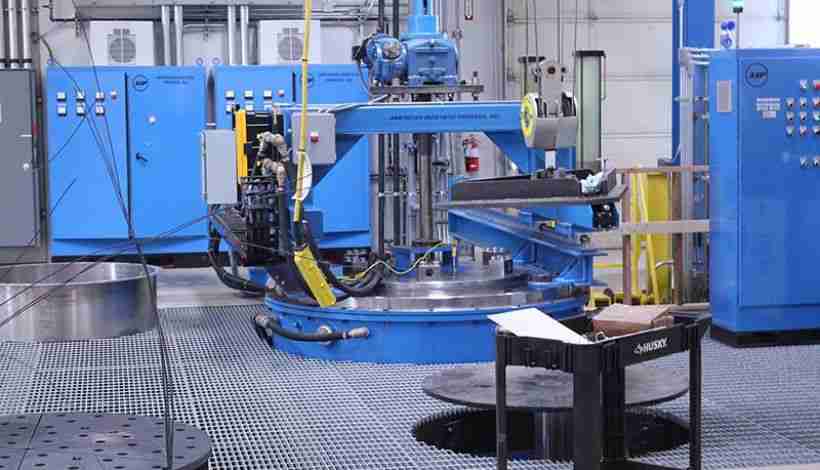
Hot Isostatic Pressing applies simultaneous high temperature (1100-1200°C) and isostatic gas pressure (100-150 MPa) to collapse internal voids.
Video: Understanding the Hot Isostatic Pressing process by Quintus Technologies (3:09)
Three Densification Stages:
Stage 1: Plastic Collapse (0-30 minutes)
- Material yield strength drops to 10-20 MPa at temperature
- Applied pressure (100-150 MPa) forces plastic flow into pores
- Eliminates 50% of residual porosity
- Why it matters: Rapid initial densification only works if starting density >92%
Stage 2: Creep Densification (30 min - 3 hours)
- Time-dependent material flow closes smaller pores
- Fine-grained MIM structures densify faster than cast materials
- Contributes 40% of total densification
- Why it matters: This is why HIP takes 3-4 hours, not 30 minutes
Stage 3: Diffusion Bonding (Final 1-2 hours)
- Atomic diffusion across collapsed pore surfaces
- Creates metallurgical continuity indistinguishable from wrought material
- Why it matters: Eliminates former pore boundaries as weak points
Critical Process Parameters by Alloy
HIP parameters depend on alloy and part specification. Typical ranges include temperatures near but below normal sintering temperatures, gas pressures in the 100–150 MPa range, and hold times of several hours. Always follow material-specific qualified recipes.
Key Principle: HIP temperature is 100-200°Cbelowsintering temperature to prevent grain growth.
⚠️Common Mistake: Using sintering temperature for HIP causes 2-3x grain growth, reducing fatigue strength by 30%.
The Critical 92% Density Threshold
Why 92-94% is the "Golden Zone"
⚠️Fundamental Rule: HIP only works on closed porosity.
What Happens at Different Densities:
Below 92% Density - FAILURE MODE
- Pores remain connected to surface
- Argon gas infiltrates pore network during HIP
- Internal pressure = External pressure
- Result: Zero densification, wasted HIP cycle
92-94% Density - SUCCESS MODE
- All pores isolated from surface
- External pressure (100 MPa) >> Internal pressure (0.1 MPa)
- Strong driving force for collapse
- Result: Complete densification to99.9%
Above 96% Density - DIMINISHED RETURNS
- Excessive grain growth (>50 μm)
- Some pores trapped inside large grains
- HIP effectiveness reduced by 50%
Optimizing Sintering for HIP
The Strategic Approach: Don't try to maximize sintering density. Target 93-94% with fine grain structure.
Process Control Steps:
1. Temperature Control
- Use 96-98% of normal sintering temperature
- Example: 1320-1350°C for 316L (not 1380°C)
- Why: Achieves closed porosity without excessive grain growth
2. Hold Time
- 60-90 minutes (shorter than standard MIM)
- Stop when density reaches 93±1%
- Why: Prevents over-densification and grain coarsening
3. Atmosphere
- H₂ or H₂/N₂ (95/5) for stainless steels
- Dewpoint < -40°C
- Why: Prevents surface oxidation that can reopen porosity during HIP
Verification Before HIP:
💡Pro Tip: Verify closed porosity before HIP to avoid wasting cycles on unsuitable parts.
Capsule-Free HIP: The MIM Advantage
Why MIM Parts Don't Need Expensive Capsules
Traditional HIP Applications:
- Castings: 85-95% dense with open porosity → Require metal capsules
- Powder compacts: 70-90% dense → Require glass capsules
- Process time: Additional 4-6 hours for encapsulation/removal
MIM Parts Advantage:
- Achieve >95% density with closed porosity
- Part's own surface acts as gas-tight barrier
- Capsule-free processing: Direct load → HIP → unload
- Cost savings: Capsule cost eliminated
Economic Impact:
This capsule-free capability is why MIM-HIP dominates high-volume, high-performance applications over competing processes like investment casting.
Quantified Performance Improvements
HIP generally increases density, improves ductility, and raises fatigue limits versus as-sintered MIM. The magnitude of improvement depends on alloy, starting density, grain structure, and HIP parameters. Request application-specific test data from your supplier.
Material Selection and Applications
Common Alloys for MIM-HIP
Stainless Steels - High Volume Applications
316L (Most Popular)
- Applications: Surgical instruments, food processing, marine hardware
- HIP Benefit: Eliminates crevice corrosion sites, enables mirror polish
- Cost: Adds HIP processing cost
17-4 PH (Highest Performance)
- Applications: Aerospace fasteners, firearm components, valve bodies
- HIP Benefit: Fatigue limit doubles (200→450 MPa)
- Cost: Adds HIP processing cost
420/440C (Wear Resistance)
- Applications: Cutting tools, wear parts, surgical blades
- HIP Benefit: Uniform hardness, eliminates soft spots
- Cost: Adds HIP processing cost
Titanium Alloys - Aerospace and Medical
Ti-6Al-4V (Grade 5)
- Applications: Turbine blades, spinal implants, dental fixtures
- HIP Benefit: Achieves wrought fatigue in complex shapes impossible to machine
- Critical: Stay below 995°C beta transus during HIP
- Cost: Adds HIP processing cost
Superalloys - Extreme Environments
Inconel 718
- Applications: Turbine vanes, turbocharger wheels, combustion chambers
- HIP Benefit: Can improve creep-rupture life
- Cost: Adds HIP processing cost
F-75 Cobalt-Chrome
- Applications: Hip/knee joint surfaces, dental crowns
- HIP Benefit: Can improve wear resistance
- Cost: Adds HIP processing cost
Industry Application Examples
MIM-HIP is used in aerospace for turbine and structural components, in medical for implants and instruments requiring high reliability, and in automotive for high-temperature fatigue-critical parts. In each case, the value is the combination of complex net-shape geometry with wrought-like density and dynamic properties.
When to Choose MIM-HIP: Decision Framework
Quick Comparison with Competing Processes
MIM-HIP competes with investment casting and metal additive manufacturing for complex, high-performance parts. MIM-HIP is usually favored at higher volumes where tooling can be amortized and where near-net-shape geometry reduces machining. Casting suits larger parts and lower volumes, while additive manufacturing suits prototyping and very low volumes.
Application-Specific Guidelines
MUST Use MIM-HIP:
- ✅ Medical implants (regulatory + liability)
- ✅ Aerospace fatigue-critical (certification requires99.9%)
- ✅ High-pressure systems >200 bar (leak = safety hazard)
- ✅ Any application where single failure is catastrophic
Should Consider MIM-HIP:
- ⚠️ Automotive fatigue components (warranty cost justifies HIP)
- ⚠️ Tool steels requiring uniform properties
- ⚠️ Parts needing mirror polish (medical, consumer)
Can Skip HIP:
- ❌ Cosmetic/structural only (<5:1 safety factor)
- ❌ Static loading applications
- ❌ Consumer electronics where part value is low
- ❌ Very low volume (<5,000/year)
Troubleshooting Guide: Common HIP Failures
Incomplete densification: Usually caused by starting density that is too low or by oversized grains trapping pores. Verify closed porosity before HIP and optimize sintering temperature/time.
Surface texture changes: Some alloys develop slight surface roughening after HIP. Cosmetic surfaces may need light finishing.
Dimensional distortion: Unsupported features or non-uniform density can distort at HIP temperature. Use appropriate setters and maintain uniform wall thickness.
Unrecoverable defects: Severe carbon contamination, open porosity, or oxide inclusions generally cannot be corrected by HIP; they must be addressed in upstream processes.
Frequently Asked Questions
Q: What happens if my sintered parts have 90% density?
HIP will completely fail. Argon gas infiltrates the open pore network, equalizing pressure. With no pressure differential, zero densification occurs—you've wasted money on an ineffective thermal treatment.
Options:
- Re-sinter at higher temperature (risky—may cause slumping)
- Use capsule HIP (adds cost)
- Scrap and fix process (usually most economical)
💡Prevention: Run helium pycnometry testing before committing batch to HIP.
Q: Why does my customer specify HIP when as-sintered parts pass tensile tests?
Static strength is misleading for dynamic applications.
17-4 PH Real Data:
- As-sintered: UTS 980 MPa ✅ (meets spec), Fatigue 200 MPa ❌ (50% below requirement)
- After HIP: UTS 1100 MPa, Fatigue 450 MPa ✅ (2.25x improvement)
Translation: Without HIP, you must design for 140 MPa (accounting for ±30% scatter). With HIP, you can design for 430 MPa.Result: 3x higher allowable stress.
Q: Can I skip sintering and go directly from brown parts to HIP?
Absolutely not.This will cause catastrophic failure.
Why it fails:
- Brown parts have 40-50% open porosity
- No metallurgical bonding between particles
- Part will slump into puddle at HIP temperature
- Binder pyrolysis products can contaminate HIP vessel, requiring costly cleaning
Correct sequence: Green → Debind → Brown → Sinter to 93-94% → HIP to 99.9%
Q: How do I justify HIP cost to management?
Frame HIP as a risk-mitigation and performance investment. It can reduce scrap, inspection, warranty, and liability costs for critical components, while meeting density and fatigue requirements that as-sintered MIM may not satisfy.
Q: What's the minimum wall thickness that survives HIP?
Successfully processed features:
Design Rule: Maintain thickness/length ratio >1/20 for unsupported spans.
Q: Can I use the same HIP cycle for all materials in a batch?
No.Material-specific requirements will compromise all parts.
Example failure:
- 316L optimal:1150°C
- Ti-6Al-4V optimal: 920°C
- Compromise at 1035°C results in:
- 316L under-processed: 98% density (not99.9%)
- Ti-6Al-4V over-heated: crosses beta transus, loses 40% strength
Grouping rule: Process materials within ±50°C temperature window only.
Q: How do I validate densification without destructive testing?
Multi-tier approach:
Every Part:
- Archimedes density verification
- Visual inspection for surface defects
10% Sampling:
- Helium pycnometry check against qualified baseline
- Ultrasonic velocity check against qualified baseline
Every HIP Cycle (Witness Specimens):
- Tensile testing to specification
- Metallography for residual porosity
Critical Applications Only:
- CT scanning for internal porosity
Q: Should we buy a HIP or use toll processing?
The decision depends on annual volume, utilization, lead-time needs, and confidentiality. High-volume, multi-year programs with stable demand are more likely to justify in-house HIP equipment, while lower volumes or development work often favor toll processing.
Conclusion: When MIM-HIP is the Right Choice
The integration of Hot Isostatic Pressing with Metal Injection Molding transforms MIM from a high-density process (95-98%) to a full-density process (99.9%+), unlocking wrought-equivalent performance in complex geometries.
Key Success Factors:
- Achieve92-94%sintered density- The critical closed porosity threshold
- Use capsule-free HIP- MIM's >95% density eliminates capsule cost
- Optimize for dynamic properties- Fatigue strength doubles, ductility increases 50-100%
- Target high-volume applications- ROI depends on part value, volume, and performance requirements
Choose MIM-HIP When:
- ✅ Part weight <250g
- ✅ Complex geometry (undercuts, thin walls, internal features)
- ✅ Volume >20,000/year
- ✅ Fatigue life critical
- ✅ Zero porosity specification required
- ✅ Wrought-equivalent properties needed in net-shape
The Bottom Line: For small (<250g), complex components in high volumes (>20,000/year) requiring absolute reliability, MIM-HIP offers a unique combination of geometric freedom and material integrity that cannot be matched by investment casting or achieved cost-effectively through metal additive manufacturing or machining.
Precision Metal Parts from Emitech
Nanjing Emitech delivers MIM, CNC machining, and custom metal parts. MIM services · Request a quote
Last updated: 2026-06-24