
Metal Injection Molding (MIM) vs. Investment Casting (IC)—Which Is Best for Your Manufacturing Needs?
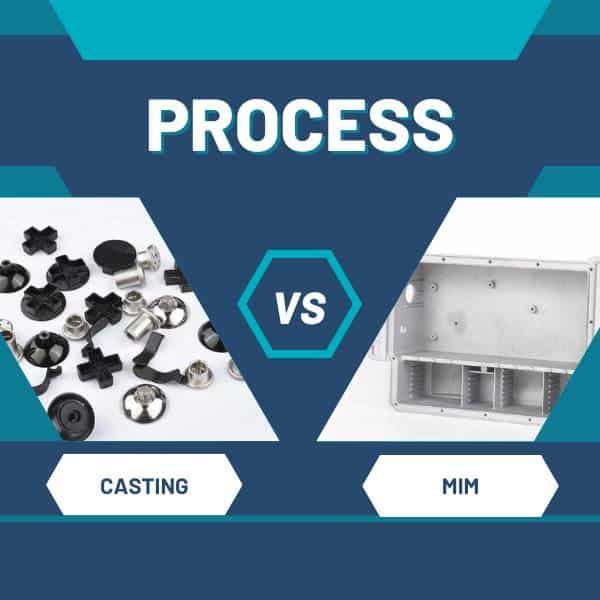
MIM wins on high-volume production of small, complex parts under 100g, offering lower unit costs at scale. Investment Casting wins on medium batches, larger components (up to 75kg), and complex superalloys. Choose MIM for mass production efficiency; choose Investment Casting for versatility and larger sizes.
When picking a method to make complex metal parts, two options shine: Metal Injection Molding (MIM) and Investment Casting (IC). Both techniques have unique benefits for making precise metal parts. However, picking the right one needs careful thought about your project needs.
This guide covers the basics of MIM and IC. It looks at key principles, manufacturing methods, material options, and cost factors. Knowing the pros and cons of each method helps you make better choices for your manufacturing projects.
What is Metal Injection Molding (MIM)?
Metal Injection Moldingmixes powder metallurgy and plastic injection molding. This method makes small, complex metal parts. These parts have great mechanical properties. This new process has changed how industries make complex metal parts. Now, they can achieve exact tolerances more easily.
The Metal Injection Molding Process Explained
TheMIM manufacturing processinvolves several critical steps. First, finemetal powdersmix with thermoplastic binders and additives. This creates a feedstock. Then, it is granulated into pellets for processing. They use standard injection molding machines to inject feedstock into molds. They do this under high pressure to ensure precision. This creates a "green part" approximately 15-20% larger than the final component.
Next is the debinding phase. Here, the binder is removed from the green part. Only 2-3% of the binder will be left. This process can use catalytic, thermal, or solvent methods. It depends on the binder system. The "brown parts" (partially debound components) are heated to 1200°C to 1400°C. This process burns off the leftover binder and shrinks the part to its final size. The resulting components achieve over 97% density with mechanical properties comparable tomachined parts.
MIM partscan go through more steps. These include heat treatment,CNC machining, laser processing, surface treatments, and joining operations. This helps create complete assemblies.
Advantages of Metal Injection Molding for Complex Components
Advantages of MIM
- Design Freedom:Allows for complex shapes with thin walls (as thin as 0.2mm) and intricate details that traditional methods struggle with.
- High Strength:Mechanical properties similar to wrought metals, with tensile strengths varying from 400 MPa to over 1500 MPa.
- Cost Efficiency at Scale:Ideal for high-volume production (thousands to millions) with low part costs.
- Low Waste:A near-net-shape process that uses over 97% of input materials.
- Assembly Reduction:Can combine several components into one part, reducing assembly costs substantially.
- Consistency:Dimensional tolerances usually reach ±0.3% (min ±0.03mm).
Limitations of MIM
- High Upfront Cost:Specialized equipment and molds represent significant upfront capital investments.
- Lead Time:New molds and setup can take 4 to 12 weeks.
- Volume Constraints:Best for high-volume (>10,000 units/yr) and small parts (<100g). Not ideal for low volume or large parts.
- Part Cost:Typical part costs vary widely by material, geometry, and order volume.
- Shrinkage:The 15% shrinkage during sintering requires sophisticated simulations and skilled engineering.
Materials Compatible with Metal Injection Molding
MIM can work with an impressive range of metal materials. Stainless steel alloys such as 17-4PH, 316L, and 420 are popular in medical devices, electronics, and consumer products. They are known for their strength and resistance to corrosion. Tool steels are valued for their hardness, reaching up to 62 HRC, and their wear resistance. This makes them ideal for cutting and forming tasks.
Titanium and its alloys are strong yet lightweight. They are great for aerospace and medical uses. Tungsten alloys, on the other hand, are very dense, reaching up to 18 g/cm³. They offer high strength for specific aerospace and defense parts.
Copper-based materials offer excellent thermal conductivity, reaching up to 180-350 W/m·K depending on alloy and sintered density. They also have high electrical conductivity, making them ideal for electronics. Hard materials like cobalt-chrome alloys and cemented carbides offer great wear resistance. Their hardness often exceeds 60 HRC.
You can get specialty and custom formulations for unique needs, but they usually cost more.
What is investment casting (IC)?
Investment casting, or lost-wax casting, is a precise metal forming process. It has ancient roots and has grown into a modern manufacturing method. This technique creates complex metalparts with excellent surface finishesand dimensional accuracy.
The Investment Casting Process Step-by-Step
Investment casting involves several distinct phases. First, a wax or polymer pattern is made. It’s an exact copy of the part, but a bit larger. This extra size helps with metal shrinkage when it cools. Multiple wax patterns usually connect to a central sprue, forming a "tree" or cluster. This setup includes gates and runners to help the metal flow.
The pattern assembly gets dipped in ceramic slurry over and over. It is coated with fine refractory materials to form a solid ceramic shell. This shell is usually 5-15mm thick. The ceramic shell heats to about 200°C. This melts and removes the wax pattern. As a result, it leaves a cavity in the desired shape. The shell is then fired at high temperature (800-1100 °C) to harden the ceramic material.
Molten metal is heated to 1400-1650°C, based on the alloy. Then, it is poured into the preheated ceramic mold. This fills the space left by the wax that was removed. After the ceramic shell hardens, it is taken off. Then, the casting goes through finishing steps. These steps include cutting off the gating system, machining, heat treatment, and inspection.
Benefits of Investment Casting for Precision Parts
Advantages of Investment Casting
- Complex Shapes:Creates parts with thin walls (down to 0.5mm), internal cavities, and fine details.
- Tight Tolerances:Dimensional accuracy is usually ±0.13mm for the first 25mm.
- Surface Finish:Smooth ceramic molds result in finishes between 1.6 and 3.2 μm Ra.
- Material Range:Works with stainless steel, aluminum, titanium, and special superalloys hard to machine.
- Cost Effective for Low Volume:Ideal for 100 to 10,000 units.
- Assembly Reduction:Single castings can replace several parts, reducing assembly costs.
Drawbacks of Investment Casting
- Higher Cost:Usually more expensive than sand or die casting.
- Long Cycle:Production takes 4-6 weeks from pattern to casting.
- Size Limits:Best for parts under 75 kg.
- Labor Intensive:Labor contributes a significant share of total expenses.
- Complexity Limits:Complex internal cavities or holes under 1mm can be difficult.
- Upfront Tooling:Pattern and mold costs are generally lower than MIM tooling but still significant.
Materials Suitable for Investment Casting
Investment casting works effectively with numerous metals and alloys.Stainless steel grades like 17-4PH, 316L, and 420 offer strength and resist corrosion. They are used in medical, aerospace, and industrial fields. Carbon andlow-alloy steelsare strong, flexible, and affordable. They are great for automotive andindustrial parts. Their tensile strengths vary from 415 to 1380 MPa, based on the grade and heat treatment used.
Aluminum alloys like A356 and A380 are strong yet lightweight. They have tensile strengths of 160 to 300 MPa. This range makes them great for aerospace and automotive use.Copper alloyslike bronze and brass resist corrosion and wear. They also conduct heat and electricity well. These properties make them ideal for valves, bearings, and electrical parts.
Nickel and cobalt superalloys, such as Inconel and Hastelloy, stay strong at temperatures up to 1200°C. They are ideal for high-temperature and high-pressure settings in aerospace and energy. Titanium and its alloys offer a great strength-to-weight ratio. They can reach a tensile strength of 830 MPa while weighing just 4.5 g/cm³. This makes them ideal for aerospace and medical devices due to their biocompatibility. You can find specialtyalloys like tool steels, magnetic alloys, and wear-resistant materials for specific uses.
MIM vs. Investment Casting: Head-to-Head Comparison
Cost Comparison Between MIM and Investment Casting
| Factor | Metal Injection Molding (MIM) | Investment Casting (IC) |
|---|---|---|
| Initial tooling cost | Higher | Lower to moderate |
| Part cost at low volume | Higher per part | Moderate per part |
| Part cost at medium volume | Moderate per part | Moderate per part |
| Part cost at high volume | Lower per part | Moderate per part |
| Part cost at very high volume | Lowest per part | Moderate per part |
| Material utilization | >97% | 70-90% |
| Labor cost contribution | Moderate share | Significant share |
| Energy cost contribution | Moderate share | Moderate share |
| Secondary operations cost | Moderate share | Significant share |
| Economical part size range | 0.1g-100g | 5g-75kg |
| Minimum economical production volume | ~5,000 units | ~100 units |
The cost-effectiveness of each process depends on several factors. Investment casting is usually cheaper for low to medium production volumes. On the other hand, MIM is better for high-volume production of small parts. Investment casting is usually cheaper for larger parts. MIM works best for smaller ones.
MIM requires higher initial tooling costs, which are amortized over larger production runs. Material costs differ a lot between processes. This depends on the specific alloys used. MIM usually needs more specialized metal powders. These can be more expensive at times.
To make the best choice, look at your project needs. Consider these factors: production quantity, part complexity, material selection, and your budget.
Mechanical Properties: MIM vs. Investment Casting
| Property | Metal Injection Molding (MIM) | Investment Casting (IC) |
|---|---|---|
| Density | 95-99% of theoretical | 99-100% of theoretical |
| Porosity | 1-4% | 0-1% |
| Tensile strength (316L SS) | 510-570 MPa | 480-520 MPa |
| Yield strength(316L SS) | 170-220 MPa | 170-210 MPa |
| Elongation (316L SS) | 40-50% | 30-40% |
| Hardness (17-4 PH SS) | 33-42 HRC | 32-40 HRC |
| Impact strength | Good to excellent | Excellent |
| Fatigue resistance | Good | Good to excellent |
| Grain structure | Fine, uniform | Variable, depends on cooling |
| Isotropy | Highly isotropic | Somewhat directional |
| Dimensional stability | Very good | Good |
| Heat treatment response | Excellent | Excellent |
MIM partsusually have higher density and more uniform microstructures. This can lead to better strength for certain applications. Investment casting can provide similar or even greater strength. This relies on choosing the right materials and using post-processing methods, such ashot isostatic pressing(HIP).
Heat treatment improves the mechanicalproperties of both processes. However, the results depend on the material and process used. For strength-critical tasks, think about your material needs, component design, and post-processing choices. Don't just depend on the manufacturing method.
Production Timeline Comparison
| Process Stage | Metal Injection Molding (MIM) | Investment Casting (IC) |
|---|---|---|
| Initial tooling development | 4-12 weeks | 2-6 weeks |
| First article production | 2-4 weeks | 1-3 weeks |
| Production setup time | 24-48 hours | 8-24 hours |
| Cycle time per part | Seconds (injection) | Hours (entire process) |
| Total production time (1,000 units) | 1-3 weeks | 3-6 weeks |
| Total production time (10,000 units) | 3-8 weeks | 8-16 weeks |
| Design changes implementation | 2-8 weeks | 1-4 weeks |
| Typical lead time for repeat orders | 2-6 weeks | 3-8 weeks |
Consider production timelines for high-volume efficiency. MIM usually provides faster cycle times. It can automate the production of small, complex parts in large quantities. Investment casting often takes longer because it's a labor-intensive, multi-step process.
MIM needs more setup time at first. However, it leads to faster production once the tooling is ready. For 10,000 identical small parts, MIM may finish in 3 to 8 weeks. In contrast, investment casting could take 8 to 16 weeks for the same amount.
MIM is usually quicker for making many small parts. In contrast, investment casting works better for small batches or larger items.
Surface Finish and Dimensional Accuracy
| Characteristic | Metal Injection Molding (MIM) | Investment Casting (IC) |
|---|---|---|
| Surface finish (Ra) | 0.8-1.6 μm | 1.6-3.2 μm |
| Surface quality consistency | Excellent | Good to excellent |
| Typical dimensional tolerance | ±0.3% (min ±0.03mm) | ±0.13mm for first 25mm (≈±0.5%) |
| Minimumwall thickness | 0.2-0.5mm | 0.5-1.5mm |
| Minimum hole diameter | 0.3mm | 1.0mm |
| Surface detail reproduction | Excellent | Very good to excellent |
| As-cast surface quality | Minimal secondary finishing | May require some finishing |
| Surface porosity | Minimal to none | Minimal |
| Maximum part size | 0.1 g to 200 g | ~75kg typical |
| Minimum part size | No practical limit | ~5g practical minimum |
MIM usually makes parts with smoother surfaces than investment casting. It reaches Ra values of 0.8-1.6 μm, while investment casting typically has Ra values of 1.6-3.2 μm. Both processes may require additional finishing operations depending on application requirements.
Investment casting is great for capturing surface details. However, achieving overall smoothness might need extra processing. MIM is often preferred for applications needing high surface quality. However, investment casting with proper finishing can also deliver similar results.
Selecting the Right Process for Your Manufacturing Needs
Choosing betweenMetal Injection Moldingand Investment Casting requires careful consideration of key factors. MIM is often better for making many small and complex metal parts. This method is best for designs with complex features or thin walls. Other manufacturing methods often struggle with these. MIM is great when you need precise dimensions and consistent results. It is also useful when the material properties need to match wrought metals closely.
MIM is very appealing because it can cut assembly costs. It can reduce the number of parts in complex assemblies. The process is most cost-effective when producing over 10,000 units. This makes the higher initial tooling costs worthwhile.
Investment casting is often the best choice for medium to low production volumes. This method works well for quantities under 5,000 units. This process works best for medium-sized or larger components. They usually weigh between 5 g and 75 kg. Investment casting is ideal for complex shapes that are difficult to machine.
Investment casting is great when you need a smooth surface finish. It's great for parts made fromspecial alloys, like superalloys. These alloys remain strong even at high temperatures. The process looks better with longer lead times. A budget that cuts initial tooling costs helps, too.
Frequently Asked Questions
Q: Can MIM and investment casting produce parts with the same level of detail?
MIM usually delivers better detail than investment casting. It can make features as small as 0.2 mm, while investment casting has a minimum of 0.5 mm. For micro-features smaller than 0.5 mm, MIM is usually the best choice. Both processes work well for most standard design features.
Q: How do MIM and investment casting compare in terms of environmental impact?
MIM needs more energy to produce parts because of the high-temperature sintering process. However, it also creates less waste, using over 97% of the material. Investment casting uses less energy for each part. However, it can create more waste when building and removing the shell. Both processes have changed to lessen their environmental impact. They do this by using materials better and being more energy efficient.
Q: What are the usual lead times for first production runs using MIM compared to investment casting?
First production runs usually take 6 to 16 weeks for MIM. This includes tooling development, process validation, and production. Investment casting generally requires 3 to 9 weeks for initial production. For repeat orders, MIM usually takes 2 to 6 weeks. Investment casting needs 3 to 8 weeks. The time depends on complexity and quantity.
Q: Can both processes use the same alloys?
MIM works well with many ferrous alloys and specialty metals in powder form. There is also a lot of overlap in compatible materials. Investment casting can handle a wider variety of superalloys and specialty non-ferrous metals. Both processes work well for common stainless steels and tool steels. Still, some grades may perform better in one process than the other.
Q: How do these processes compare in producing medical implants?
Both methods can make medical implants. However, MIM is usually better for small, complex implants. It works well with biocompatible materials like titanium or cobalt-chrome. Investment casting is often used for larger orthopedic implants. It creates strong and lightweight structures, which are a big advantage. Both processes can meet stringent medical industry requirements when properly controlled.
Q: What post-processing is typically required for MIM versus investment cast parts?
MIM parts typically require minimal post-processing beyond heat treatment for specific properties. Surface finish is generally good as-sintered (0.8-1.6 μm Ra). Investment cast parts usually need extra post-processing. This involves taking out gates and risers, shaping key surfaces, and sometimes applying hot isostatic pressing (HIP). HIP helps remove porosity in key applications.
Q: How do the two processes compare in producing aerospace components?
Both processes are used in aerospace. Investment casting is often the best choice for large structural parts. It’s ideal for high-temperature engine components made from superalloys. MIM is now more common for small, complex parts, including fuel system components, brackets, and actuator pieces. Aerospace applications often need extra quality checks for both processes, including non-destructive testing.
Conclusion: Making the Informed Manufacturing Choice
Metal Injection Molding and Investment Casting both offer excellent advantages for creating precise metal parts. The best choice depends on your needs. Consider these factors: production volume, component size, design complexity, material selection, and cost.
MIM is great at making many small, detailed parts. They ensure precise dimensions and strong material quality. Investment casting provides more flexibility for medium to low volumes of larger, complex parts. It also delivers excellent surface finishes.
For products needing many small, precise metal parts, MIM is often the best choice. It offers lower costs, quicker production times, and great consistency. For projects that require many medium to large parts with complex shapes, investment casting usually provides a better mix of quality and cost.
Knowing the strengths and weaknesses of each process helps you make smart manufacturing choices. This way, you canimprove quality, save costs, and boost performance for your specific needs.
MIM offers great production efficiency and design flexibility. Investment casting providesmaterial versatilityand lower startup costs. Both methods are advanced choices for making high-quality metal parts in today’s competitive market.
Precision Metal Parts from Emitech
Nanjing Emitech delivers MIM, CNC machining, and custom metal parts. MIM services · Request a quote
Last updated: 2026-09-08